

CURRENT AFFAIRS | 25 APRIL 2026
CLAT GK + Environmental Law & International Conventions
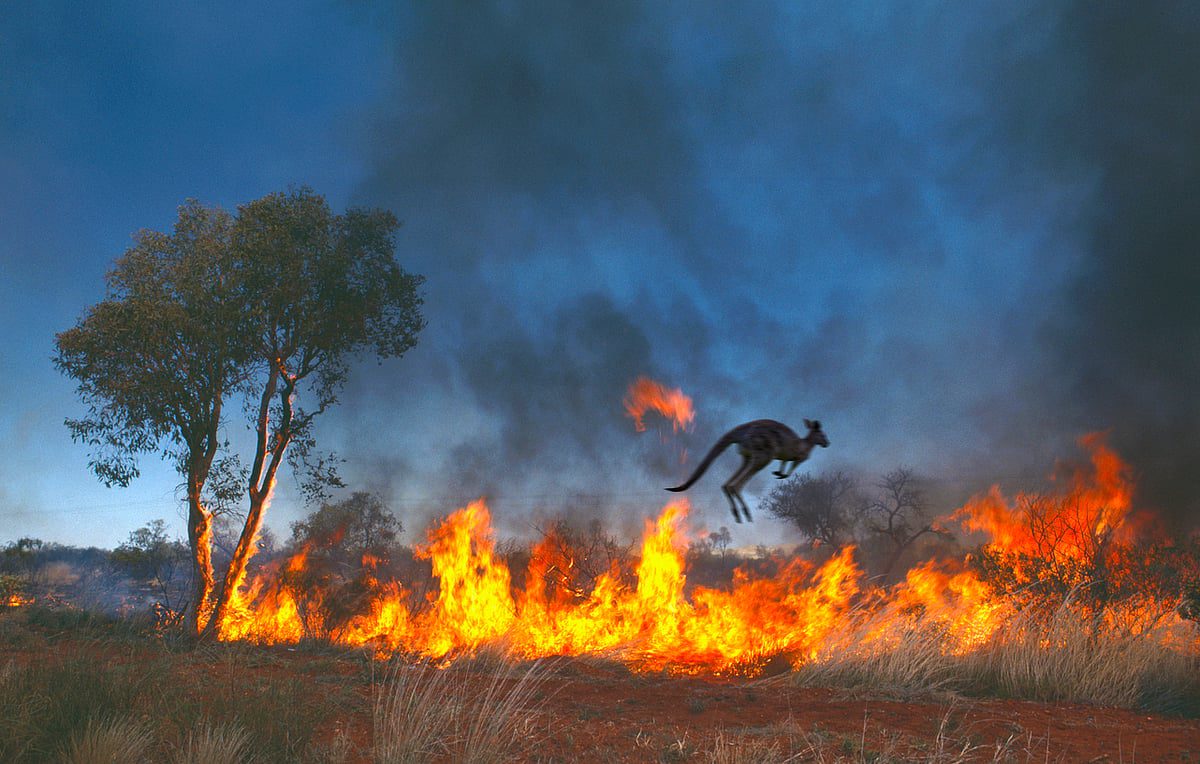
A new study published this week in Nature Ecology & Evolution, led by Stefanie Heinicke at the Potsdam Institute for Climate Impact Research (PIK), projects that under medium-to-high emissions trajectories, 36% of currently occupied terrestrial vertebrate habitats will be exposed to multiple extreme climate events — heatwaves, wildfires, droughts and floods — by 2085. The study covers 33,936 vertebrate species across 794 ecoregions and finds that by 2050 alone, 74% of habitats will face heatwaves. The 2019-20 Australian bushfires killed an estimated 72,000 flying foxes; the 2020 Pantanal fires killed 17 million vertebrates. For CLAT 2027 aspirants, this is a perfect peg for environmental constitutionalism — Articles 48A, 51A(g), 21 — and the CBD-Paris-Ramsar architecture.
Constitutional / Legal Framework
- Article 48A (DPSP) — State to protect and improve the environment and safeguard forests and wildlife (inserted by 42nd Amendment, 1976).
- Article 51A(g) (Fundamental Duty) — duty of every citizen to protect environment, forests, lakes, rivers and wildlife.
- Article 21 + M C Mehta line — right to a clean and healthy environment read into the right to life; key cases: Subhash Kumar v. State of Bihar (1991), M C Mehta (Oleum gas, Taj Trapezium, vehicular pollution).
- Environment (Protection) Act, 1986 — umbrella statute enacted in the wake of the 1984 Bhopal Gas Tragedy.
- Wild Life (Protection) Act, 1972 + Forest (Conservation) Act, 1980 — domestic biodiversity protection.
- Convention on Biological Diversity (CBD), 1992 — adopted at Rio Earth Summit; India ratified in 1994; Biological Diversity Act 2002 implements it domestically.
- Paris Agreement (2015), Article 2 — limit warming to “well below 2 deg C” and pursue 1.5 deg C above pre-industrial levels.
- India’s NDCs — 45% emissions intensity reduction by 2030 (vs 2005); ~50% non-fossil installed power by 2030; net-zero by 2070.
- Ramsar Convention (1971) — wetlands of international importance; India has 80+ Ramsar sites.
- IPCC AR6 — synthesis report (2023) underpinning the Heinicke study’s emissions scenarios.
Why This Matters for CLAT 2027
Environmental law sits across CLAT GK, Legal Reasoning and the new Quantitative Comprehension passages (climate stats fit perfectly). Expect a passage with the 36%/74%/33,936/794 numbers asking you to apply Article 48A or Article 21 (M C Mehta line) to a hypothetical wildlife habitat. AILET typically tests CBD/Paris/Ramsar overlaps — memorise which convention deals with which subject (CBD = biodiversity, Paris = emissions/temperature, Ramsar = wetlands, CITES = trade in endangered species, UNFCCC = parent climate framework).
Key Facts at a Glance
| Study | “Land vertebrates increasingly exposed to multiple extreme events by 2085” |
| Journal | Nature Ecology & Evolution |
| Lead institution | Potsdam Institute for Climate Impact Research (PIK), Germany |
| Lead author | Stefanie Heinicke (post-doc, PIK) |
| Species covered | 33,936 — amphibians 7,605; birds 10,562; mammals 5,476; reptiles 10,293 |
| Ecoregions | 794 |
| 2085 projection | 36% habitats face multiple extreme events |
| 2050 projection | 74% habitats exposed to heatwaves |
| Mitigation potential | Limit exposure to 9% with rapid emissions cuts |
| Cited disasters | 2019-20 Australia bushfires (72,000 flying foxes); 2020 Pantanal (17 mn vertebrates) |
Mnemonic / Memory Hook
“48A-51A(g)-21” — the constitutional triangle: Directive Principle 48A (State duty), Fundamental Duty 51A(g) (citizen duty), Fundamental Right Article 21 (clean environment via M C Mehta). For conventions remember “Rio-Paris-Ramsar = BCW” — Biodiversity (CBD, Rio 1992), Climate (Paris 2015), Wetlands (Ramsar 1971).
Test Yourself — 10 MCQs
Practice Quiz — 10 CLAT-Style Questions
Click an option to reveal the answer and explanation.






