
CURRENT AFFAIRS | MAY 8, 2026
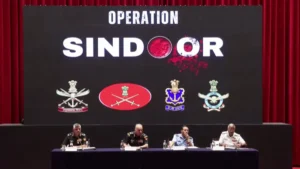
May 8 is the birthday of Henry Dunant, born in Geneva in 1828. A Swiss businessman who witnessed the catastrophic aftermath of the Battle of Solferino (1859) — where 40,000 soldiers lay wounded with no organised medical care — Dunant went on to found the International Committee of the Red Cross in 1863 and co-create the first Geneva Convention. For this, he received the first Nobel Peace Prize in 1901. Every year on May 8, the world observes World Red Cross and Red Crescent Day. In 2026, the theme is “Keeping Humanity Alive.” The 2026 anniversary is particularly significant: the four Geneva Conventions of August 12, 1949 turn 77 this year, and India ratified them in 1950 and passed the Geneva Conventions Act in 1960. With Operation Sindoor fresh in memory, the question of how International Humanitarian Law (IHL) applies to India’s military actions is deeply relevant for CLAT 2027.
Constitutional Framework
Art. 51(c): The state shall endeavour to foster respect for international law and treaty obligations in the dealings of organised peoples with one another. This DPSP is the constitutional mandate for India to honour IHL.
Art. 51(d): The state shall encourage settlement of international disputes by arbitration. Alongside Art. 51(c), it creates India’s constitutional commitment to a rules-based international order.
Art. 253: Parliament has power to make any law for implementing any treaty, agreement, or convention with any other country or any decision made at any international conference. This is the basis for the Geneva Conventions Act 1960 and the Red Cross Act 1994.
Art. 246 + List III (Concurrent List) Entry 14: Legislation on “treaties and agreements” with foreign states falls under Art. 253, not the Concurrent or State List — only Parliament can legislate to implement international treaties.
The Four Geneva Conventions — A CLAT Map
- GC-I (Convention for the Amelioration of the Condition of the Wounded and Sick in Armed Forces in the Field): Protection of wounded and sick soldiers on land. The Red Cross emblem is the protected symbol under this convention.
- GC-II (Convention for the Amelioration of the Condition of Wounded, Sick and Shipwrecked Members of Armed Forces at Sea): Extension of GC-I to naval warfare — the same protections apply to those wounded, sick, or shipwrecked at sea.
- GC-III (Convention Relative to the Treatment of Prisoners of War): Establishes minimum standards for treatment of POWs — humane treatment, prohibition on torture, right to communicate with family, repatriation after hostilities. Highly relevant post-Operation Sindoor given the IAF pilot Wing Commander Abhinandan Varthaman precedent (2019).
- GC-IV (Convention Relative to the Protection of Civilian Persons in Time of War): The most extensive — protects civilians in occupied territories, prohibits collective punishment, deportation, and using civilians as human shields.
CLAT Angle — Core IHL Principles
Distinction Principle: Parties to a conflict must always distinguish between combatants (legitimate military targets) and civilians (who must never be targeted). The most fundamental rule of IHL — and the most frequently violated.
Proportionality: An attack on a legitimate military target is unlawful if the expected civilian harm is excessive relative to the anticipated military advantage. This is why “collateral damage” is a legal concept — not a blanket permission to harm civilians.
Military Necessity: Only measures necessary to achieve a legitimate military objective may be taken. This limits the methods and means of warfare permitted even against combatants.
Common Article 3: Present in all four GCs, it applies to non-international armed conflicts (civil wars, internal armed conflicts). It sets the absolute minimum — humane treatment, no torture, fair trials. It is considered customary international law — binding even on non-parties.
Additional Protocols: AP-I (1977) — extends GC protections to international armed conflicts including wars of national liberation. AP-II (1977) — applies to non-international armed conflicts, supplementing Common Article 3 with detailed rules. India has ratified AP-I but not AP-II.
India’s Domestic IHL Architecture
India enacted the Geneva Conventions Act 1960 to give domestic legal force to its GC obligations — making grave breaches (such as willful killing, torture, or inhumane treatment of protected persons) punishable offences under Indian law. The Red Cross Act 1994 protects the Red Cross and Red Crescent emblems in India — misuse of the emblem is a criminal offence. The Indian Red Cross Society (IRCS), founded in 1920 and operating under the Ministry of Health and Family Welfare, is India’s national society within the 192-member global Red Cross/Red Crescent network.
Key Facts — Quick Reference
| Parameter | Detail |
|---|---|
| Henry Dunant born | May 8, 1828 (Geneva, Switzerland) |
| ICRC founded | 1863 |
| Four Geneva Conventions adopted | August 12, 1949 (77 years in 2026) |
| India ratified GCs | 1950 |
| Geneva Conventions Act (India) | 1960 |
| Indian Red Cross Society founded | 1920 |
| National societies worldwide | 192 |
| World RC Day 2026 theme | Keeping Humanity Alive |
| GC-III deals with | Prisoners of War (POWs) |
| Common Article 3 applies to | Non-international armed conflicts |
Mnemonic — DUNANT to Remember
D — Distinction principle: combatants vs civilians — core IHL rule
U — UN Charter Art. 51 (self-defence) interfaces with IHL
N — Nobel Peace Prize 1901: Dunant, first recipient
A — Art. 253 (Parliament implements treaties) + Art. 51(c) (foster int’l law)
N — Non-international conflicts: Common Art. 3 + AP-II (1977)
T — Treaty domestication: Geneva Conventions Act 1960 (India)
Practice Quiz — 10 CLAT-Style Questions
Click an option to reveal the answer and explanation.