

CURRENT AFFAIRS | 4 MAY 2026
CLAT GK + CONSTITUTIONAL LAW & RELEVANT AREA
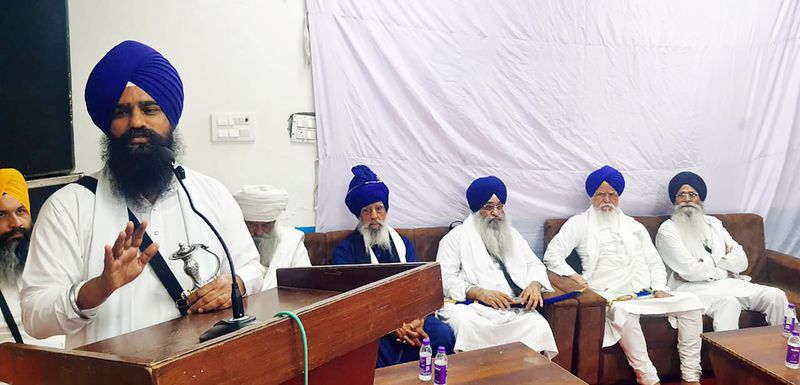
The Akal Takht, the supreme temporal seat of the Sikh Panth established by Guru Hargobind in 1606, has issued a formal summons to Punjab Speaker Kultar Singh Sandhwan for a clause-by-clause discussion on the Jaagat Jot Sri Guru Granth Sahib Satkar (Amendment) Act, 2026. The state law, notified on April 20, 2026, prescribes life imprisonment plus a Rs 25 lakh fine for acts of beadbi (sacrilege). Akal Takht Jathedar Kuldeep Singh Gargajj on May 3 said the legislation was framed without consulting the Khalsa Panth, and the SGPC has flagged that the law weaponises state power against Sikh institutions
.
The standoff raises a textbook CLAT constitutional question: when a State Legislature passes a law touching the religious affairs of a denomination, must it consult the denomination first, or is community consent legally irrelevant? The answer turns on the interplay between Articles 25 and 26, the State List entries on public order and religious endowments, and the Supreme Court’s evolving doctrine on community participation.
Constitutional Framework
- Article 25 — freedom of conscience and free profession, practice and propagation of religion.
- Article 26 — every religious denomination has the right to (a) establish and maintain institutions, (b) manage its own affairs in matters of religion, (c) own and acquire property, (d) administer such property by law.
- Article 25(2)(a) — allows the State to regulate any economic, financial, political or other secular activity associated with religious practice.
- Seventh Schedule — Public order (List II Entry 1) and religious endowments (List II Entry 9) are state subjects, anchoring Punjab’s legislative competence.
- Article 246 — distribution of legislative powers among Union, State and Concurrent Lists.
CLAT Angle — Why This Matters
This is a high-yield setup for a Legal Reasoning passage on the essential religious practice doctrine (Shayara Bano v UoI, 2017) and the community participation principle (Sabarimala, 2018). When a passage flags a state law on a religious matter framed without community consultation, the strongest doctrinal anchor is Article 26(b): the denomination’s right to manage its own religious affairs. Watch for distractors on Article 25(1) (individual freedom) and Article 27 (no taxes for religion) — these are weaker fits.
Also expect questions distinguishing religious activity (protected) from secular activity associated with religion (regulable under 25(2)(a)). State laws on hygiene at religious institutions, audit of temple finances, or anti-conversion are routinely upheld under this carve-out.
Key Facts at a Glance
| Notifying State | Punjab |
| Statute | Jaagat Jot Sri Guru Granth Sahib Satkar (Amendment) Act, 2026 |
| Notified on | April 20, 2026 |
| Punishment | Life imprisonment + Rs 25 lakh fine for beadbi |
| Akal Takht Established | 1606 by Guru Hargobind, Amritsar |
| Summons Issued by | Jathedar Kuldeep Singh Gargajj (May 3, 2026) |
| Summoned | Punjab Speaker Kultar Singh Sandhwan |
| Key Cases | Shayara Bano (2017), Sabarimala (2018) |
Mnemonic — AKAL
Article 26 protection — Khalsa-consent doctrine — Anti-sacrilege statute — List-II Entry 9 overreach challenge.
The Bigger Picture
This is the third major Punjab anti-sacrilege effort since the 2015 Bargari incidents. The 2018 amendment to the IPC (state) attempt was returned by the Centre. The 2026 version is framed under the Bharatiya Nyaya Sanhita era and adds a denomination-specific veneer (limiting protection to the Guru Granth Sahib initially, before the SGPC pushed for parity for other faiths). The fundamental tension — secular state competence v denomination autonomy — remains unresolved and is exactly the kind of doctrinal fault line CLAT examiners love to test.
Test Yourself: 10 CLAT-Style MCQs
Lock in your understanding with this concept-check quiz.
Practice Quiz — 10 CLAT-Style Questions
Click an option to reveal the answer and explanation.






