CURRENT AFFAIRS | 2 APRIL 2026
CLAT GK + CONSTITUTIONAL LAW & FEDERAL STRUCTURE
What Happened?
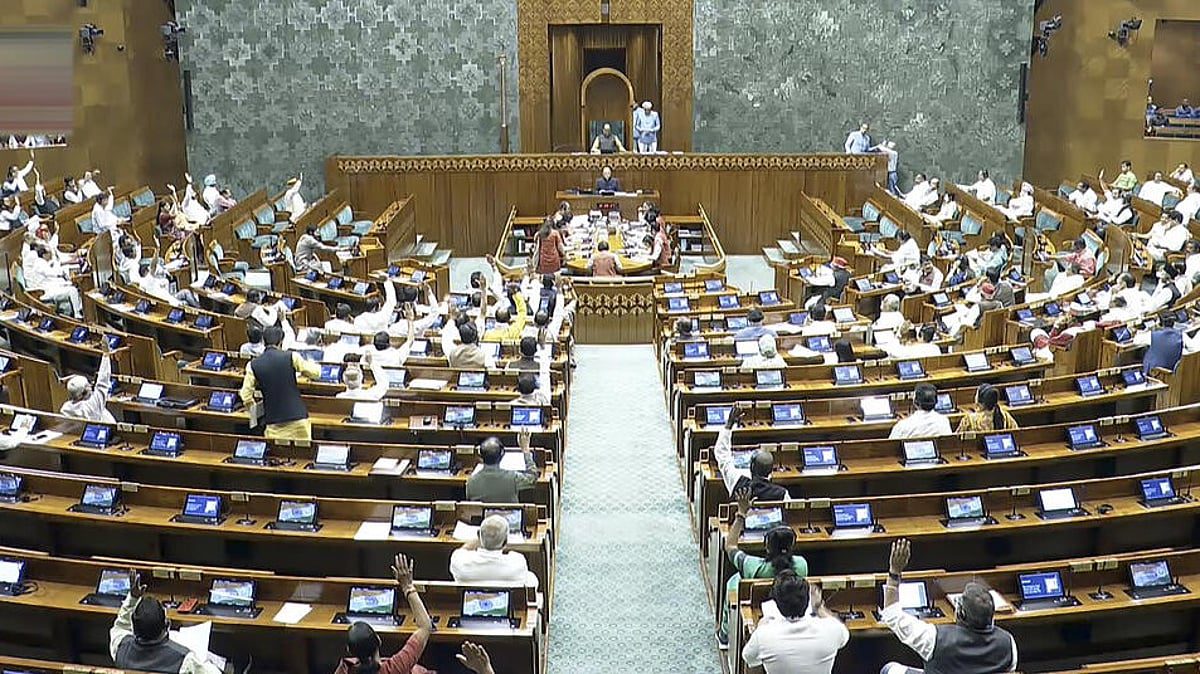
The Lok Sabha on 1 April 2026 passed the Andhra Pradesh Reorganisation (Amendment) Bill, 2026 by voice vote, officially recognising Amaravati as the sole and permanent capital of Andhra Pradesh. The Bill amends Section 5 of the AP Reorganisation Act, 2014, which had originally declared Hyderabad as the joint capital for both AP and Telangana for a period not exceeding 10 years.
The amendment substitutes the words “there shall be a new capital” in Section 5(2) with “and Amaravati shall be the new capital,” giving Amaravati statutory recognition as AP’s capital with retrospective effect from 2 June 2024. The Bill received support from Congress, BJP, and TDP, while YSRCP staged a walkout in opposition.
Background: The Capital Saga
When Andhra Pradesh was bifurcated in 2014 under the AP Reorganisation Act, Hyderabad was designated as the common capital for both successor states. The 2014 Act’s Section 5 envisaged that AP would establish a new capital, but did not name it. Chief Minister N. Chandrababu Naidu chose Amaravati in 2015, but the subsequent YSRCP government under Jagan Mohan Reddy proposed a three-capital model (Amaravati for legislative, Visakhapatnam for executive, Kurnool for judicial). After TDP’s return to power, the AP Legislative Assembly passed a resolution on 28 March 2026 urging the Centre to formally recognise Amaravati.
Constitutional & Legal Framework
- Article 3 — Empowers Parliament to form new states, alter boundaries, change state names (with President’s recommendation)
- Article 4 — Laws under Art 2 and 3 shall NOT be deemed constitutional amendments under Art 368 (simple majority suffices)
- AP Reorganisation Act, 2014 — Section 5 (capital provisions), Section 6 (common governor), Section 8 (division of assets)
- Proviso to Article 3 — Bill must be referred to state legislature for views, but Parliament is not bound by them
- States Reorganisation Act, 1956 — Historical precedent for linguistic reorganisation
Article 3: The State-Making Power
Article 3 is one of the most important provisions for CLAT aspirants. It grants Parliament the power to:
- Form a new state by separation or merger
- Increase or diminish the area of any state
- Alter the boundaries of any state
- Alter the name of any state
The proviso requires that a Bill affecting state boundaries must first receive the President’s recommendation, and the President must refer the Bill to the affected state legislature. However, Parliament is not bound by the state’s opinion. Under Article 4, such laws are not deemed constitutional amendments — they pass by simple majority.
CLAT Angle: Why This Matters
- State Reorganisation — Art 3 procedure, role of President, Parliament’s supremacy over state views
- Federal Structure — India’s “quasi-federal” nature: Centre can alter state boundaries without state consent
- Capital City Disputes — Amaravati vs three-capital model, farmer displacement, judicial challenges
- Art 4 Exception — A favourite CLAT question: laws under Art 3 do NOT need Art 368 amendment procedure
- Historical Precedents — SRC 1956, Punjab Reorganisation Act 1966, J&K Reorganisation Act 2019
Key Facts at a Glance
| Bill Passed | 1 April 2026 (Lok Sabha, voice vote) |
| Amends | Section 5 of AP Reorganisation Act, 2014 |
| Effect | Amaravati = sole capital (retrospective from 2 June 2024) |
| Supporting Parties | TDP, BJP, Congress |
| Opposing Party | YSRCP (staged walkout) |
| Constitutional Basis | Article 3 (formation of new states) |
Mnemonic: Article 3 Powers — “FIAC” (Form, Increase, Alter, Change)
- F — Form new states
- I — Increase or diminish area
- A — Alter boundaries
- C — Change names of states
Key Rule: Art 3 needs President’s recommendation + state legislature’s views (not consent). Art 4 says these laws are NOT constitutional amendments.
Practice Quiz
Practice Quiz — 10 CLAT-Style Questions
Click an option to reveal the answer and explanation.