
CURRENT AFFAIRS | 15 APRIL 2026
CLAT GK + CONSTITUTIONAL LAW — FEDERALISM & INTER-STATE WATER DISPUTES
What happened?
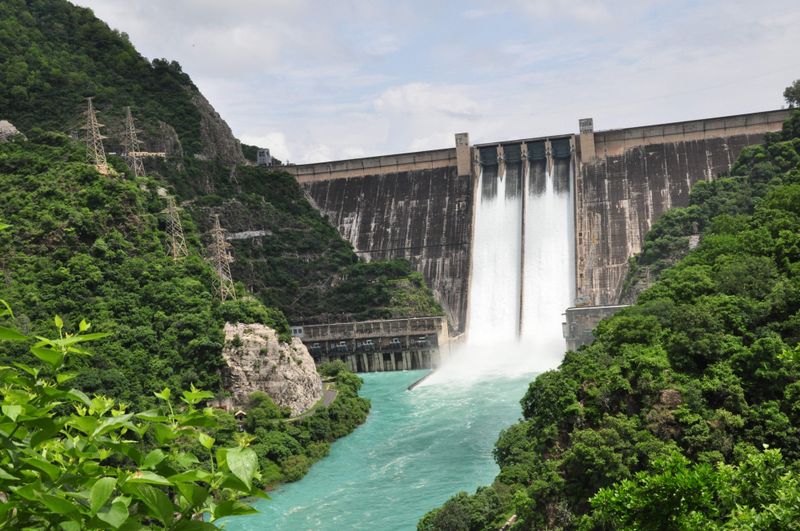
The Union government has widened the eligibility pool for three top posts of the Bhakra Beas Management Board (BBMB) — Chairman, Member (Power) and Member (Irrigation). Under the amended BBMB Rules, 1974, officers from any State cadre may now be considered; preference for Punjab and Haryana remains but is no longer a guarantee. Historically, Member (Power) was reserved for Punjab and Member (Irrigation) for Haryana. Punjab has called the move a dilution of its control over the sharing of the Ravi-Beas waters, while Haryana’s opposition has termed it “anti-Haryana”. The change sits at the crossroads of cooperative federalism and India’s century-old inter-State river water politics.
Constitutional & Legal Framework
- Article 262: Empowers Parliament to provide, by law, for the adjudication of disputes relating to the use, distribution or control of waters of any inter-State river or river valley, and to bar the jurisdiction of courts, including the Supreme Court, over such disputes.
- Entry 17, State List (Seventh Schedule): Water, water supplies, irrigation, canals, drainage — a State subject, but subject to Entry 56 of the Union List.
- Entry 56, Union List: Regulation and development of inter-State rivers and river valleys when Parliament declares such regulation to be in the public interest.
- Inter-State River Water Disputes Act, 1956: Operationalises Article 262. Provides for constitution of Tribunals (Cauvery, Krishna, Godavari, Ravi-Beas/Eradi, etc.).
- Punjab Reorganisation Act, 1966 (Sections 78–80): Parent statute under which BBMB was constituted to administer the Bhakra-Nangal and Beas Projects after the bifurcation of Punjab and Haryana.
- BBMB Rules, 1974: Subordinate legislation governing composition, eligibility and functions — this is the instrument now amended.
- Part XI of the Constitution (Articles 245–263): Centre-State legislative and administrative relations; Article 263 allows constitution of an Inter-State Council.
CLAT Angle — Why This Matters
This story is a textbook CLAT passage weaving together constitutional law, federal theory and legal reasoning:
- Cooperative vs competitive federalism: The Sarkaria Commission (1983) and the Punchhi Commission (2010) both recommended prior consultation with States on such structural changes. Passages may test whether unilateral rule-making violates federal comity.
- Landmark cases: State of Punjab v Union of India (2016 Presidential Reference, SC held Punjab’s Termination of Agreements Act, 2004 unconstitutional), In re Cauvery Water Disputes Tribunal (1991), and the Mullaperiyar Dam cases have all reinforced that water agreements between States have binding constitutional weight.
- Ravi-Beas / Eradi Tribunal (1986): Set up under the 1956 Act to adjudicate the Punjab-Haryana-Rajasthan share of the Ravi-Beas waters.
- Legal reasoning format: “Principle: State’s administrative control over shared water resources may be diluted only after consultation… Facts: Centre amends rules unilaterally… Apply.”
Key Facts at a Glance
| Item | Detail |
|---|---|
| Body | Bhakra Beas Management Board (BBMB) |
| Parent Act | Punjab Reorganisation Act, 1966 (Sections 78–80) |
| Administered Projects | Bhakra-Nangal and Beas Project (Pong, Pandoh dams) |
| Beneficiary States | Punjab, Haryana, Rajasthan, Delhi, HP, Chandigarh |
| Constitutional Article | Article 262 (inter-State water disputes) |
| Relevant Tribunal | Ravi-Beas Water Tribunal (Eradi, 1986) |
| Key Commissions | Sarkaria (1983), Punchhi (2010) |
| Landmark SC Case | State of Punjab v UOI (2016 — SYL Presidential Reference) |
Mnemonic — “BBMB → B-PRESS”
Bhakra-Beas — Punjab Reorganisation Act, Ravi-Beas Tribunal, Eradi Commission, Sarkaria Commission, State of Punjab v UOI (2016). Remember B-PRESS to recall every moving part of the BBMB & federalism story.
The CLAT Reasoning Question You Might See
Principle: Where a subject is on the State List but is also covered under an entry of the Union List for inter-State coordination, the Union’s regulatory power is valid, provided it is exercised in a spirit of cooperative federalism and after due consultation with affected States.
Facts: The Union amends rules of a joint river board to open its top management posts to officers of any State, while historically two of the three posts were cadre-reserved for the two successor States. One State claims the amendment dilutes its control over shared waters.
Question: Is the amendment constitutionally permissible? Answer: Yes, Parliament/Union has competence under Entry 56 of the Union List and the 1966 Act, but the manner of exercise may be challenged on federalism grounds if consultation under the Sarkaria/Punchhi framework is absent.
Test Yourself — 10 CLAT-Style MCQs
Practice Quiz — 10 CLAT-Style Questions
Click an option to reveal the answer and explanation.