

CURRENT AFFAIRS | 31 MARCH 2026
CLAT GK + CONSTITUTIONAL LAW & SEPARATION OF POWERS
– Separation of powers doctrine and judicial review
– Article 14 (Equality), Article 312 (All-India Services), Article 246 (Legislative powers)
– CAPF structure: BSF, CRPF, CISF, ITBP, SSB
– Landmark cases: L. Chandra Kumar v. UOI (1997), SP Gupta v. UOI (1981)
– Federalism and Centre-State relations
What Is the CAPF Bill 2026?
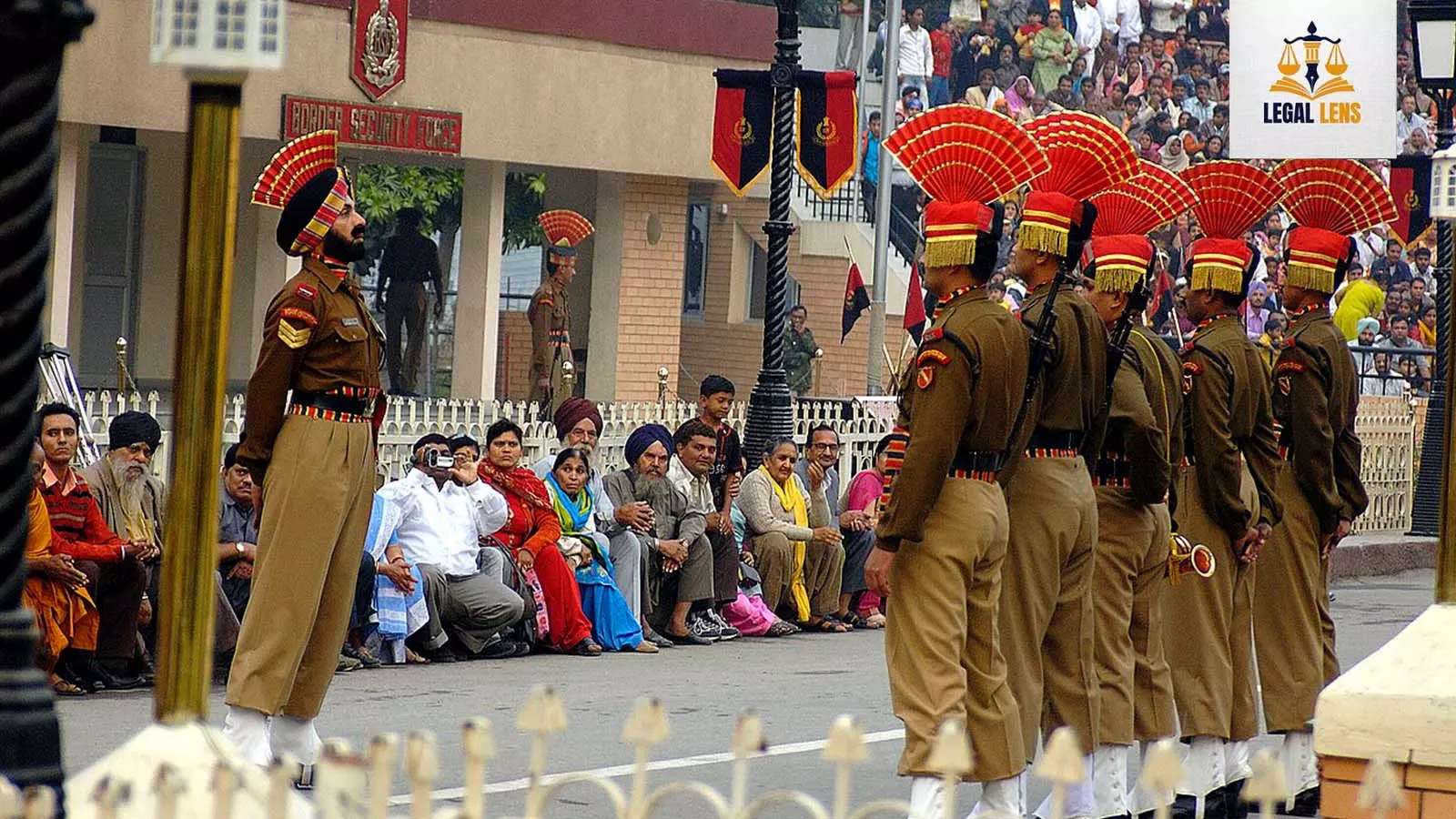
The Central Armed Police Forces (General Administration) Bill, 2026 was introduced in the Rajya Sabha on 25 March 2026 by Minister of State for Home Affairs Nityanand Rai. The Bill seeks to bring five CAPFs — CRPF, BSF, ITBP, SSB, and CISF — under a unified administrative framework, while reserving top leadership positions for IPS officers on deputation.
The Bill has sparked a fierce parliamentary debate because it effectively overrides a May 2025 Supreme Court judgment that directed the government to phase out IPS deputation in CAPFs. The judgment, delivered by Justices A.S. Oka and Ujjal Bhuyan, recognised CAPF Group A officers as an Organised Group A Service (OGAS) entitled to promotion to top ranks.
Key Provisions of the Bill
| Provision | Detail |
| IG-level posts | 50% reserved for IPS officers |
| ADG posts | At least 67% for IPS officers |
| DG/Special DG posts | 100% for IPS officers |
| Forces covered | CRPF, BSF, ITBP, SSB, CISF |
| CAPF officer promotion time | 15-18 years for similar rank |
| IPS officer promotion time | 4-5 promotions in same period |
The most controversial element is a ‘notwithstanding’ clause that allows rules made under this Bill to supersede any existing law or court direction — directly targeting the 2025 SC judgment.
Opposition’s Constitutional Objections
Opposition MPs in the Rajya Sabha raised serious constitutional concerns:
- DMK’s Tiruchi Siva — The government is going against the spirit of the 2025 SC judgment that clearly directed phasing out IPS deputation within two years
- CPI(M)’s John Brittas — Parliament cannot simply declare a binding court order void by bare declaration without addressing its legal basis
- TMC’s Derek O’Brien — First attempt to table the Bill was stalled for violating the 48-hour advance notice convention
- Congress’s Ajay Maken — Cited data: 749 CAPF personnel died by suicide (2021-2025), 46,000 took voluntary retirement, 9,532 resigned
Constitutional Framework: Separation of Powers
– Article 14 — Equality before law; the Bill creates a permanent glass ceiling for 13,000 CAPF officers
– Article 312 — All-India Services (IAS, IPS, IFoS) created by Parliament with Rajya Sabha approval
– Article 246 — Distribution of legislative powers; Seventh Schedule lists (Union, State, Concurrent)
– Article 50 — Separation of judiciary from executive (DPSP)
– L. Chandra Kumar v. UOI (1997) — Judicial review under Articles 226 and 32 is a basic feature of the Constitution
– SP Gupta v. UOI (1981) — First Judges Case; established principles of judicial independence
Can Parliament Override a Supreme Court Judgment?
This is the central constitutional question raised by the CAPF Bill. The legal position is nuanced:
- Parliament can legislate to change the legal basis on which a court decision rests — this is a valid exercise of legislative power
- Parliament cannot simply nullify a court order by declaring it void — this violates separation of powers
- The ‘notwithstanding’ clause in the CAPF Bill is expected to be challenged in the Supreme Court on grounds that it amounts to a legislative override of a judicial direction without addressing the underlying constitutional right (Art. 14)
- Precedent: The SC in L. Chandra Kumar held that judicial review is a basic structure feature that cannot be excluded
– Constitutional Law: Separation of powers — Parliament vs. Judiciary; ‘notwithstanding’ clauses and their limits
– GK: CAPF structure (5 forces), IPS cadre system, All-India Services under Art. 312
– Legal Reasoning: Can legislation override a specific court order? L. Chandra Kumar basic structure test
– Federalism: Centre-State relations in policing (Entry 2 State List vs. CAPFs under Union)
C — CRPF (Central Reserve Police Force) — internal security
A — (B)SF — Border Security Force — Indo-Pak/Indo-BD borders
P — (IT)BP — Indo-Tibetan Border Police — Indo-China border
F — CISF (Central Industrial Security Force) + SSB (Sashastra Seema Bal — Indo-Nepal/Indo-Bhutan)
Source: The Print, The Federal, The Quint — March 2026
Practice Quiz
Test your understanding with these 10 MCQs:
Practice Quiz — 10 CLAT-Style Questions
Click an option to reveal the answer and explanation.






