
CURRENT AFFAIRS | 4 MAY 2026
CLAT GK + CONSTITUTIONAL LAW & RELEVANT AREA
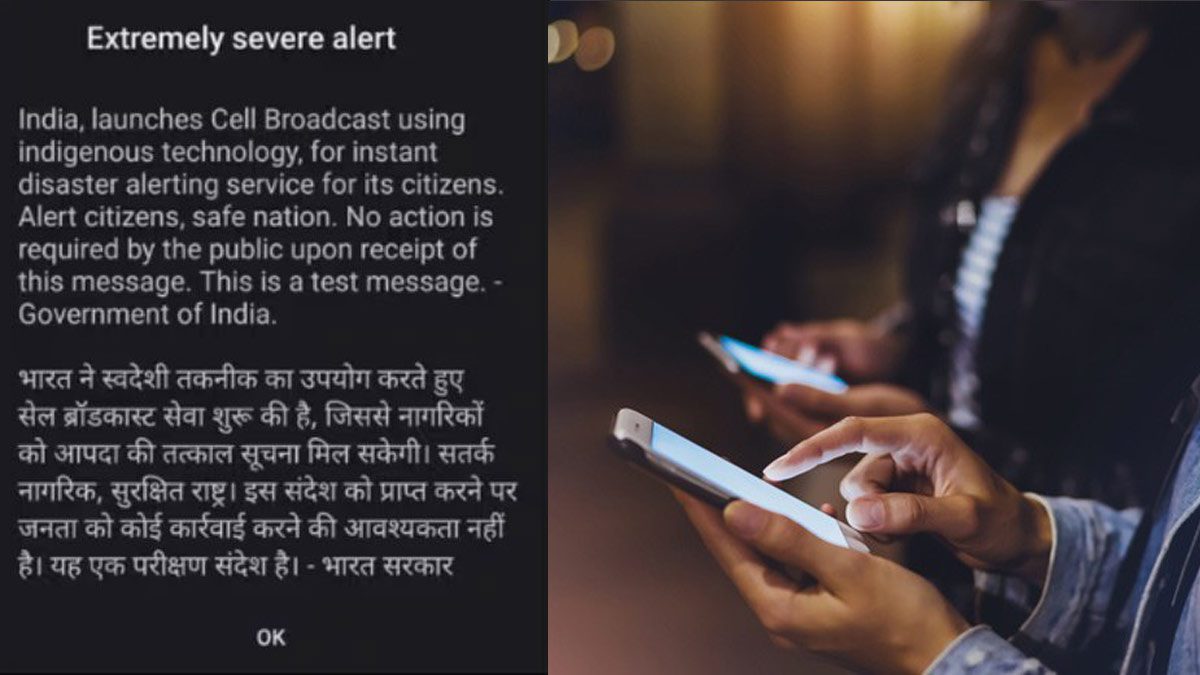
On Saturday, May 2, 2026, smartphones across India simultaneously played an “extremely severe alert” tone with a multilingual pop-up — the country’s first pan-India cell broadcast emergency alert test. Built by the Centre for Development of Telematics (C-DOT) under the Department of Telecommunications, the system delivers a one-to-many, tower-level push to every phone in a defined geographic area without needing an app, subscription, or even a saved phone number. It operationalises India’s obligations under the Disaster Management Act 2005 and the Sendai Framework 2015-2030.
What Happened
Cell broadcast is fundamentally different from SMS. SMS is a one-to-one text — congestion-prone, stores phone numbers as identifiers, requires a Mobile Subscriber ISDN (MSISDN) lookup. Cell broadcast is a one-to-many tower push — every device in range receives it without identification. The technology is recognised by the International Telecommunication Union (ITU), the UN’s oldest specialised agency (1865). Japan deployed J-Alert in 2007, the US adopted Wireless Emergency Alerts (WEA) in 2012, and the EU’s EU-Alert went live in 2018. India has joined this club.
Why It Matters for CLAT
The Disaster Management Act 2005 lays out a three-tier institutional architecture (NDMA → SDMA → DDMA), but the operational arm — getting timely warnings to citizens in cyclones, flash floods, earthquakes, terror attacks — was the missing piece. Cell broadcast plugs that. It also pairs with Section 22 of the Telecommunications Act 2023, which empowers the Centre to take temporary possession of telecom services during emergencies.
Constitutional & Statutory Framework
- Disaster Management Act 2005 — NDMA, SDMA, DDMA architecture
- Telecommunications Act 2023, Sec 22 — emergency provisions
- Article 51A(g) — fundamental duty to protect environment & living creatures
- ITU Constitution 1992 — UN telecom standards
- Sendai Framework 2015-2030 — UN DRR successor to Hyogo
- National Disaster Management Plan 2019 (revised 2023)
The CLAT Angle
Watch for trick options framing cell broadcast as “SMS-based.” It is NOT — that distinction is the favourite distractor. Also, while NDMA is constituted under the DM Act 2005 (chaired by the PM), NDRF (National Disaster Response Force) is the operational armed force under DM Act Sec 44. Don’t confuse the two. Tip: cell broadcast is privacy-friendly because it doesn’t store identifiers — useful in Puttaswamy-style data protection legal-reasoning passages.
Key Facts at a Glance
| Item | Detail |
|---|---|
| First test | May 2, 2026 (pan-India) |
| Built by | C-DOT (DoT R&D arm, 1984) |
| Statutory base | DM Act 2005 + Telecom Act 2023 |
| Global precedents | Japan J-Alert 2007, US WEA 2012, EU-Alert 2018 |
| UN body | ITU (founded 1865) |
| DRR framework | Sendai 2015-2030 |
Mnemonic — ALERT
All-phones · LBS-bypass · Emergency-DM-Act · Real-time · Tower-broadcast
Test Yourself: 10-Question CLAT Quiz
Practice Quiz — 10 CLAT-Style Questions
Click an option to reveal the answer and explanation.