

CURRENT AFFAIRS | 6 APRIL 2026
CLAT GK + INDIAN POLITY & JUDICIARY
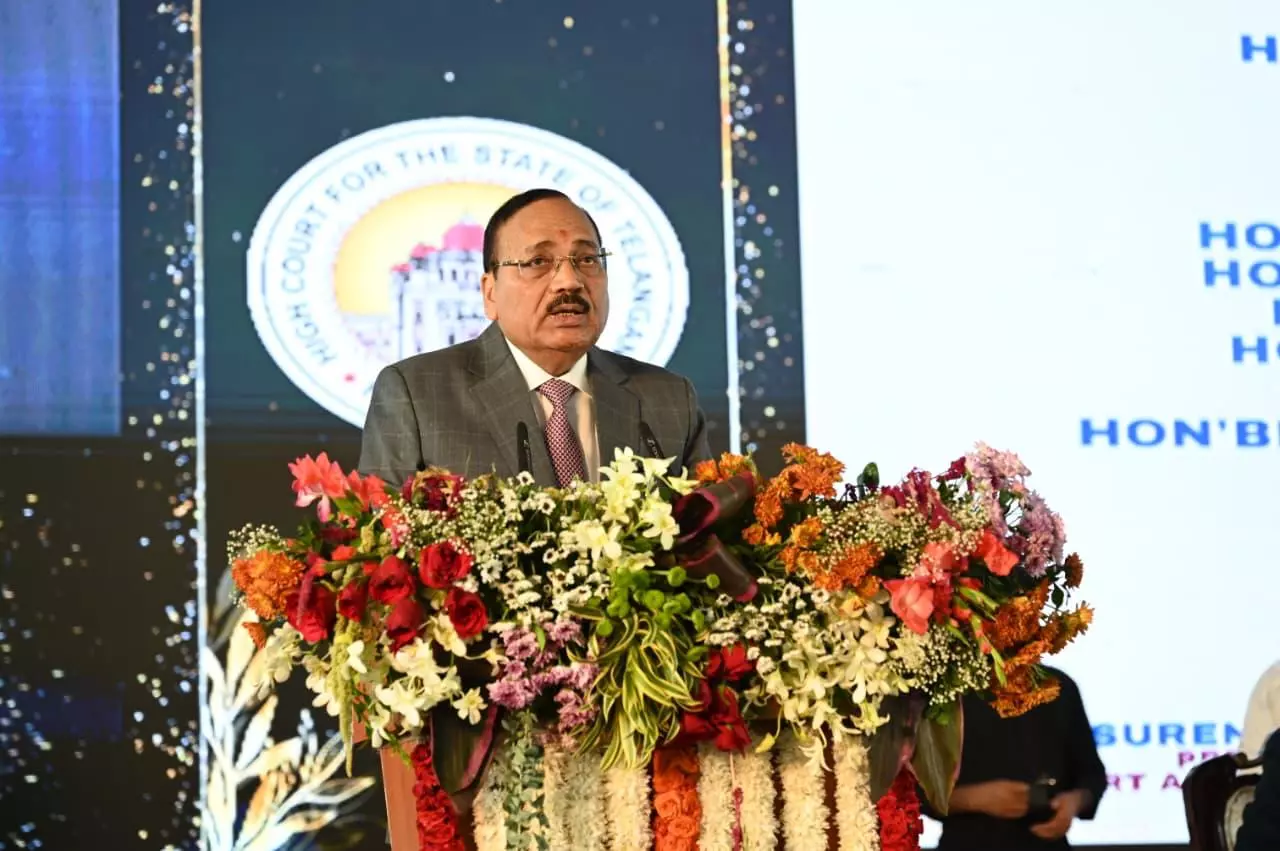
Chief Justice of India Surya Kant made a powerful statement on April 5, 2026, declaring that “strengthening judicial infrastructure is not optional but essential.” The CJI made these remarks while laying the foundation stone for the Telangana High Court Zone-2 building at Rajendernagar, Hyderabad. He emphasised that when the judiciary and executive align in purpose, the Constitution truly comes alive.
This statement comes at a critical juncture when India’s justice delivery system is grappling with over 5 crore pending cases, severe judicial vacancies across High Courts, and inadequate court infrastructure in most districts. The CJI noted that state governments across the political spectrum now recognise the urgency of judicial infrastructure development.
The State of Judicial Infrastructure in India
India’s judicial infrastructure deficit is staggering. Many district courts operate from dilapidated buildings without basic amenities like functional toilets, clean drinking water, or adequate waiting areas for litigants. The judge-to-population ratio remains abysmally low at approximately 21 judges per million people — far below the Law Commission’s recommendation of 50 per million.
The CJI has been on an active infrastructure drive, laying foundation stones for judicial court complexes in Uttar Pradesh, Himachal Pradesh, Andhra Pradesh, Assam, and now Telangana in recent months. The Telangana government has allotted 100 acres for the new High Court complex with an administrative sanction of Rs 2,583 crore.
Constitutional & Legal Framework
- Article 39A (DPSP): The State shall secure that the operation of the legal system promotes justice, on a basis of equal opportunity, and shall provide free legal aid to ensure that opportunities for justice are not denied by reason of economic or other disabilities
- Article 21: Right to life and personal liberty — interpreted by SC to include the right to speedy trial (Hussainara Khatoon v. State of Bihar, 1979)
- Article 50 (DPSP): The State shall take steps to separate the judiciary from the executive in public services — the foundation of judicial independence
- Article 124-147: Provisions relating to the Supreme Court including its composition, jurisdiction, and independence
- Article 214-231: Provisions relating to High Courts
Hussainara Khatoon v. State of Bihar (1979): The Right to Speedy Trial
The most important case connecting judicial infrastructure to fundamental rights is Hussainara Khatoon v. State of Bihar (1979). Justice P.N. Bhagwati held that the right to speedy trial is a fundamental right under Article 21. The case exposed the horrifying reality that thousands of undertrial prisoners in Bihar had been incarcerated for periods longer than the maximum sentence for their alleged offences — directly because of inadequate courts and judicial capacity.
This judgment established that speedy trial is not merely a procedural safeguard but a substantive fundamental right. Without adequate judicial infrastructure — enough judges, courtrooms, digital systems, and support staff — this right remains a dead letter for millions of Indians.
CLAT Exam Angle
Judicial infrastructure and access to justice are high-frequency CLAT topics. Key exam concepts:
- Article 39A vs Article 21: DPSP (equal justice) read with FR (speedy trial) creates an enforceable right to accessible justice
- Hussainara Khatoon (1979): Landmark for undertrial rights and speedy trial — one of the most cited cases in CLAT
- Article 50: Separation of judiciary from executive — structural independence
- National Mission for Justice Delivery: e-Courts project, virtual hearings, digital case management
- Judge-population ratio: Current ~21/million vs recommended 50/million (Law Commission 120th Report)
- NJIC proposal: National Judicial Infrastructure Corporation — centralised body for court infrastructure
Key Initiatives for Judicial Modernisation
Several initiatives are underway to modernise India’s judicial infrastructure:
- e-Courts Project: Phase III aims to create a unified digital platform for all Indian courts with e-filing, virtual hearings, and AI-assisted case management
- National Mission for Justice Delivery: Umbrella programme for reducing pendency, increasing judicial strength, and improving infrastructure
- NJIC Proposal: Proposed National Judicial Infrastructure Corporation as a dedicated body to plan, develop, and maintain court buildings and digital infrastructure nationwide
- Tele-Law Programme: Connecting citizens in rural areas with lawyers through video conferencing at Common Service Centres
- Fast Track Special Courts: Dedicated courts for cases involving POCSO Act and crimes against women
Key Facts Table
| Pending Cases (All Courts) | 5+ crore (50 million) |
| SC Sanctioned Strength | 34 judges (incl. CJI) |
| Current Judge-Population Ratio | ~21 per million |
| Recommended Ratio | 50 per million (120th Law Commission) |
| Telangana HC Budget | Rs 2,583 crore (100 acres) |
| CJI Statement Date | April 5, 2026 (Hyderabad) |
| Key Landmark Case | Hussainara Khatoon v. Bihar (1979) |
| Article for Free Legal Aid | Article 39A (DPSP) |
The Pendency Crisis: Numbers That Demand Action
India’s case pendency problem is not just a statistic — it represents millions of individuals waiting years, sometimes decades, for justice. The Supreme Court itself has acknowledged that justice delayed is justice denied. Key data points:
- District Courts: Over 4.4 crore cases pending — the bulk of the burden
- High Courts: Over 62 lakh cases pending with significant judicial vacancies
- Supreme Court: Over 80,000 cases pending
- Undertrial prisoners: Over 75% of India’s prison population are undertrials awaiting judgement
Mnemonic: JUSTICE — Infrastructure Needs
J — Judge-population ratio must increase (21 to 50/million)
U — Undertrial prisoners need speedy trials (Art 21)
S — Separation of judiciary from executive (Art 50)
T — Technology: e-Courts, virtual hearings, AI case management
I — Infrastructure: courtrooms, amenities, residential quarters
C — CJI Surya Kant’s nationwide foundation stone drive
E — Equal justice and free legal aid (Art 39A)
Conclusion
CJI Surya Kant’s declaration that judicial infrastructure is “not optional but essential” is a clarion call to all stakeholders. For CLAT aspirants, this topic connects the dots between DPSP provisions (Art 39A, 50), fundamental rights (Art 21), landmark cases (Hussainara Khatoon), and the practical challenges of justice delivery in India. Understanding the infrastructure-justice nexus is crucial for both the legal reasoning and GK sections of CLAT 2027.
Practice Quiz — 10 CLAT-Style Questions
Click an option to reveal the answer and explanation.