

Last Updated: April 2026
CLAT 2027 | GK & Current Affairs
Comprehensive legal and constitutional current affairs for April 2026 — organised week-by-week with CLAT article and case cross-references.
CLAT current affairs questions are never pure GK — they are always passage-based. The examiner selects a recent event, writes a passage connecting it to a legal principle, constitutional provision, or judgment, and asks 4-5 questions. Your job is not just to know the event but to understand the constitutional/legal angle. This month’s events connect to: Article 25/26 (Waqf), Article 21 and UAPA (Umar Khalid), Article 352 and Emergency history (50th anniversary), Article 19(1)(a) (Electoral Bonds), and the DPDP Act 2023. Know all of these connections.
| Event | Constitutional/Legal Link | CLAT Relevance |
|---|---|---|
| Waqf Amendment Act 2025 SC petitions | Articles 14, 25, 26 | High — religious freedom + minority rights |
| Pahalgam terror attack + India-Pakistan tensions | UN Charter Art. 51, IHL | High — international law + state responsibility |
| Umar Khalid SC bail hearing | UAPA Section 43D(5), Article 21 | High — personal liberty vs national security |
| DPDP Act 2023 implementation rules | Article 21 — right to privacy (Puttaswamy) | Medium-High — data privacy law |
| Emergency 50th anniversary (June 2025) | Article 352, 44th Amendment | High — historical constitutional crisis |
| Electoral Bonds case follow-up (ECI compliance) | Article 19(1)(a) — right to information | High — democratic accountability |
Week 1: April 1–7, 2026
Waqf Amendment Act 2025 — SC Challenge Intensifies
The Supreme Court continued hearing petitions challenging the Waqf (Amendment) Act, 2025. Over 200 petitions from across the country were consolidated before a constitutional bench. Petitioners — including Muslim personal law bodies, opposition-ruled state governments, and civil society organisations — argued that the amendment fundamentally alters the character of Waqf boards by permitting non-Muslim representation, which they said violates the constitutionally protected right of Muslim communities to manage their religious affairs.
Constitutional provisions at stake:
- Article 14 (Equality): Petitioners argued that the law discriminates against one religious community (Muslims) by creating intrusive oversight not applied to similar Hindu religious endowments or Christian ecclesiastical bodies.
- Article 25 (Freedom of conscience and religion): The right to profess, practice and propagate religion — which includes the right to make charitable endowments for religious purposes.
- Article 26 (Freedom to manage religious affairs): Every religious denomination has the right to manage its own affairs in matters of religion. Petitioners argued that allowing non-Muslim members on Waqf boards violates this autonomy.
- Article 30 (Rights of minorities): The right of minorities to establish and administer educational institutions.
Government’s position: The Union government argued that Waqf boards are statutory bodies (not religious denominations per se), and that Parliament has plenary power to regulate their administration. The presence of non-Muslim members is for administrative efficiency and transparency, not religious intrusion.
The Supreme Court issued an interim order in early April directing that no Waqf property should be de-listed during the pendency of the petitions. This interim relief was significant as it froze the most controversial operational provision of the amendment.
CLAT connection: The Waqf case is a masterclass in the tension between Articles 25-26 (religious freedom) and Article 14 (equality). CLAT 2027 could present a passage from the judgment or a hypothetical fact pattern testing whether statutory regulation of religious administration violates the right to manage religious affairs.
India-Pakistan Tensions — Pahalgam Attack and Operation Sindoor
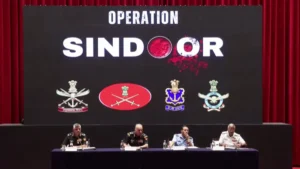
On April 22, 2026, a devastating terrorist attack at Baisaran meadow near Pahalgam, Jammu & Kashmir, killed 26 tourists. India attributed the attack to Lashkar-e-Taiba operatives based in Pakistan. The attack set off a major escalation in India-Pakistan relations, ultimately leading to India’s military response — Operation Sindoor — targeting terror infrastructure across the border.
International law dimensions (critical for CLAT):
- State responsibility: Under customary international law and the Articles on Responsibility of States for Internationally Wrongful Acts (ARSIWA), a state is responsible for internationally wrongful acts attributable to it. India’s position: Pakistan’s support for non-state terror groups makes it responsible.
- Right of self-defence — UN Charter Article 51: States have an inherent right of individual or collective self-defence if an armed attack occurs. India invoked Article 51, though Pakistan disputed the attribution of the attack to its state apparatus.
- Jus ad bellum (right to go to war) vs jus in bello (laws of warfare): CLAT passages on armed conflict test whether students can distinguish between the lawfulness of resorting to force (jus ad bellum) and the conduct during hostilities (jus in bello — embodied in the Geneva Conventions).
- Proportionality: International law requires that acts of self-defence be proportional to the original attack. This became a point of debate in the UN Security Council when the matter was raised.
Week 2: April 8–14, 2026
Umar Khalid Bail — UAPA and Personal Liberty
The Supreme Court heard Umar Khalid’s bail application after he had been in custody for over five years under the Unlawful Activities (Prevention) Act (UAPA). The case raised fundamental questions about personal liberty under Article 21 and the evidentiary bar for bail under Section 43D(5) of UAPA.
Section 43D(5) of UAPA: Bail cannot be granted if the court, after examining the prosecution’s case diary, is of the opinion that there are reasonable grounds for believing that the accusation against the accused is prima facie true. This is a reversal of the normal bail jurisprudence, which presumes innocence.
Key arguments before the SC:
- Defence: Prolonged incarceration without trial violates Article 21 (right to life and personal liberty). The right to speedy trial — a component of Article 21 — was being violated by indefinite detention without trial.
- Prosecution: The gravity of the offence (conspiracy in the Delhi riots), severity of the alleged acts, and threat to national security justified continued detention.
SC’s approach — Vernon Gonsalves (2023) precedent: In Vernon Gonsalves v State of Maharashtra (2023), the Supreme Court had granted bail in a UAPA case, holding that Section 43D(5) does not mean that courts surrender their duty to examine whether the material disclosed a prima facie case. The court cannot be a “rubber stamp” on the prosecution’s case diary.
The Umar Khalid case was significant because it tested whether the Vernon Gonsalves principles would extend to cases involving alleged conspiracy in communal violence — a context the court had not yet directly addressed.
DPDP Act 2023 — Implementation Rules Notified
The Union government notified draft implementation rules under the Digital Personal Data Protection Act, 2023 in April 2026. The rules specify the obligations of Data Fiduciaries (entities that collect and process personal data) and the rights of Data Principals (individuals whose data is collected).
Key provisions of the DPDP Act 2023 for CLAT:
- Data Principal’s Rights: Right to access data, right to correction and erasure, right to grievance redressal, right to nominate a nominee.
- Data Fiduciary’s Obligations: Purpose limitation, data minimisation, storage limitation, security safeguards.
- Significant Data Fiduciaries: Government can designate certain entities as Significant Data Fiduciaries (SDFs) subject to higher obligations including data protection impact assessments.
- Cross-border data transfers: Transfer of data outside India is permitted only to countries notified by the government (negative list approach).
- Constitutional basis: K.S. Puttaswamy v Union of India (2017) — the 9-judge bench recognised the right to privacy as a fundamental right under Article 21. The DPDP Act is the legislative realisation of this right.
Week 3: April 15–21, 2026
Electoral Bonds Case — ECI Compliance and Political Funding Transparency
Following the Supreme Court’s 2024 judgment striking down the Electoral Bonds scheme, the Election Commission of India (ECI) was directed to publish comprehensive data about bonds purchased and redeemed. In April 2026, follow-up proceedings examined whether full compliance had been achieved and whether any information was still being withheld.
The 2024 judgment — Association for Democratic Reforms v Union of India: The Constitution Bench (CJI D.Y. Chandrachud, Justices Sanjiv Khanna, B.R. Gavai, J.B. Pardiwala, Manoj Misra) unanimously struck down the scheme. Key holdings:
- Anonymous political funding violates voters’ right to information under Article 19(1)(a).
- Article 19(1)(a) encompasses the right to know about sources of political party funding.
- The scheme also violated Article 14 — it gave large corporate donors an unfair advantage over small donors by providing anonymity only to donors above Rs 1,000.
April 2026 developments: The ECI published full donor-recipient data as directed. Analysis showed correlations between specific bond purchases and government contracts/regulatory decisions. These findings prompted calls for FIR registration, with PIL petitions filed before various High Courts.
The Emergency — 50th Anniversary Reflections (June 1975 Approaching)
As India approaches the 50th anniversary of the Emergency (June 25, 1975), April 2026 saw significant constitutional discourse on the lessons of that period. For CLAT 2027, the Emergency remains one of the most important constitutional history events.
Key facts about the Emergency of 1975-77:
- Proclaimed by President Fakhruddin Ali Ahmed on the advice of PM Indira Gandhi on June 25, 1975 (technically midnight of June 25/26).
- Ground invoked: “internal disturbance” under Article 352 (then in force — later replaced by “armed rebellion” by the 44th Amendment).
- Immediate trigger: Allahabad High Court judgment (June 12, 1975) setting aside Indira Gandhi’s election on grounds of corrupt electoral practice.
- Duration: June 25, 1975 to March 21, 1977 — approximately 21 months.
- Consequences: Suspension of fundamental rights, press censorship, mass arrests under MISA (Maintenance of Internal Security Act), postponement of general elections.
- ADM Jabalpur v Shivkant Shukla (1976): The Supreme Court’s most criticised judgment — ruled that during Emergency, even the right to life under Article 21 is suspended and no person can approach courts for habeas corpus. Justice H.R. Khanna alone dissented.
- 44th Amendment (1978): Enacted by the Janata government to prevent a repeat. Changed “internal disturbance” to “armed rebellion,” made Presidential satisfaction justiciable, added Article 20 and 21 to the list of rights that cannot be suspended even during Emergency.
CLAT connection: The Emergency is a staple of CLAT legal reasoning passages. Expect passages discussing the ADM Jabalpur case, Justice Khanna’s dissent (“even if I am the last person to uphold the Constitution”), and the 44th Amendment. The case was judicially overruled in K.S. Puttaswamy v Union of India (2017), where the Court held that ADM Jabalpur was wrongly decided and that Article 21 cannot be suspended even during Emergency.
Supreme Court Constitutional Bench Matters — April 2026
Several important constitutional bench matters were listed before the Supreme Court in April 2026:
- Sedition law (IPC Section 124A / BNS equivalent): The court examined the constitutionality of sedition-related provisions in the Bharatiya Nyaya Sanhita (BNS), which replaced the IPC in July 2024. The question: does the new law cure the constitutional infirmities of the old Section 124A IPC?
- PMLA bail conditions: The constitutionality of Section 45 of the Prevention of Money Laundering Act (PMLA) — which sets twin conditions for bail — was revisited. The court had earlier struck down the provision in Nikesh Tarachand Shah (2017) and Parliament re-enacted it; validity of the re-enacted provision was before the court.
- Delimitation of Lok Sabha constituencies: The court received petitions challenging the delay in carrying out delimitation based on the 2021 census (which was postponed due to COVID-19), now expected after the 2026 headcount. Article 82 mandates readjustment after each census.
For CLAT 2027 current affairs, the April 2026 events cluster around three major themes: (1) Religious freedom vs State regulation — Waqf case tests Articles 25-26 and the limits of Parliamentary power over religious bodies. (2) Personal liberty vs national security — UAPA bail jurisprudence, PMLA conditions, and the continuing tension between Article 21 and preventive detention laws. (3) Democratic accountability and transparency — Electoral Bonds follow-up and DPDP Act implementation. For the Emergency anniversary: know ADM Jabalpur, Justice Khanna’s dissent, and how Puttaswamy (2017) overruled it. CLAT passages often quote from dissenting opinions — Justice Khanna’s dissent (“life and liberty are not gifts of the Executive”) is CLAT gold.
Waqf Amendment — Articles 25, 26 (religious freedom challenged)
Umar Khalid — UAPA Section 43D(5), Article 21 (personal liberty)
Electoral Bonds — Article 19(1)(a) follow-up (ECI disclosure)
DPDP Act — Puttaswamy right to privacy, Data Protection Board
Emergency 50th — ADM Jabalpur, Khanna dissent, 44th Amendment
Frequently Asked Questions
What is the Waqf Amendment Act 2025 and why is it controversial?
The Waqf (Amendment) Act 2025 amends the Waqf Act, 1995 to introduce several changes including allowing non-Muslim members on Waqf boards, mandatory registration of Waqf properties on a government portal, and enhanced government oversight. Critics argue it violates Articles 25 and 26 (religious freedom and autonomy) of the Constitution. The government defends it as a transparency measure. The Supreme Court is hearing 200+ petitions challenging it.
What is Section 43D(5) of UAPA and why is bail so hard to get under it?
Section 43D(5) of the Unlawful Activities (Prevention) Act provides that no person accused of an offence under Chapter IV or VI of UAPA shall be released on bail if the court, on examining the case diary, forms an opinion that there are reasonable grounds to believe the accusation is prima facie true. This reverses the ordinary presumption of innocence and makes bail almost impossible in UAPA cases. The Supreme Court in Vernon Gonsalves (2023) held that courts must still apply their judicial mind and not mechanically deny bail.
What did the Supreme Court decide in the Electoral Bonds case?
In Association for Democratic Reforms v Union of India (2024), a 5-judge Constitution Bench unanimously struck down the Electoral Bonds scheme. The court held that anonymous political funding violated voters’ right to information under Article 19(1)(a) and that this right is essential for meaningful democratic participation. The court ordered the ECI to publish full data about bonds purchased and redeemed.
What was the ADM Jabalpur case and how was it subsequently overruled?
ADM Jabalpur v Shivkant Shukla (1976) was decided during the Emergency. The Supreme Court held (4:1) that when a Presidential proclamation suspending the right to move courts under Article 359 is in force, no person can seek habeas corpus for alleged illegal detention. Justice H.R. Khanna dissented, saying that even without Article 21, life and liberty are natural rights that no executive government can take away without law. The majority judgment was overruled in K.S. Puttaswamy v Union of India (2017) where the Supreme Court held that ADM Jabalpur was incorrectly decided.
What are the key rights of individuals under the Digital Personal Data Protection Act 2023?
Under the DPDP Act 2023, Data Principals (individuals) have: (1) the right to access information about their data being processed, (2) the right to correction and erasure of personal data, (3) the right to grievance redressal through the Data Protection Board of India, and (4) the right to nominate a person to exercise these rights on their behalf in case of death or incapacity. The Act flows from the constitutional right to privacy recognised in K.S. Puttaswamy v Union of India (2017).
Practice Quiz — 10 CLAT-Style Questions
Click an option to reveal the answer and explanation.