
CURRENT AFFAIRS | 12 APRIL 2026
CLAT GK + SOCIAL JUSTICE
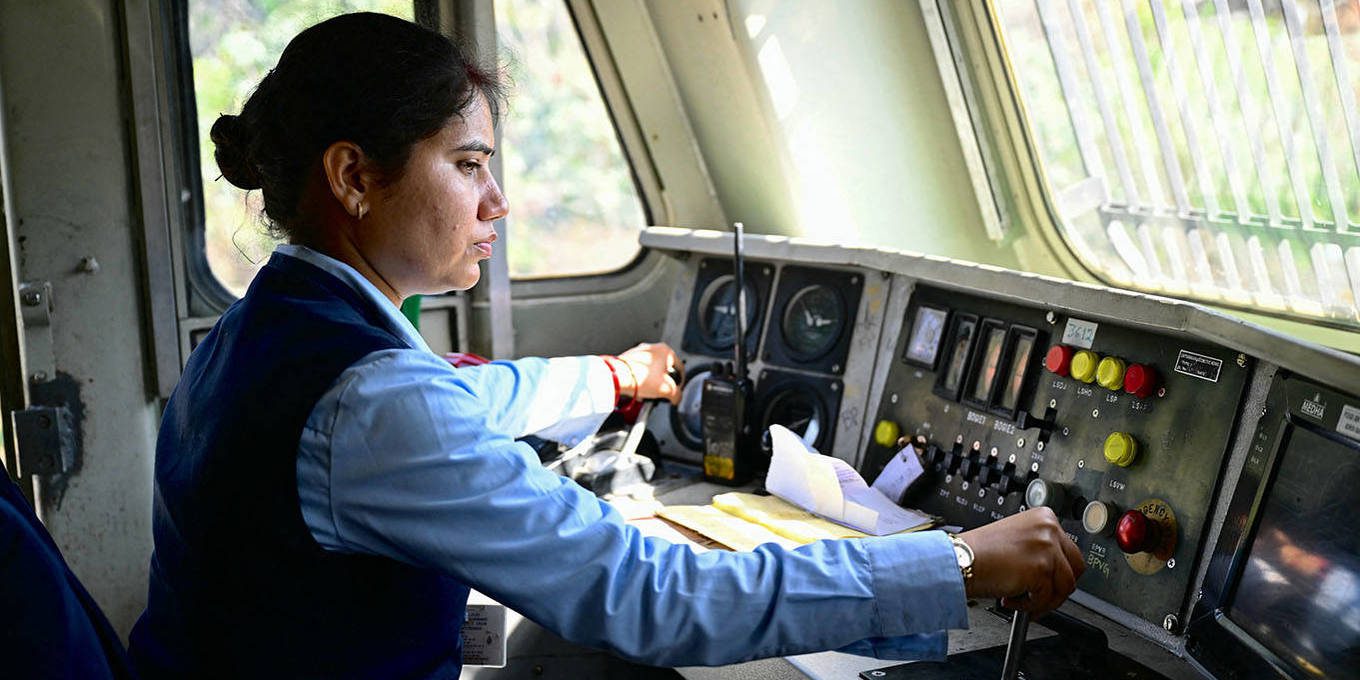
Delhi is among India’s most educated cities for women, yet its female workforce participation rate is far below the national average of approximately 35%. A district-level study commissioned by Veil for Women, conducted across 11 districts of Delhi and engaging nearly 3,000 women, has uncovered findings that challenge the familiar explanation that social norms and family resistance are the primary barriers to women’s employment.
The study found that the widely held assumption — that societal expectations are always the primary barrier — does not fully explain the gap. Nearly half the women surveyed reported requiring constant adjustment, recognition, and compromise in their working lives. A significant finding was that many educated women still assume entry-level paid work is “too low” for their qualifications, creating a mismatch between expectations and available opportunities. The inability to control work hours emerged as a central constraint — not the nature of work itself, but women’s inability to manage unpredictable schedules around care responsibilities.
The study highlights how care responsibilities run through women’s lives like a constant thread, whether or not they are employed. Globally, women spend three times as many hours as men on unpaid care work. This structural inequality persists despite the Indian Constitution’s robust framework of equality provisions, from Article 14’s guarantee of equality before law to Article 39(d)’s directive for equal pay for equal work.
Constitutional & Legal Framework
Fundamental Rights:
- Article 14: Equality before law and equal protection of laws
- Article 15: Prohibition of discrimination on grounds of religion, race, caste, sex, or place of birth
- Article 15(3): Enables State to make special provisions for women and children
- Article 16: Equality of opportunity in matters of public employment
Directive Principles of State Policy:
- Article 39(a): Equal right to adequate means of livelihood for men and women
- Article 39(d): Equal pay for equal work for both men and women
- Article 42: Just and humane conditions of work and maternity relief
- Article 43: Living wage and decent standard of life for workers
Key Legislation: Equal Remuneration Act 1976 (now subsumed under Code on Wages 2019), Maternity Benefit Act 1961 (amended 2017 — 26 weeks paid leave), Sexual Harassment of Women at Workplace Act 2013 (Vishaka guidelines codified).
CLAT Angle: Why This Matters
- Legal Reasoning: The gap between constitutional guarantees (Article 14, 15, 16) and ground reality is a rich area for CLAT passage-based questions on gender equality
- Constitutional Law: Understanding the difference between formal equality (Article 14) and substantive equality (Article 15(3) enabling provisions) is critical
- GK Section: Female workforce participation statistics, unpaid care work data, and government schemes for women’s employment are directly testable
- Social Justice: The intersection of education, employment, and gender — connecting constitutional provisions to lived experiences — is a CLAT favourite
Key Facts at a Glance
| City | Delhi |
| Study By | Veil for Women |
| Coverage | 11 districts, ~3,000 women |
| National FWPR | ~35% (Delhi much lower) |
| Central Constraint | Inability to control work hours |
| Unpaid Care Gap | Women spend 3x more hours than men globally |
| Key Articles | Art 14, 15, 16, 39(a)(d), 42 |
| Maternity Leave | 26 weeks (Maternity Benefit Amendment Act 2017) |
Mnemonic: CARE EQUAL
- C – Care responsibilities (unpaid work burden on women)
- A – Article 14, 15, 16 equality framework
- R – Reality gap between education and employment
- E – Equal pay directive (Article 39(d))
- E – Eleven districts of Delhi surveyed
- Q – Qualification mismatch (educated women vs entry-level jobs)
- U – Unpredictable schedules as central barrier
- A – Article 42 (just and humane conditions + maternity relief)
- L – Labour force participation far below national average
Practice Quiz — 10 CLAT-Style Questions
Click an option to reveal the answer and explanation.