
CURRENT AFFAIRS | MARCH 24, 2026
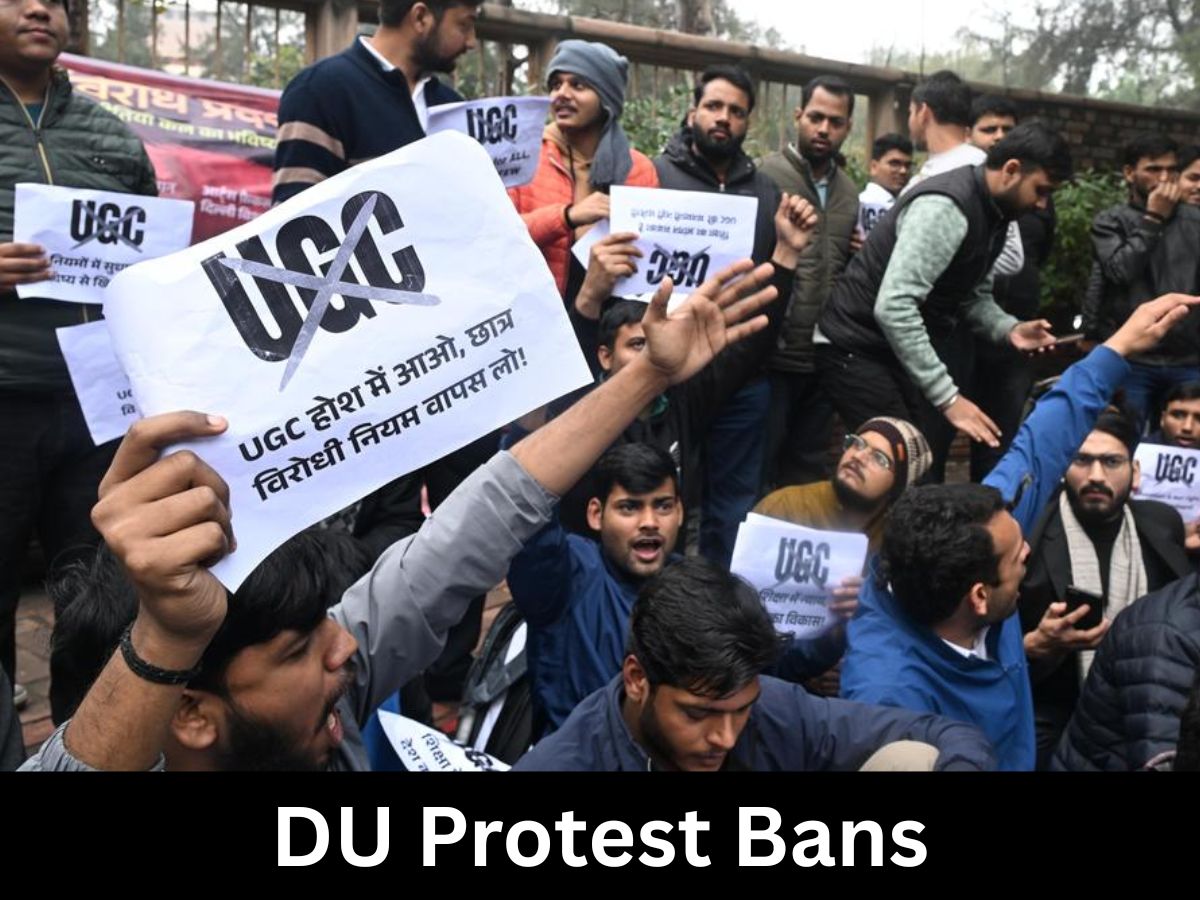
Delhi University has introduced stricter norms governing campus assemblies, protests, and gatherings — requiring prior written permission from the Proctor’s Office and banning assemblies near examination halls and administrative blocks. The move has triggered a constitutional debate on whether universities can impose blanket restrictions on the right to assemble peacefully guaranteed under Article 19(1)(b) of the Constitution.
⚖️ Constitutional Framework
- Article 19(1)(b) — Right to assemble peaceably and without arms
- Article 19(3) — State may impose reasonable restrictions in the interests of public order and sovereignty
- Article 19(1)(a) — Freedom of speech and expression (linked to protest rights)
- Blanket ban ≠ Reasonable restriction — SC has consistently held that total prohibition is disproportionate
The Supreme Court in Ramlila Maidan Incident v. Home Secretary (2012) held that citizens have a fundamental right to assembly and protest, subject only to reasonable restrictions. The Court emphasised that restrictions must be proportionate, not arbitrary or blanket. In Mazdoor Kisan Shakti Sangathan v. Union of India (2018), the Court upheld the right to protest at Jantar Mantar but with reasonable conditions — establishing that the state must balance public order with fundamental freedoms.
🎯 CLAT Angle — Why This Matters
Legal Reasoning passages may present a scenario where an institution restricts assembly and ask you to evaluate whether the restriction is reasonable under Article 19(3). The key test is proportionality — does the restriction serve a legitimate aim, and is it the least restrictive means? GK questions may test your knowledge of landmark cases on protest rights. This topic connects to broader themes of institutional autonomy vs. fundamental rights.
📋 Key Facts at a Glance
| What happened | DU imposed prior-permission requirement and zone-based bans on campus assemblies |
| Constitutional right | Article 19(1)(b) — peaceful assembly without arms |
| Restriction power | Article 19(3) — reasonable restrictions for public order |
| Key precedent | Ramlila Maidan (2012) — blanket ban is unconstitutional |
| CLAT relevance | Legal Reasoning (proportionality test), GK (protest rights cases) |
🧠 Mnemonic — “RAMP” for Assembly Rights
Right under Art 19(1)(b) • Article 19(3) allows restrictions • Must be proportionate, not blanket • Precedent: Ramlila Maidan
Practice Quiz — 10 CLAT-Style Questions
Click an option to reveal the answer and explanation.
📰 Source: The Indian Express, 24 March 2026 • CLAT Gurukul Daily Current Affairs