
CURRENT AFFAIRS | 4 MAY 2026
CLAT GK + CONSTITUTIONAL LAW & RELEVANT AREA
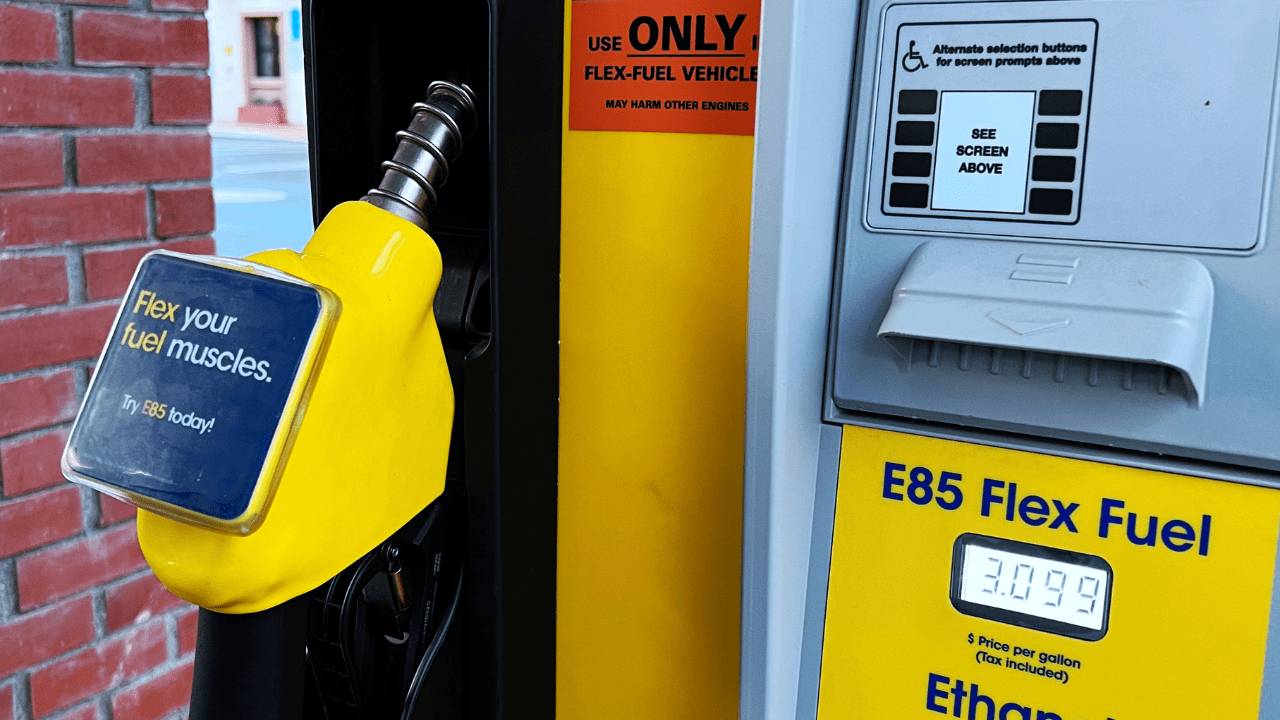
The Ministry of Road Transport and Highways (MoRTH) on May 3 issued a draft notification recognising E85 (85% ethanol) and E100 (near-pure ethanol) as automotive fuels under the Central Motor Vehicles Rules, 1989. This is the next step beyond the E20 (20% ethanol) mandate already in force from April 2026. Flex-fuel vehicles can run on E85/E100; manufacturer compatibility for post-April 2023 fleets is partial. Ethanol prices ~Rs 60.73/litre vs petrol Rs 89/litre ex-refinery — directly cutting India’s crude import bill.
India achieved its 20% Ethanol Blending Programme target five years ahead of schedule. The push to E85/E100 places India among a small group of flex-fuel-friendly economies (Brazil, US, Sweden). For CLAT 2027 aspirants, this is a rich environmental-law plus DPSP plus international-commitments topic touching Articles 48A, 51A(g), the Panchamrit pledge, and the broader National Biofuel Policy 2018 architecture.
Constitutional & Statutory Framework
- Article 48A (DPSP) — State to protect and improve the environment.
- Article 51A(g) — fundamental duty of every citizen to protect the natural environment.
- Motor Vehicles Act, 1988 + CMVR 1989 — framework for vehicle standards, fuel specifications.
- Environment (Protection) Act, 1986 — umbrella legislation for emission norms, EPR rules.
- National Biofuel Policy, 2018 — categorises feedstocks (1G sugar/starch, 2G cellulosic, 3G algae); sets blending targets.
- End-of-Life Vehicle Rules, 2025 — EPR notification under EP Act 1986.
CLAT Angle — Why This Matters
Three traps to watch in any Legal Reasoning passage on biofuels:
- Ethanol blending ≠ biodiesel. Ethanol is for petrol engines; biodiesel (from used cooking oil, jatropha) is for diesel engines. Different feedstocks, different policy instruments.
- Article 48A is a DPSP, not a fundamental right. Non-justiciable directly, but the SC has read it together with Article 21 in M.C. Mehta cases to ground environmental rights.
- Food vs fuel debate: Sugarcane and maize-based ethanol diverts food crops. India’s 2018 policy permits damaged-rice from FCI godowns precisely to dodge this critique.
Key Facts at a Glance
| Notification Date | May 3, 2026 (draft) |
| Issued By | MoRTH |
| Statute Amended | Central Motor Vehicles Rules, 1989 |
| New Fuels Recognised | E85 (85% ethanol), E100 (near-pure ethanol) |
| Existing Mandate | E20 in force from April 2026 |
| Ethanol Price | Rs 60.73/litre |
| Petrol Ex-Refinery | Rs 89/litre |
| Net-Zero Target | 2070 (Panchamrit, COP26 Glasgow) |
| Policy Framework | National Biofuel Policy 2018 |
Mnemonic — FUEL
Flex-fuel vehicles — Use of biofuel feedstock — Eighty-five percent ethanol (E85) — Launch via EBP roadmap.
The Larger Climate Frame
India’s Panchamrit pledge at COP26 Glasgow (November 2021) committed to: 500 GW non-fossil capacity by 2030, 50% electricity from renewables by 2030, 1 billion tonne carbon emission reduction by 2030, 45% reduction in carbon intensity of GDP by 2030, and net-zero by 2070. Ethanol blending is a key lever for the second and third pledges, contributing roughly 60 MMT of CO2 reduction. The challenge ahead: scaling 2G cellulosic ethanol (less food-vs-fuel friction) and ensuring flex-fuel vehicle availability across price segments.
Test Yourself: 10 CLAT-Style MCQs
Lock in your understanding with this concept-check quiz.
Practice Quiz — 10 CLAT-Style Questions
Click an option to reveal the answer and explanation.