CURRENT AFFAIRS | MARCH 24, 2026
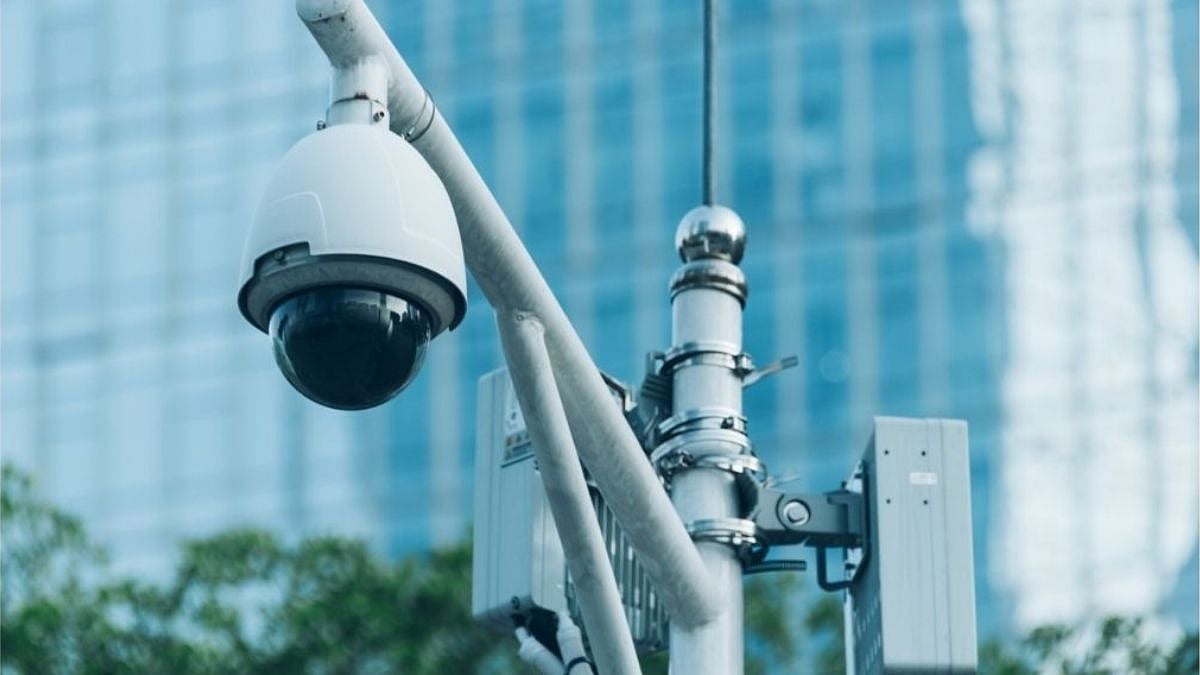
Mumbai Railways has deployed 463 CCTV cameras equipped with facial recognition technology across 114 railway stations, marking one of India’s largest mass surveillance rollouts. The system scans commuter faces in real time, matches them against a Railway Protection Force database, and triggers automatic alerts for flagged individuals. It has helped track missing children and solved a stalking case involving a Portuguese tourist.
⚖️ Constitutional & Legal Framework
- Article 21 — Right to life includes right to privacy, informational privacy, bodily autonomy
- Article 19(1)(d) — Freedom of movement; mass surveillance may create a chilling effect
- K.S. Puttaswamy v. UOI (2017) — 9-judge bench: Right to Privacy is fundamental under Art 21; three-part test: legality, legitimate aim, proportionality
- DPDP Act, 2023 — Personal data processing requires consent or legitimate use; exemptions for state security
- Section 69, IT Act 2000 — Framework for electronic surveillance and interception
The deployment raises profound constitutional questions. In K.S. Puttaswamy v. UOI (2017), the Supreme Court laid down a three-part test — legality, legitimate aim, and proportionality — for any restriction on privacy. Mass facial surveillance raises concerns about function creep (data collected for safety repurposed for unrelated ends). Critically, India has no standalone facial recognition legislation, creating a regulatory gap. The EU AI Act bans real-time facial recognition in public spaces — a sharp contrast to India’s approach.
🎯 CLAT Angle — Why This Matters
Legal Reasoning: Passages presenting a surveillance scenario — apply Puttaswamy proportionality test. GK: DPDP Act 2023, Article 21 jurisprudence, IT Act 2000. RC: Balance between public safety and individual privacy. Comparative law: EU AI Act ban vs India’s approach.
📋 Key Facts at a Glance
| Deployment | 463 CCTV cameras across 114 Mumbai railway stations |
| Privacy landmark | Puttaswamy (2017) — three-part test for privacy restrictions |
| Regulatory gap | No standalone facial recognition law in India |
| Comparison | EU AI Act bans real-time FRS in public spaces |
| Data law | DPDP Act 2023 governs personal data processing |
Key Terms and Definitions
| Term | Definition |
|---|---|
| Facial Recognition System | AI tech that identifies individuals by analysing facial features against a stored database |
| Function Creep | Expansion of a system beyond its original purpose (e.g., safety cameras used for general surveillance) |
| Proportionality Test | Judicial standard requiring restrictions on rights be proportional and least restrictive means available |
| Chilling Effect | Suppression of rights exercise due to fear of surveillance or consequences |
🧠 Mnemonic — “FACE” for Privacy vs Surveillance
Function creep risk • Article 21 privacy right • Consent under DPDP Act • EU bans real-time FRS
Practice Quiz — 10 CLAT-Style Questions
Click an option to reveal the answer and explanation.
📰 Source: The Indian Express, 24 March 2026 • CLAT Gurukul Daily Current Affairs