
CURRENT AFFAIRS | 20 APRIL 2026
CLAT GK + CONSTITUTIONAL LAW & RELEVANT AREA
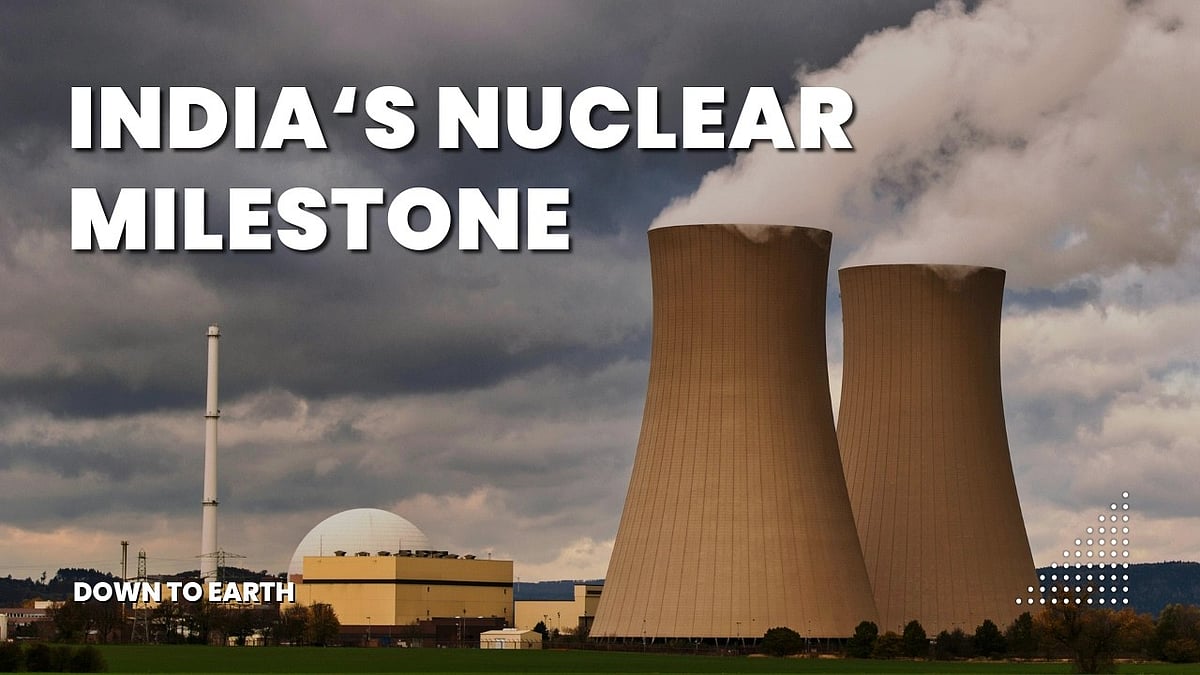
On 6 April 2026 at 20:25 hrs, India quietly crossed a 50-year strategic finish line. The 500 MWe Prototype Fast Breeder Reactor (PFBR) at Kalpakkam, Tamil Nadu attained first criticality — putting India into a club of nations (only Russia so far) operating commercial fast-breeders. NPCIL Chairman Bhuwan Chandra Pathak confirmed the milestone and signalled opening the civil nuclear sector to private capital. For CLAT, this sits at the intersection of Art 48A, Union List Entry 6, and the 2008 123 Agreement — a dream passage.
What happened?
- India’s indigenously built 500 MWe PFBR attained first criticality on 6 April 2026.
- Built by BHAVINI (Bharatiya Nabhikiya Vidyut Nigam Ltd), technology by IGCAR (Dept of Atomic Energy).
- Fuel: Uranium-Plutonium MOX with a U-238 blanket that can later be swapped for a Th-232 blanket to breed U-233.
- Current nuclear capacity: ~8 GWe (24 reactors); target 22 GWe by 2031-32 and 54 GWe by 2047.
- NPCIL Chairman B. C. Pathak announced opening the sector to private participation.
- Validates Homi Bhabha’s three-stage nuclear programme.
Constitutional Framework
- Union List Entry 6: Atomic energy and mineral resources necessary for it.
- Atomic Energy Act 1962: Central government monopoly; AERB as regulator.
- CLND Act 2010: Civil Liability for Nuclear Damage — operator strict liability + limited supplier liability via Sec 17(b).
- 123 Agreement (2008): India-US civil nuclear deal; NSG waiver.
- Art 48A + Art 51(c): Environmental protection + respect for international law.
- Art 253: Parliament’s power to implement international treaties.
- Key case: G. Sundarrajan v UoI (2013) — the Kudankulam verdict on nuclear safety and Art 21.
CLAT 2027 Angle
Only the Centre can legislate on atomic energy (List I Entry 6) — States have zero competence. But the Kudankulam (2013) line holds that environmental and land-use clearances at State/local level remain valid — these are not atomic regulation per se. Expect a passage testing whether the Tamil Nadu PCB can refuse NOC to BHAVINI: the answer turns on scope — environment yes, reactor design no. Also examine CLND Sec 17(b) supplier liability: it is the specific clause that scared away Westinghouse and GE.
Key Facts at a Glance
| Reactor | 500 MWe Prototype Fast Breeder Reactor (PFBR) |
| Site | Kalpakkam, Tamil Nadu |
| Criticality date | 6 April 2026, 20:25 hrs |
| Builder / R&D | BHAVINI / IGCAR (DAE) |
| Fuel | U-Pu MOX + U-238 blanket (future: Th-232) |
| Current nuclear capacity | ~8 GWe (24 reactors) |
| Target 2031-32 / 2047 | 22 GWe / 54 GWe |
| Regulator | AERB (under AEA 1962) |
Mnemonic: BHABHA
- B — Breeds U-233 from thorium blanket
- H — Homi’s three-stage dream realised
- A — Atomic Energy Act 1962 base
- B — Blanket thorium-232 (stage 3 eventually)
- H — High plutonium core loading
- A — AERB regulates
Test Yourself: 10-Question Current Affairs Quiz
Attempt all 10 — balanced difficulty, all four options distributed.
Practice Quiz — 10 CLAT-Style Questions
Click an option to reveal the answer and explanation.
Final Takeaway
Revise this topic twice before CLAT 2027 — once for the factual trigger, once for the constitutional-law layering. If you cracked 7/10 on the quiz above, you are CLAT-ready on this story. Keep following CLAT Gurukul for daily decoder pieces like this one.