

CURRENT AFFAIRS | MARCH 2026
CLAT Relevance
• GK Section — Ester Boserup, WID/GAD approaches, UN Decade for Women, unpaid labour statistics
• Legal Reasoning — Gender discrimination, property rights, labour law, de jure vs de facto concepts
• Key Terms — Feminisation, de jure/de facto female-headed households, WID, GAD, 87% unpaid labour
• GK Section — Ester Boserup, WID/GAD approaches, UN Decade for Women, unpaid labour statistics
• Legal Reasoning — Gender discrimination, property rights, labour law, de jure vs de facto concepts
• Key Terms — Feminisation, de jure/de facto female-headed households, WID, GAD, 87% unpaid labour
Academic Origins — Ester Boserup’s Pioneering Work
The scholarly study of women in agriculture traces back to Ester Boserup, a Danish economist who published “Woman’s Role in Economic Development” in 1970.
- Women’s agricultural contributions were systematically invisible in economic data
- Development policies designed without considering women often worsened their economic position
- Boserup challenged the assumption that modernisation automatically benefits women
UN Decade for Women and WID Approach
Key Development Frameworks
• Boserup’s work inspired the UN Decade for Women (1976-1985)
• This established the “Women in Development” (WID) approach — integrating women into existing economic structures
• WID was later supplemented by the Gender and Development (GAD) approach — which addresses structural inequalities rather than just inclusion
• Boserup’s work inspired the UN Decade for Women (1976-1985)
• This established the “Women in Development” (WID) approach — integrating women into existing economic structures
• WID was later supplemented by the Gender and Development (GAD) approach — which addresses structural inequalities rather than just inclusion
Female-Headed Households in Rural India
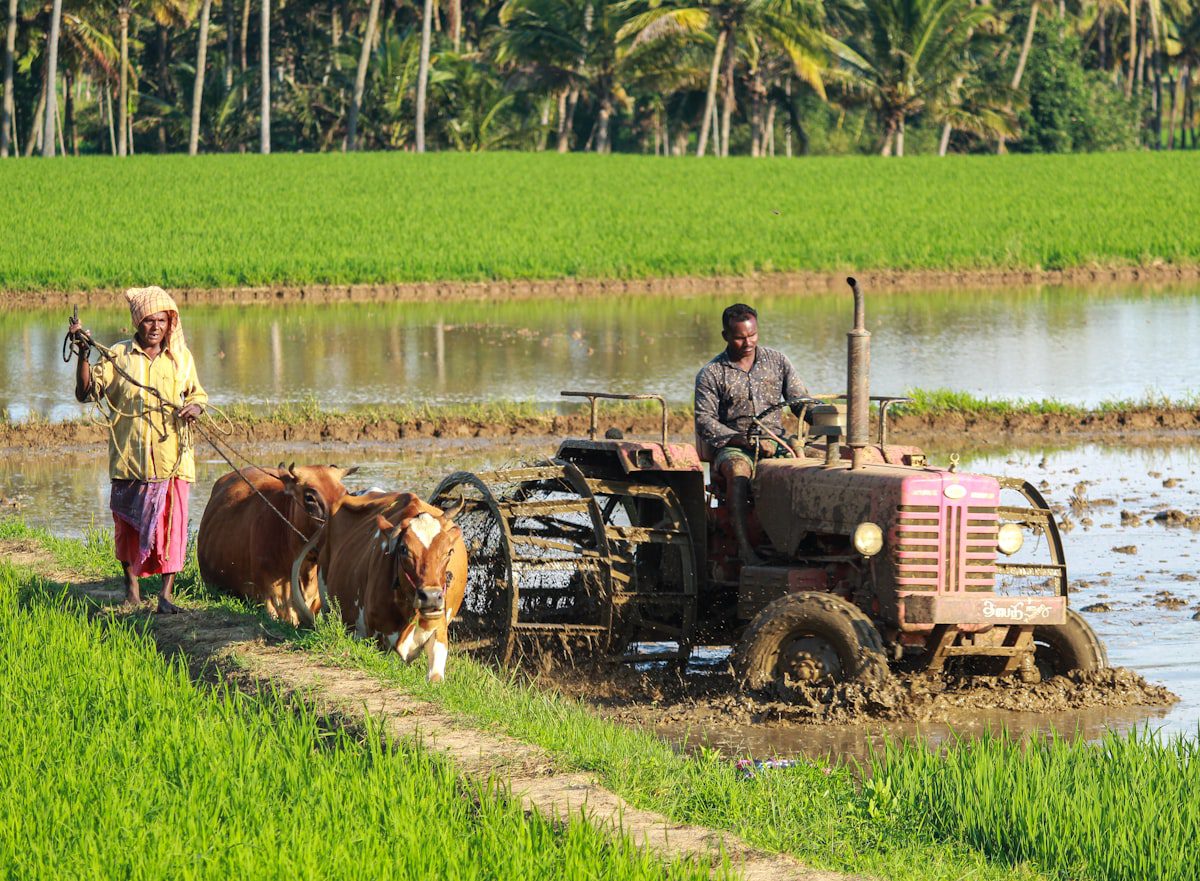
The feminisation of agriculture is closely linked to the rise of female-headed farming households, which are of two types:
Legal Distinction — Important for CLAT
• De jure female-headed: Women become household heads due to widowhood, divorce, or abandonment — permanent male absence
• De facto female-headed: Men have migrated for urban employment but retain nominal household head status — women manage all farming decisions in practice
• De jure female-headed: Women become household heads due to widowhood, divorce, or abandonment — permanent male absence
• De facto female-headed: Men have migrated for urban employment but retain nominal household head status — women manage all farming decisions in practice
Both categories face similar challenges: limited credit access, inadequate extension services, and exclusion from farmer welfare schemes designed around male land-title holders.
Want structured CLAT preparation? Try our free 5-day Bodh Demo Course with live classes and expert guidance. Start Free →
The Burden of Unpaid Labour
- 87% of women workers in India are in unpaid labour
- Women’s farm work is classified as “family labour” — invisible in national economic accounting
- This creates a cycle where women’s contributions are neither measured nor compensated
Mnemonic — Timeline
1970-1976-WID-GAD: Boserup’s book (1970) led to UN Decade for Women (1976-85), which created WID, later evolved into GAD
1970-1976-WID-GAD: Boserup’s book (1970) led to UN Decade for Women (1976-85), which created WID, later evolved into GAD
Source: UPSC Essentials, The Indian Express — March 2026
Practice Quiz
Test your understanding with these 10 MCQs:
Practice Quiz — 10 CLAT-Style Questions
Click an option to reveal the answer and explanation.