
CURRENT AFFAIRS | 2 MAY 2026
CLAT GK + CONSTITUTIONAL LAW & RELEVANT AREA
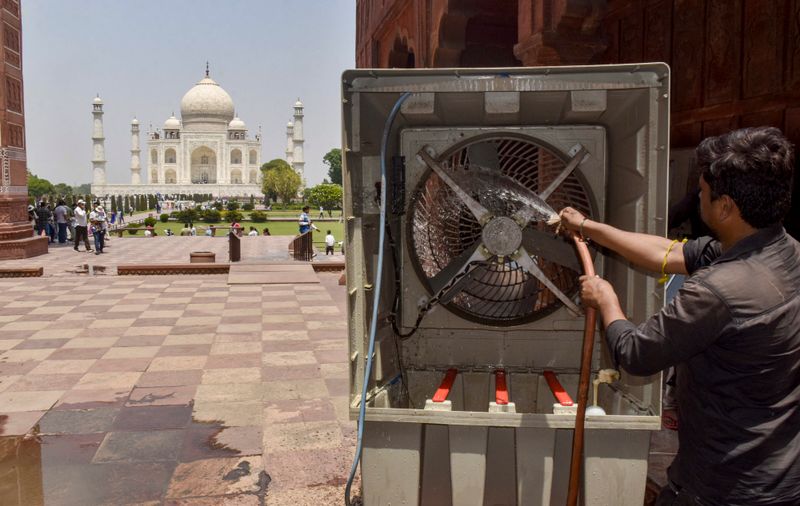
The 16th Finance Commission has recommended that heatwaves be added to the list of “nationally notified disasters” — a small statutory tweak with very large fiscal and federal consequences. As the Indian Express Ideas page put it, the move would unlock central-government financing through the National Disaster Response Fund (NDRF) for states battling deadly summer temperatures, ending the awkward limbo where states could only carve out up to 10 per cent of the State Disaster Response Fund (SDRF) for “state-specific disasters” like heatwaves. Given that the IMD has warned that Summer 2026 will see above-normal heatwave days across central and northern India, the timing of the recommendation is anything but academic.
The legal scaffolding sits in the Disaster Management Act, 2005. The Act created a three-tier institutional architecture — the National Disaster Management Authority (NDMA), chaired by the Prime Minister under Section 3; State Disaster Management Authorities under the Chief Ministers; and District Disaster Management Authorities. Section 11 of the Act mandates a National Disaster Management Plan; Section 46 establishes the NDRF (Fund) — distinct from the NDRF (Force) under Section 44. Currently the centrally notified list includes cyclones, droughts, earthquakes, floods, tsunamis, hailstorms, landslides, avalanches, cloudbursts, pest attacks, frost and cold waves — but not heatwaves, an omission that has cost Indian cities dearly.
The constitutional anchor is Article 21: the right to life has been judicially expanded since Subhash Kumar v Bihar (1991) to include the right to a clean and healthy environment, and the MC Mehta line of cases has built doctrines of absolute liability, polluter pays, and public trust around it. India’s on-the-ground response has been the Heat Action Plan (HAP) — Ahmedabad pioneered the country’s first HAP in 2013, and over 30 cities now have one. Adding heatwaves to the nationally notified list would for the first time put HAPs on the same fiscal footing as cyclone or flood response — converting a slow administrative ambition into hard, audited central money.
Constitutional & Legal Framework
- Disaster Management Act, 2005 — three-tier authority (NDMA / SDMA / DDMA).
- NDMA — chaired by PM, Section 3 of DM Act.
- Section 11 — National Disaster Management Plan.
- NDRF (Fund) — Section 46; distinct from NDRF (Force), Section 44.
- Article 21 + Subhash Kumar v Bihar (1991) — right to clean environment.
- MC Mehta cases — absolute liability, polluter pays, public trust doctrines.
- 16th Finance Commission — heatwave inclusion recommendation.
CLAT Angle — Why This Matters
- SDRF vs NDRF distinction is a high-yield exam topic — note the 10 per cent state-specific carve-out.
- NDRF (Fund) vs NDRF (Force) is a classic trap question.
- Article 21 + Subhash Kumar (1991) + MC Mehta = the holy trinity of Indian environmental law.
- Ahmedabad as India’s first HAP city (2013) is a quick-recall fact.
Key Facts at a Glance
| Item | Detail |
|---|---|
| Body | 16th Finance Commission |
| Recommendation | Notify heatwaves nationally |
| Current SDRF cap (state-specific) | Up to 10% |
| DM Act | 2005 |
| NDMA chair | Prime Minister |
| India’s first HAP | Ahmedabad (2013) |
Mnemonic
HEAT-FC — Heatwave notification, Environment under Art. 21, Ahmedabad first HAP, Ten per cent SDRF cap; Finance Commission 16, Central NDRF unlock.
Practice Quiz — 10 CLAT-Style Questions
Click an option to reveal the answer and explanation.