
CURRENT AFFAIRS | MAY 8, 2026
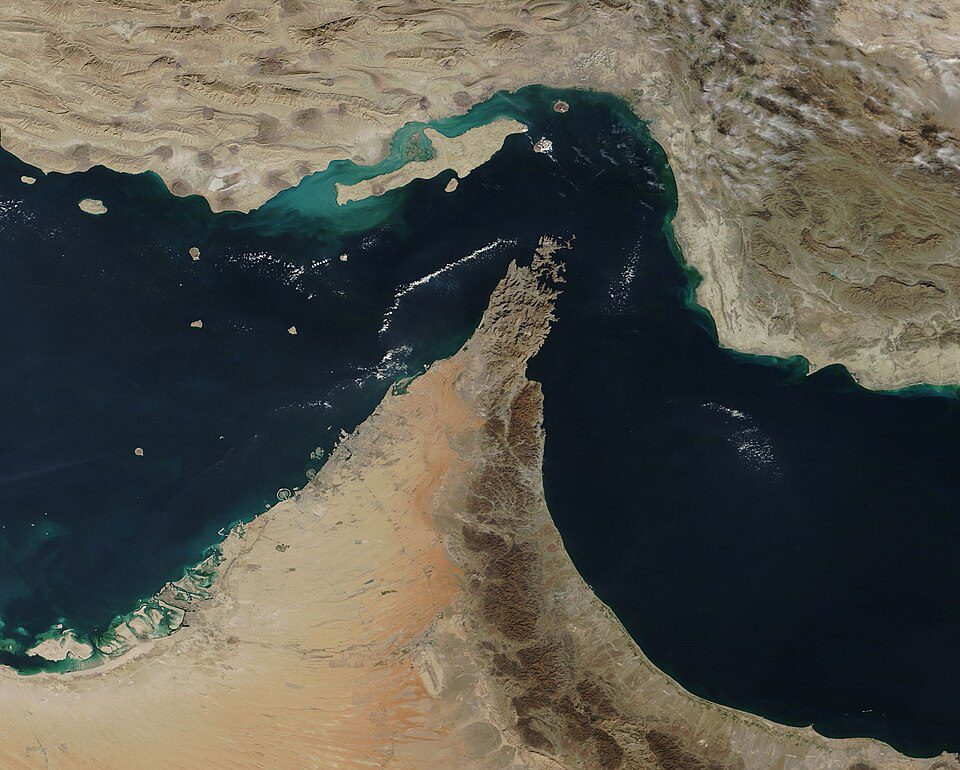
Iran has established a Hormuz Management Agency to regulate, manage, and potentially tax passage through the Strait of Hormuz — where 21% of the world’s petroleum trade transits daily. The move raises immediate questions under UNCLOS (UN Convention on the Law of the Sea) regarding the right of transit passage through international straits, and has alarmed global shipping nations including India.
Article 51 (DPSP) commits India to promoting international law — making UNCLOS compliance directly relevant. UNCLOS 1982 is the governing international law. Articles 34-45 UNCLOS deal with straits used for international navigation. Art. 37 UNCLOS specifies that transit passage applies to straits connecting one area of high seas/EEZ to another. Art. 38 UNCLOS establishes the right of transit passage — ships and aircraft of all states enjoy this right. Art. 44 UNCLOS prohibits bordering states from suspending transit passage (unlike innocent passage, which can be suspended for security). The IMO (International Maritime Organization) — a UN specialized agency established in 1958 — governs international shipping norms.
What Happened?
Iran created the Hormuz Management Agency amid ongoing nuclear negotiations with the US. The agency is empowered to regulate maritime passage through the Strait of Hormuz — the narrow waterway (approximately 33 km at its narrowest) connecting the Persian Gulf to the Gulf of Oman. Iran contends it is exercising coastal state jurisdiction; international shipping nations argue this violates UNCLOS transit passage rights. The IMO has been asked to intervene. This comes as Iran-US nuclear talks continue, with the Hormuz gambit seen as leverage in negotiations. India, which imports 25% of its oil through Hormuz, has expressed concern through diplomatic channels.
UNCLOS Framework You Must Know
- Territorial Waters (Art. 3): 12 nautical miles — full sovereignty of coastal state; innocent passage applies.
- Contiguous Zone: Up to 24 nautical miles — limited jurisdiction (customs, immigration, sanitation).
- EEZ (Art. 55-75): Up to 200 nautical miles — sovereign rights over resources; other states retain freedom of navigation.
- High Seas: Beyond EEZ — freedom of navigation, overflight, fishing for all states.
- Transit Passage (Art. 37-44): Through international straits — cannot be suspended; submarines may travel submerged.
- Innocent Passage: Through territorial waters — can be suspended for security; submarines must surface.
CLAT tests the difference between transit passage and innocent passage — this is a high-frequency distinction. Key rules: (1) Transit passage through international straits CANNOT be suspended by the bordering state. (2) Innocent passage through territorial waters CAN be suspended for security. (3) In transit passage, submarines may proceed submerged. In innocent passage, they must surface and show their flag. (4) Bordering states cannot charge fees for transit passage under UNCLOS. (5) IMO is a UN specialized agency — not the UN itself. Know these distinctions: territorial waters (12 nm) vs EEZ (200 nm) vs contiguous zone (24 nm).
| UNCLOS Zone | Width / Key Rule |
| Territorial Waters | 12 nm — full sovereignty; innocent passage applies; can be suspended |
| Contiguous Zone | 24 nm — limited jurisdiction (customs/immigration) |
| EEZ | 200 nm — sovereign resource rights; freedom of navigation for others |
| International Straits | Transit passage — CANNOT be suspended; submarines can be submerged |
| Art. 44 UNCLOS | Bordering states must not impede or suspend transit passage |
| Hormuz | Persian Gulf ↔ Gulf of Oman; 21% of world petroleum trade |
| IMO | UN specialized agency for international shipping; est. 1958 |
Transit passage cannot be suspended (international straits) — Innocent passage can be suspended (territorial waters) — Coastal state cannot charge fees for transit passage — EEZ extends 200 nm (exclusive economic zone, not exclusive navigation zone) — Submarines submerged in transit passage; must surface in innocent passage. Remember: Hormuz = transit passage zone = Iran cannot legally restrict passage.
Practice Quiz — 10 CLAT-Style Questions
Click an option to reveal the answer and explanation.