
CURRENT AFFAIRS | MARCH 27, 2026
CLAT GK + INTERNATIONAL RELATIONS & CONSTITUTIONAL LAW
What Happened?
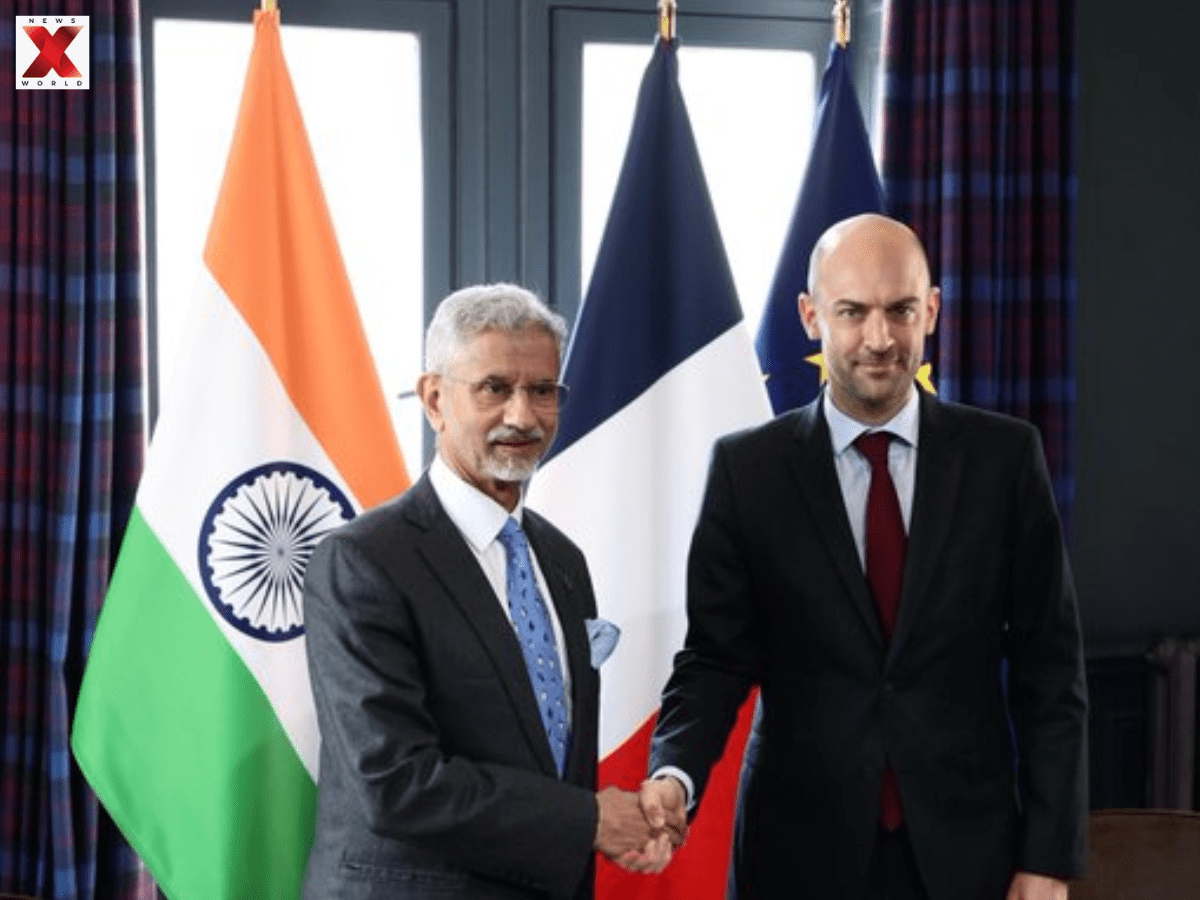
External Affairs Minister S. Jaishankar met French Foreign Minister Jean-Noel Barrot at the Abbaye des Vaux-de-Cernay near Paris on the sidelines of the G7 Foreign Ministers’ meeting on 26 March 2026. The two ministers agreed to work jointly to ensure the Strait of Hormuz is safe for international shipping.
The G7 ministers discussed “potential avenues for negotiation” on the Strait of Hormuz crisis, which has disrupted global energy supplies since late February 2026. India raised the Global South’s concerns about energy challenges, fertiliser supplies, and food security.
Jaishankar also stressed the urgency of UNSC reforms, streamlining peacekeeping operations, and strengthening humanitarian supply chains. PM Modi has confirmed his participation in the G7 Summit at Evian (15-17 June 2026). India, which holds the BRICS presidency in 2026, participated as a partner country invited by France (current G7 chair).
Iran has called the US terms “one-sided and unfair.” Brent crude surpassed $100/barrel on 8 March 2026 for the first time in four years, peaking at $126/barrel. PM Modi has scheduled a video conference with all Chief Ministers to discuss the West Asia impact on India.
Constitutional & Legal Framework
- Article 51 (DPSP) — Directs the State to promote international peace and security, maintain just relations between nations, and foster respect for international law and treaty obligations
- Article 253 — Empowers Parliament to make laws for implementing any treaty, agreement, or convention with any other country, even on subjects in the State List
- Article 73 — Executive power of the Union extends to matters on which Parliament has the power to make laws, including external affairs (Union List, Entry 10)
- Union List, Entry 14 — “Entering into treaties and agreements with foreign countries and implementing of treaties, agreements and conventions with foreign countries”
CLAT Angle — Why This Matters
- International Law: The Strait of Hormuz crisis raises questions about UNCLOS (freedom of navigation), the right of innocent passage, and the legality of maritime blockades under international humanitarian law
- DPSP vs Fundamental Rights: Article 51 (international peace) is a DPSP — non-justiciable but serves as a guiding principle for India’s foreign policy conduct
- Treaty-making power: India’s Constitution vests treaty-making power in the Executive (Article 73), but implementation requires Parliamentary legislation (Article 253) — a frequently tested CLAT topic
- Energy Security: India imports over 85% of its oil; Hormuz disruption directly impacts Article 39(b) considerations about equitable distribution of material resources
Key Facts at a Glance
| Event | G7 Foreign Ministers’ Meeting, France |
| Date | 26 March 2026 |
| G7 Members | US, UK, France, Germany, Italy, Canada, Japan |
| G7 Chair 2026 | France |
| Strait of Hormuz | Connects Persian Gulf to Gulf of Oman; ~20% of global oil transit |
| Brent Crude Peak | $126/barrel (March 2026) |
| India’s Role | Partner country at G7; BRICS President 2026 |
Mnemonic — “HORMUZ PEACE”
Hormuz strait crisis
Oil prices surge ($100+)
Reforms of UNSC demanded
Modi to attend G7 Summit (June)
Union List — external affairs
Zealous diplomacy — Article 51 DPSP
Parliament’s treaty power (Art 253)
Executive power (Art 73)
Article 39(b) — energy resource equity
Cooperation — India-France joint effort
Energy security for Global South
Practice Quiz
Practice Quiz — 10 CLAT-Style Questions
Click an option to reveal the answer and explanation.