
CURRENT AFFAIRS | APRIL 7, 2026
CLAT GK + SCIENCE & TECHNOLOGY
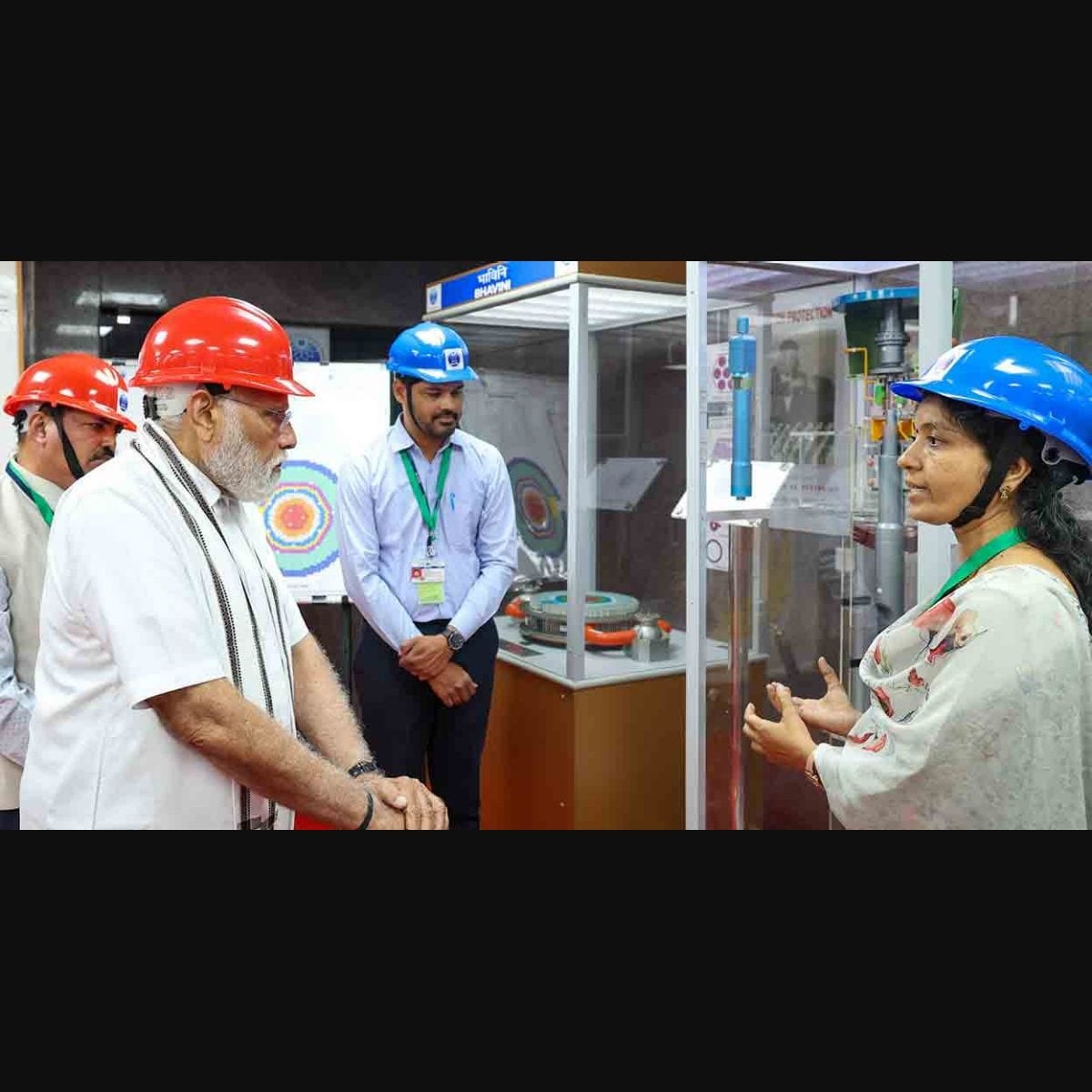
In a landmark achievement for India’s nuclear programme, the Prototype Fast Breeder Reactor (PFBR) at Kalpakkam, Tamil Nadu, has achieved criticality. Prime Minister Narendra Modi hailed this as a “defining step” for India’s energy future. With this milestone, India becomes only the second country in the world, after Russia, to have a commercial fast breeder reactor in operation.
This achievement is the culmination of decades of work that traces back to Dr. Homi Jehangir Bhabha’s vision of a three-stage nuclear power programme designed to leverage India’s abundant thorium reserves. The PFBR was developed by the Indira Gandhi Centre for Atomic Research (IGCAR) and is operated by Bharatiya Nabhikiya Vidyut Nigam Limited (BHAVINI).
For CLAT 2027 aspirants, this topic sits at the intersection of science and technology, constitutional law (Union List, Article 73), and India’s international nuclear agreements — all of which are high-frequency question areas in the GK section.
Constitutional & Legal Framework
- Union List Entry 6: “Atomic energy and mineral resources necessary for its production” — makes atomic energy an exclusive subject of the Central Government
- Article 73: Executive power of the Union extends to matters on which Parliament can make laws, including atomic energy
- Atomic Energy Act, 1962: Provides for the development, control, and use of atomic energy for the welfare of people of India
- Environment Protection Act, 1986: Governs environmental clearances for nuclear installations
- India-US Civil Nuclear Deal (123 Agreement), 2008: Enabled India’s access to civilian nuclear technology
India’s Three-Stage Nuclear Power Programme
Dr. Homi Bhabha conceptualized India’s three-stage nuclear programme in the 1950s, strategically designed to utilize India’s limited uranium but vast thorium reserves:
- Stage 1 — Pressurised Heavy Water Reactors (PHWRs): Use natural uranium as fuel, producing plutonium as a by-product
- Stage 2 — Fast Breeder Reactors (FBRs): Use plutonium from Stage 1 as fuel, breed more plutonium and convert thorium-232 to uranium-233
- Stage 3 — Advanced Heavy Water Reactors: Will use thorium-232/uranium-233 cycle, tapping into India’s massive thorium reserves
The achievement of criticality at Kalpakkam marks India’s successful transition from Stage 1 to Stage 2, a milestone that has been in the making for over two decades.
What is a Fast Breeder Reactor?
A fast breeder reactor is a nuclear reactor that uses fast neutrons (without a moderator to slow them down) and “breeds” more fissile material than it consumes. The PFBR at Kalpakkam is a sodium-cooled fast reactor that uses a mixture of plutonium and uranium oxides as fuel. The term “breeder” comes from its ability to produce more fissile material (plutonium-239) than it consumes during the fission process.
Constitutional Significance: Atomic Energy Under the Union List
Under the Indian Constitution, atomic energy falls exclusively under the Central Government’s domain through Entry 6 of the Union List (Schedule VII). Article 73 ensures that the executive power of the Union extends to all matters on which Parliament has legislative competence. This means only the Central Government can make laws, policies, and executive decisions regarding nuclear energy — states have no legislative or executive jurisdiction over this subject.
India’s International Nuclear Position
India is not a signatory to the Nuclear Non-Proliferation Treaty (NPT) but has maintained a voluntary moratorium on nuclear testing since 1998. The India-US Civil Nuclear Deal (123 Agreement) signed in 2008 was a watershed moment that brought India into the mainstream of global nuclear commerce, allowing access to uranium fuel and reactor technology from the international market.
India is a member of the International Atomic Energy Agency (IAEA) and has signed safeguards agreements for its civilian nuclear facilities. The Nuclear Suppliers Group (NSG) granted India a special waiver in 2008, enabling nuclear trade despite India’s non-NPT status.
CLAT Angle: Why This Matters for CLAT 2027
- GK Section: Questions on India’s nuclear programme, three-stage plan, and the PFBR are highly probable
- Constitutional Law: Union List Entry 6, Article 73, and the exclusive central jurisdiction over atomic energy
- International Relations: NPT, India-US Nuclear Deal, NSG waiver, IAEA safeguards
- Science & Technology: Understanding of fast breeder reactor technology, criticality, and nuclear fuel cycle
- Legal Reasoning: Questions on the Atomic Energy Act 1962 and its regulatory framework
Key Facts for Quick Revision
| PFBR Location | Kalpakkam, Tamil Nadu |
| Operator | BHAVINI (Bharatiya Nabhikiya Vidyut Nigam Limited) |
| Research Centre | IGCAR (Indira Gandhi Centre for Atomic Research) |
| Reactor Type | Sodium-cooled fast breeder reactor |
| Fuel | Plutonium-239 and Uranium oxide mix |
| Three-Stage Vision | Dr. Homi J. Bhabha (1950s) |
| Atomic Energy Act | 1962 |
| India-US Nuclear Deal | 2008 (123 Agreement) |
| Only Other Country with Commercial FBR | Russia (BN-800, Beloyarsk) |
Mnemonic: “BHABHA FAST” for Nuclear Programme
B — BHAVINI (operator of PFBR)
H — Homi Bhabha (three-stage vision)
A — Atomic Energy Act 1962
B — Breeder reactor (breeds more fuel than consumes)
H — Heavy Water Reactors (Stage 1)
A — Agreement 123 (India-US Nuclear Deal 2008)
F — Fast neutrons (no moderator)
A — Article 73 + Entry 6 Union List
S — Sodium-cooled (coolant used)
T — Thorium (India’s ultimate goal, Stage 3)
Practice Quiz — 10 CLAT-Style Questions
Click an option to reveal the answer and explanation.