CURRENT AFFAIRS | MARCH 26, 2026
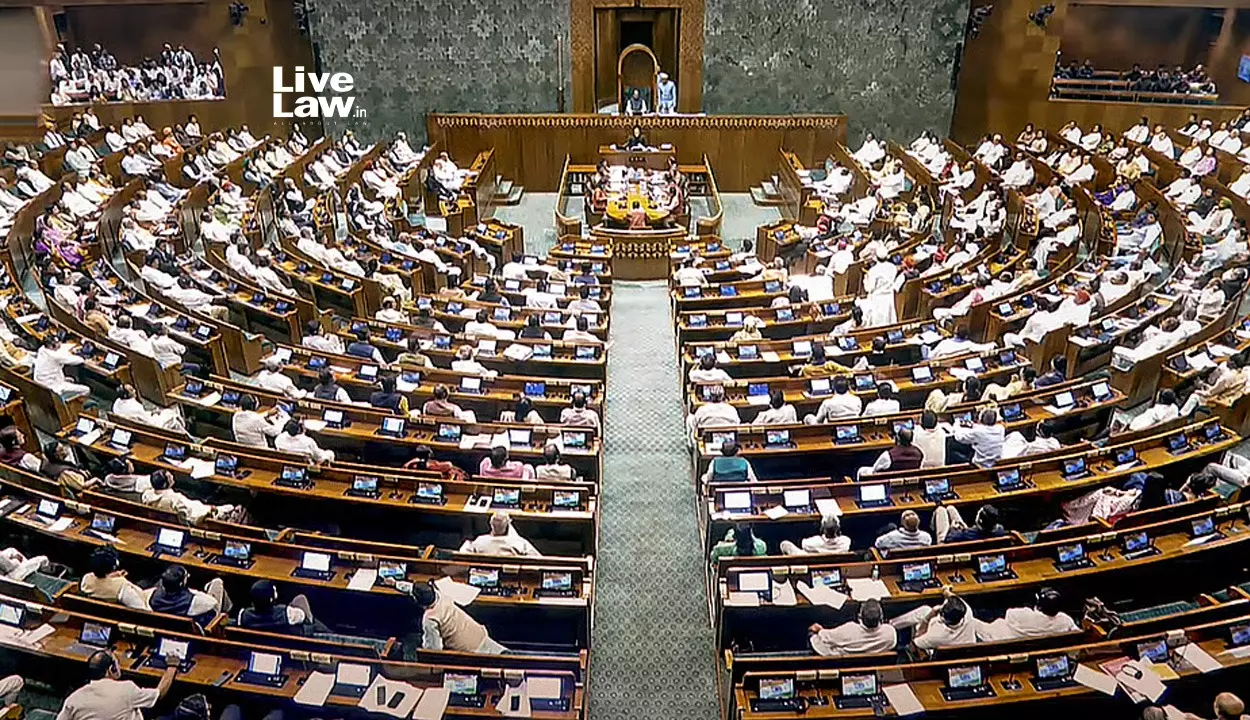
Parliament has passed the Transgender Persons (Protection of Rights) Amendment Bill, 2026, amending the controversial 2019 Act. The Bill, introduced by Social Justice and Empowerment Minister Virendra Kumar, was passed by both Lok Sabha and Rajya Sabha amid strong opposition protests and a walkout. The opposition’s demand to refer the Bill to a Select Committee was rejected by a voice vote.
Key Provisions of the Amendment Bill
- Definition Narrowed: Persons with “self-perceived gender identities” removed from the definition of “transgender person”
- Medical Board Certification: District Magistrate will issue identity certificate based on recommendation of a designated medical board headed by a Chief Medical Officer or Deputy CMO
- Stricter Penal Provisions: Introduces stronger punishment for offences involving forced conversion of individuals into transgender identities through mutilation or coercion
- Select Committee Demand Rejected: DMK MP Thiruchi Siva’s motion to refer to Select Committee was negatived
The NALSA Legacy: Self-Identification vs. State Certification
The central tension in this legislation goes back to the landmark NALSA v. Union of India (2014) judgment. The Supreme Court, in a unanimous decision by Justices KS Radhakrishnan and AK Sikri, recognized the right of transgender persons to self-identify their gender under Article 21 and directed the government to recognize them as the “third gender.” However, the 2019 Act departed from NALSA by requiring District Magistrate certification, and the 2026 Amendment further tightens this by adding a medical board requirement.
As Congress MP Renuka Chowdhury noted: “Self-identification cannot be taken away through bureaucratic certification.” Shiv Sena (UBT) MP Priyanka Chaturvedi called the Bill contrary to the NALSA verdict, while CPI(M)’s John Brittas called it a “black-letter day.”
Constitutional Framework
- Article 14 — Equality before law — transgender persons cannot be denied equal protection
- Article 15 — Prohibition of discrimination on grounds of sex — NALSA held “sex” includes gender identity
- Article 21 — Right to life and dignity — includes right to self-identification of gender (NALSA)
- Article 19(1)(a) — Freedom of expression — includes gender expression as held by the SC
- Article 16 — Equality of opportunity in public employment — cannot discriminate based on gender identity
Landmark Cases on Gender Identity
Key Cases
| NALSA v. UOI (2014) | Right to self-identification of gender; third gender recognition; Art. 14, 15, 16, 21 |
| Navtej Singh Johar v. UOI (2018) | Struck down Section 377 IPC; affirmed LGBTQ+ dignity under Art. 14, 15, 19, 21 |
| Supriyo v. UOI (2023) | Declined to legalize same-sex marriage but affirmed right against discrimination |
| K.S. Puttaswamy v. UOI (2017) | Right to privacy is a fundamental right — includes sexual orientation and gender identity |
CLAT Angle
Gender identity law is a recurring CLAT theme. Prepare:
- NALSA v. UOI (2014) — the ratio decidendi on self-identification
- How the 2019 Act departed from NALSA, and how the 2026 Amendment further departs
- Select Committee vs. Joint Parliamentary Committee — composition, role, binding nature
- Interpretation of “sex” under Articles 15 and 16 to include “gender identity”
- Tension between legislative action and judicial pronouncements — can Parliament override SC interpretation?
Select Committee vs. Joint Parliamentary Committee
The opposition demanded the Bill be referred to a Select Committee. Understanding the distinction:
- Select Committee: Members from ONE House only (Lok Sabha or Rajya Sabha); examines a specific Bill clause by clause
- Joint Parliamentary Committee (JPC): Members from BOTH Houses; can be constituted for Bills or investigations
- Both are ad hoc committees (formed for a specific purpose, dissolved after report)
- Their recommendations are advisory — the House is not bound to accept them
Mnemonic: NALSA Rights Framework
S-E-L-F: Self-identification (Art. 21 dignity) → Equality (Art. 14/15/16 non-discrimination) → Liberty of expression (Art. 19(1)(a) gender expression) → Freedom from stigma (Art. 21 right to live with dignity). The 2026 Amendment challenges the first element by replacing self-identification with state certification.
Practice Quiz
Practice Quiz — 10 CLAT-Style Questions
Click an option to reveal the answer and explanation.
Conclusion
The Transgender Persons Amendment Bill 2026 represents a significant departure from the NALSA judgment’s emphasis on self-identification. While the government argues the amendment provides “administrative clarity” and protection against forced conversion, critics contend it strips transgender persons of their constitutionally recognized right to self-identify. For CLAT aspirants, this is a critical topic at the intersection of fundamental rights, parliamentary law-making, and the tension between judicial pronouncements and legislative action.