

CURRENT AFFAIRS | 27 APRIL 2026
ART, CULTURE & PRESS FREEDOM | ARTICLE 19(1)(a) & 51A(f)
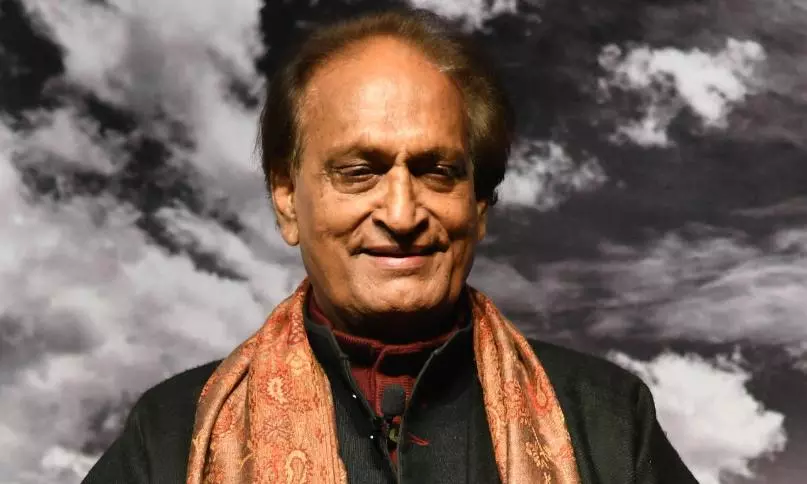
India lost one of its tallest visual chroniclers on 26 April 2026 with the passing of photojournalist Raghu Rai (b. 1942, Jhang, undivided Punjab), age 83. Cremated at Lodhi crematorium, Delhi, with tributes from PM Narendra Modi (“extraordinary sensitivity”), the President, and journalism fraternities worldwide. Rai was the first Indian invited to Magnum Photos in 1977 by Henri Cartier-Bresson — the world’s most prestigious photographer-owned cooperative, founded 1947.
Conferred the Padma Shri (1972) and Padma Bhushan (2009), Rai chronicled Indira Gandhi, the Bhopal Gas Tragedy 1984, the Bangladesh Liberation 1971, Operation Blue Star 1984, Mother Teresa, and the Dalai Lama. His 40+ books include A Day in the Life of India and Raghu Rai’s India. For CLAT this is a Culture/Awards anchor that opens onto Article 19(1)(a) press freedom and Article 51A(f) heritage duty.
Constitutional & Legal Framework
- Article 19(1)(a) — freedom of speech and expression includes freedom of the press (Romesh Thappar v State of Madras, 1950; Bennett Coleman v UoI, 1973)
- Article 19(2) — reasonable restrictions: sovereignty, public order, decency, morality, contempt, defamation
- Article 51A(f) — fundamental duty to value and preserve composite cultural heritage
- Padma Awards system, 1954 — Vibhushan, Bhushan, Shri (3 categories)
- Press Council Act, 1978 — statutory PCI, quasi-judicial powers
- Press and Registration of Books Act, 1867 — colonial-era licensing law (now superseded by PRP Act, 2023)
- MC Mehta v UoI (1986) — Absolute Liability doctrine post-Bhopal/Oleum (Rai’s Bhopal photos influenced the public-interest backdrop)
- Working Journalists Act, 1955 — wages and service conditions
Why This Matters for CLAT 2027
- Padma awards taxonomy is asked nearly every year — order, year of institution, current-year recipients
- Press freedom under Article 19(1)(a) is a passage-favourite, especially after the 2023 PRP Act
- Bhopal Gas Tragedy and the Absolute Liability doctrine (MC Mehta) is a marquee Tort Law question
- Cartier-Bresson’s “Decisive Moment” links to General Knowledge in Arts & Culture
- Article 51A(f) fundamental duty appears in 1-2 questions every CLAT
Key Facts at a Glance
| Item | Detail |
|---|---|
| Born / Died | 1942 (Jhang, undivided Punjab) / 26 April 2026, Delhi |
| Padma Shri | 1972 (Arts category) |
| Padma Bhushan | 2009 |
| Magnum Photos induction | 1977 (first Indian; invited by H Cartier-Bresson) |
| Defining works | Bhopal Gas Tragedy 1984, Bangladesh 1971, Operation Blue Star, Indira Gandhi, Mother Teresa |
| Books | 40+ including A Day in the Life of India, Raghu Rai’s India |
Mnemonic — “MAGNUM-PADMA”
Magnum Photos 1977 (first Indian) · Article 19(1)(a) press freedom · Gas Tragedy Bhopal 1984 (his most-circulated work) · Nehru-era documentary aesthetic · Undivided Punjab birthplace · Mother Teresa portraits. Then PADMA: 1954 institution, Vibhushan > Bhushan > Shri; Rai held Shri (1972) + Bhushan (2009).
Implications & The Road Ahead
Rai’s archive is now a cultural-heritage object under Article 51A(f); the Indira Gandhi National Centre for the Arts (IGNCA) and the National Gallery of Modern Art are reportedly negotiating preservation rights. The next constitutional question — already raised in academic press-freedom forums — is whether photojournalism in conflict zones (Manipur, Kashmir, Chhattisgarh) warrants stronger statutory protection beyond the 2023 PRP Act and the proposed Journalists Protection Bill. Watch for the 2026 Padma list and the next Press Council annual report.
Test Your Understanding — 10 CLAT-Style MCQs
Apply the constitutional anchors and current-affairs facts above. Each question has a detailed explanation.
Practice Quiz — 10 CLAT-Style Questions
Click an option to reveal the answer and explanation.






