

CURRENT AFFAIRS | APRIL 7, 2026
CLAT GK + CONSTITUTIONAL LAW & JUDICIARY
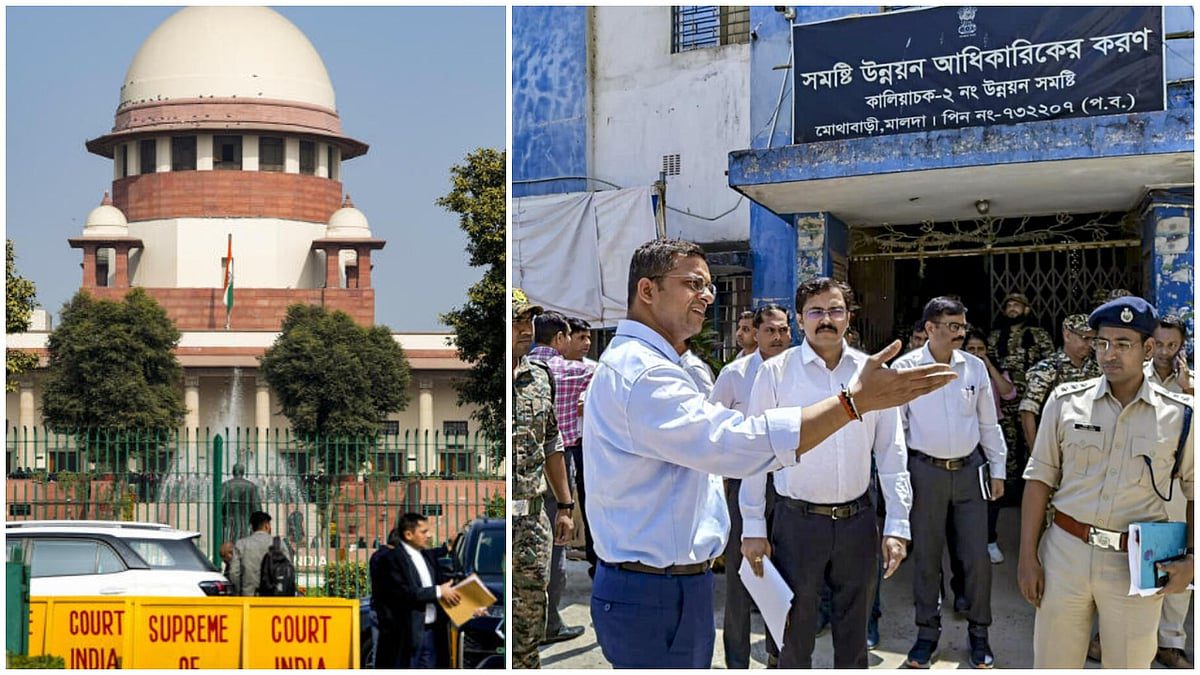
The Supreme Court of India has directed the National Investigation Agency (NIA) to take over FIRs from local police regarding the gherao (encirclement/siege) of judicial officers. The apex court noted that the case involves “serious issues” that warrant investigation by a central agency rather than the local police, which may face political and local pressures.
This development strikes at the heart of judicial independence — one of the most fundamental tenets of India’s constitutional democracy. The gherao of judicial officers represents a direct attack on the ability of judges to function without fear or favour, which is essential for the rule of law. The Supreme Court’s decision to involve the NIA underscores the gravity of such incidents.
For CLAT 2027 aspirants, this topic connects several important constitutional and legal concepts — Article 50 (separation of judiciary from executive), the NIA Act 2008, the Contempt of Courts Act 1971, and the landmark Judges Cases that shaped judicial independence in India.
Constitutional & Legal Framework
- Article 50 (DPSP): “The State shall take steps to separate the judiciary from the executive in the public services of the State”
- Article 129: Supreme Court is a court of record with power to punish for contempt
- Article 215: Every High Court is a court of record with contempt powers
- NIA Act, 2008: Establishes the National Investigation Agency for investigation of scheduled offences affecting sovereignty, security, and integrity of India
- Contempt of Courts Act, 1971: Defines civil contempt (willful disobedience of court orders) and criminal contempt (scandalizing the court, interference with judicial proceedings)
Article 50: The Constitutional Mandate for Judicial Independence
Article 50 is a Directive Principle of State Policy that directs the State to take steps to separate the judiciary from the executive. While DPSPs are not enforceable in court, they are fundamental in the governance of the country and serve as guiding principles for legislation and executive action. The Supreme Court has repeatedly emphasized that judicial independence is part of the basic structure of the Constitution, drawing from the spirit of Article 50.
The gherao of judicial officers represents a direct violation of this principle — when judges are physically surrounded, intimidated, or threatened, the separation between the judiciary and external pressures breaks down entirely.
The NIA Act 2008: When Central Investigation Steps In
The National Investigation Agency Act was enacted in 2008 in the aftermath of the 26/11 Mumbai terror attacks. The NIA investigates offences listed in the Schedule to the NIA Act, which includes offences under various statutes such as the Unlawful Activities (Prevention) Act, Atomic Energy Act, Anti-Hijacking Act, and other laws relating to national security.
The Supreme Court’s direction to the NIA to take over these FIRs is significant because it signals that the intimidation of judicial officers is being treated as a matter of national concern, not merely a local law and order issue. The NIA has the power to investigate cases across state boundaries without requiring prior permission from state governments.
Contempt Powers: Articles 129 and 215
The Constitution vests both the Supreme Court (Article 129) and High Courts (Article 215) with the status of courts of record and the inherent power to punish for contempt. The Contempt of Courts Act 1971 further defines two types of contempt:
- Civil Contempt (Section 2(b)): Willful disobedience to any judgment, decree, direction, order, writ, or other process of a court, or willful breach of an undertaking given to a court
- Criminal Contempt (Section 2(c)): Publication of any matter or doing any act that scandalizes or lowers the authority of any court, or prejudices or interferes with the due course of any judicial proceeding, or obstructs the administration of justice
Gherao of judicial officers would clearly fall within the ambit of criminal contempt as it directly interferes with the administration of justice.
The Three Judges Cases: Evolution of Judicial Independence
The concept of judicial independence in India has been shaped by three landmark cases:
- SP Gupta v. Union of India (1981) — First Judges Case: The Court held that “consultation” with the CJI did not mean “concurrence.” This gave the executive primacy in judicial appointments.
- SCAORA v. Union of India (1993) — Second Judges Case: Overruled the First Judges Case. Held that the CJI’s opinion has primacy in judicial appointments. Established the collegium system.
- In Re: Presidential Reference (1998) — Third Judges Case: Expanded the collegium to include the CJI and 4 senior-most judges of the Supreme Court.
CLAT Angle: Why This Matters for CLAT 2027
- Constitutional Law: Article 50, judicial independence, and separation of powers are foundational CLAT topics
- Legal Reasoning: Questions on contempt of court (civil vs. criminal) appear regularly
- GK Section: NIA Act 2008, the Three Judges Cases, and judicial independence are high-frequency topics
- Current Affairs Integration: This news connects abstract constitutional principles with real-world events
- Previous Year Pattern: CLAT has tested the Judges Cases, Article 129/215, and contempt powers multiple times
Key Facts for Quick Revision
| SC Direction | NIA to take over FIRs from local police in gherao case |
| Article 50 | DPSP — Separation of judiciary from executive |
| Article 129 | SC as court of record with contempt power |
| Article 215 | HCs as courts of record with contempt power |
| NIA Act | 2008 — post-26/11 Mumbai attacks |
| Contempt of Courts Act | 1971 — civil and criminal contempt |
| First Judges Case | SP Gupta (1981) — executive primacy |
| Second Judges Case | SCAORA (1993) — CJI primacy, collegium system |
| Third Judges Case | Presidential Reference (1998) — expanded collegium |
Mnemonic: “JUDGES SAFE” for Judicial Independence
J — Judges Cases (First 1981, Second 1993, Third 1998)
U — Under Article 50 (separation of judiciary)
D — Directly NIA investigation (central agency)
G — Gherao = encirclement/siege of judges
E — Established 2008 (NIA Act, post-26/11)
S — Supreme Court as court of record (Art. 129)
S — SCAORA 1993 — CJI primacy in appointments
A — Article 215 (HCs as courts of record)
F — Freedom from contempt (Contempt Act 1971)
E — Executive separation (basic structure doctrine)
Practice Quiz — 10 CLAT-Style Questions
Click an option to reveal the answer and explanation.