
CURRENT AFFAIRS | 15 APRIL 2026
CLAT GK + INTERNATIONAL LAW + STRATEGIC AFFAIRS
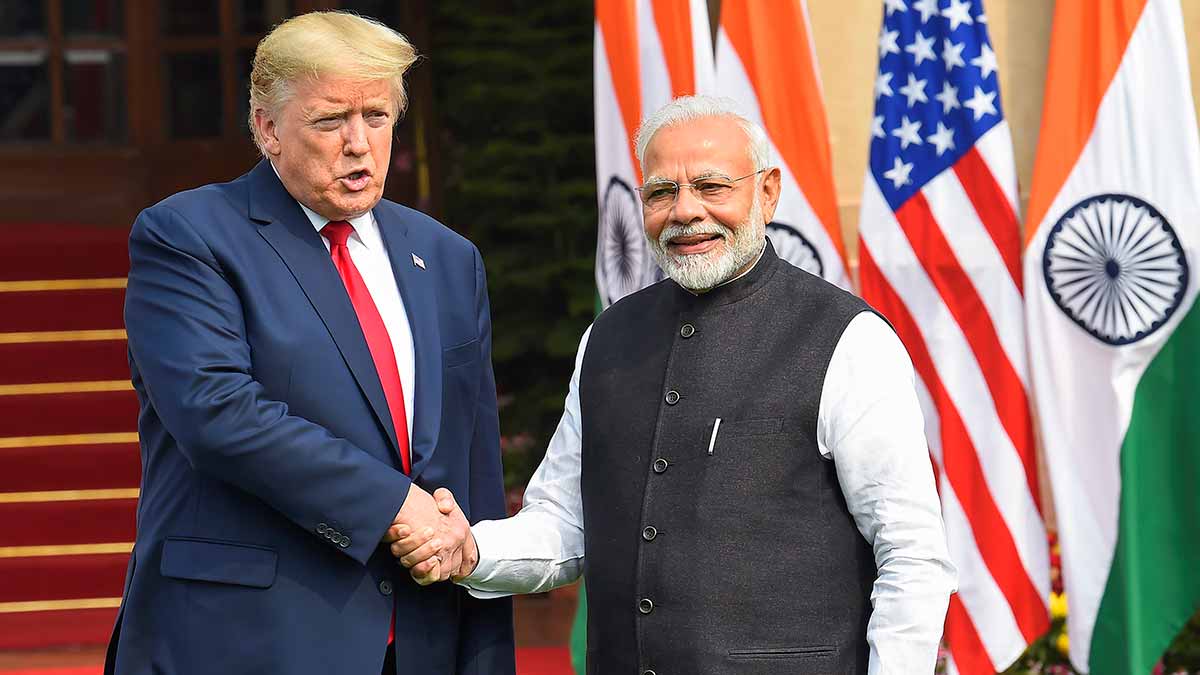
US President Donald Trump called Prime Minister Narendra Modi on 14 April 2026 to discuss keeping the Strait of Hormuz open and secure amid escalating Iran tensions. The two leaders spoke for nearly 40 minutes, with the call coming just days after Trump announced a controversial naval blockade of the strait following the US-Israeli offensive on Iran. Modi tweeted that they “stressed the importance of keeping the Strait of Hormuz open and secure”.
For India, this is not abstract geopolitics. The Strait of Hormuz serves as a conduit for roughly 40 percent of India’s crude oil imports, and roughly one-fifth of global oil consumption passes through this narrow chokepoint at any given moment. Any sustained disruption would send global oil prices soaring and directly hit India’s current account deficit, inflation trajectory, and foreign exchange reserves.
Constitutional & International Legal Framework
- UNCLOS 1982 (Articles 37-45) — Governs “straits used for international navigation”. Provides for the right of transit passage, which is continuous, expeditious, and cannot be suspended by coastal States.
- Article 38 UNCLOS — Core transit passage right for all ships and aircraft.
- Article 44 UNCLOS — Duty of coastal States not to hamper transit passage.
- Article 51 of the Indian Constitution — DPSP directing India to promote international peace, respect international law, maintain just and honourable relations with other nations.
- State responsibility doctrine — A unilateral closure of an international strait is a breach of customary international law.
Why This Matters for CLAT 2027
This topic sits at the intersection of International Law, Geography and Economics — all three CLAT GK staples. Expect principle-fact questions on unilateral closure of international straits, passage on sovereignty versus navigational freedoms, and comparisons with Chabahar Port (India’s Iranian alternative outside the Strait) as a hedge strategy. Also watch out for questions linking Hormuz to SLOC (Sea Lines of Communication), India’s “strategic autonomy” doctrine, and the role of the US Fifth Fleet headquartered in Bahrain.
Key Facts at a Glance
| Strait connects | Persian Gulf and Gulf of Oman |
| Narrowest point | 21 nautical miles wide |
| Share of global oil trade | Approximately 20 percent |
| India’s oil imports via Hormuz | About 40 percent |
| Governing law | UNCLOS Articles 37-45 |
| India’s alternative port | Chabahar (Iran, Gulf of Oman) |
| Transit passage regime | Cannot be suspended (Art 44) |
| India’s doctrine | Strategic autonomy + Art 51 DPSP |
Mnemonic to Remember
“37-45: Straits Stay Open” — locks in the UNCLOS articles governing international straits. Also: “Hormuz = Half Our Oil” captures India’s energy dependence, and “Chabahar cheats Hormuz” for the strategic hedge.
Test Your Knowledge
Practice Quiz — 10 CLAT-Style Questions
Click an option to reveal the answer and explanation.