

CURRENT AFFAIRS | MARCH 25, 2026
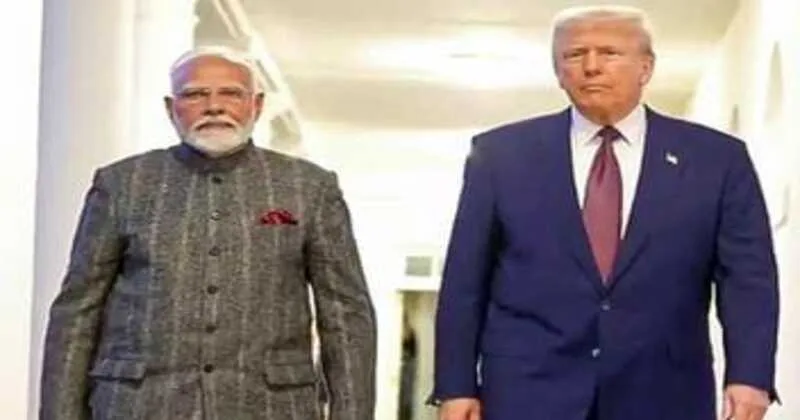
First Trump-Modi Phone Call Since War Began — Both Leaders Agree on Keeping Hormuz Open
US President Donald Trump called Prime Minister Narendra Modi on Tuesday in the first phone call between the two leaders since the war began on 28 February 2026. Both leaders agreed on the critical importance of keeping the Strait of Hormuz open for global energy supplies. India reiterated its support for de-escalation and restoration of peace at the earliest. External Affairs Minister S. Jaishankar also met Iran’s Ambassador as part of India’s active diplomatic engagement.
Constitutional & Institutional Framework
- Article 51 (DPSP): The State shall promote international peace and security, maintain just and honourable relations between nations.
- Article 253: Parliament has the power to make laws for implementing any treaty, agreement, or convention with any other country.
- Cabinet Committee on Security (CCS): Chaired by the Prime Minister, activated to handle the crisis.
- 7 Empowered Groups of Secretaries (EGoS): Set up covering foreign affairs/security, economy/finance, energy, trade/logistics, consumer affairs, transport/shipping, and information/broadcasting.
India’s Multi-Pronged Crisis Response
India adopted a comprehensive approach to tackle the impact of the conflict. The PM addressed the Rajya Sabha, assuring that India has “adequate crude oil storage” to manage energy security concerns. An all-party meeting was convened by the government to build consensus on the national response. The 7 EGoS were constituted to cover every critical sector affected by the conflict, from energy security to consumer price stability.
Strategic Significance of the Strait of Hormuz
The Strait of Hormuz is the world’s most important oil chokepoint, through which approximately 20% of global oil supplies pass. Any disruption to traffic through the Strait would have severe consequences for India, which imports over 80% of its crude oil needs. India’s emphasis on keeping the Strait open reflects both its energy security imperatives and its role as a responsible stakeholder in global maritime security.
CLAT Exam Angle
This topic tests knowledge of India’s foreign policy constitutional framework (Art. 51, Art. 253), institutional crisis management (CCS, EGoS), and geopolitical awareness. CLAT passages may present a reading comprehension on diplomatic negotiations or a legal reasoning question on the executive’s war-time powers under the Constitution.
Key Facts at a Glance
| Event | Trump-Modi Phone Call |
| War Start Date | 28 February 2026 |
| Focus | Keeping Strait of Hormuz open |
| EGoS Set Up | 7 Groups |
| EAM Meeting | S. Jaishankar met Iran’s Ambassador |
| PM’s Statement | India has adequate crude oil storage |
| India’s Position | De-escalation and restoration of peace |
Mnemonic: HORMUZ
- H — Hormuz Strait kept open
- O — Oil storage adequate (PM’s assurance)
- R — Rajya Sabha address by PM
- M — Modi-Trump first call since Feb 28
- U — Unity through all-party meeting
- Z — Zones covered by 7 EGoS groups
Practice Quiz
Practice Quiz — 10 CLAT-Style Questions
Click an option to reveal the answer and explanation.






