CURRENT AFFAIRS | 30 APRIL 2026
CLAT GK + International Organisations & Economy
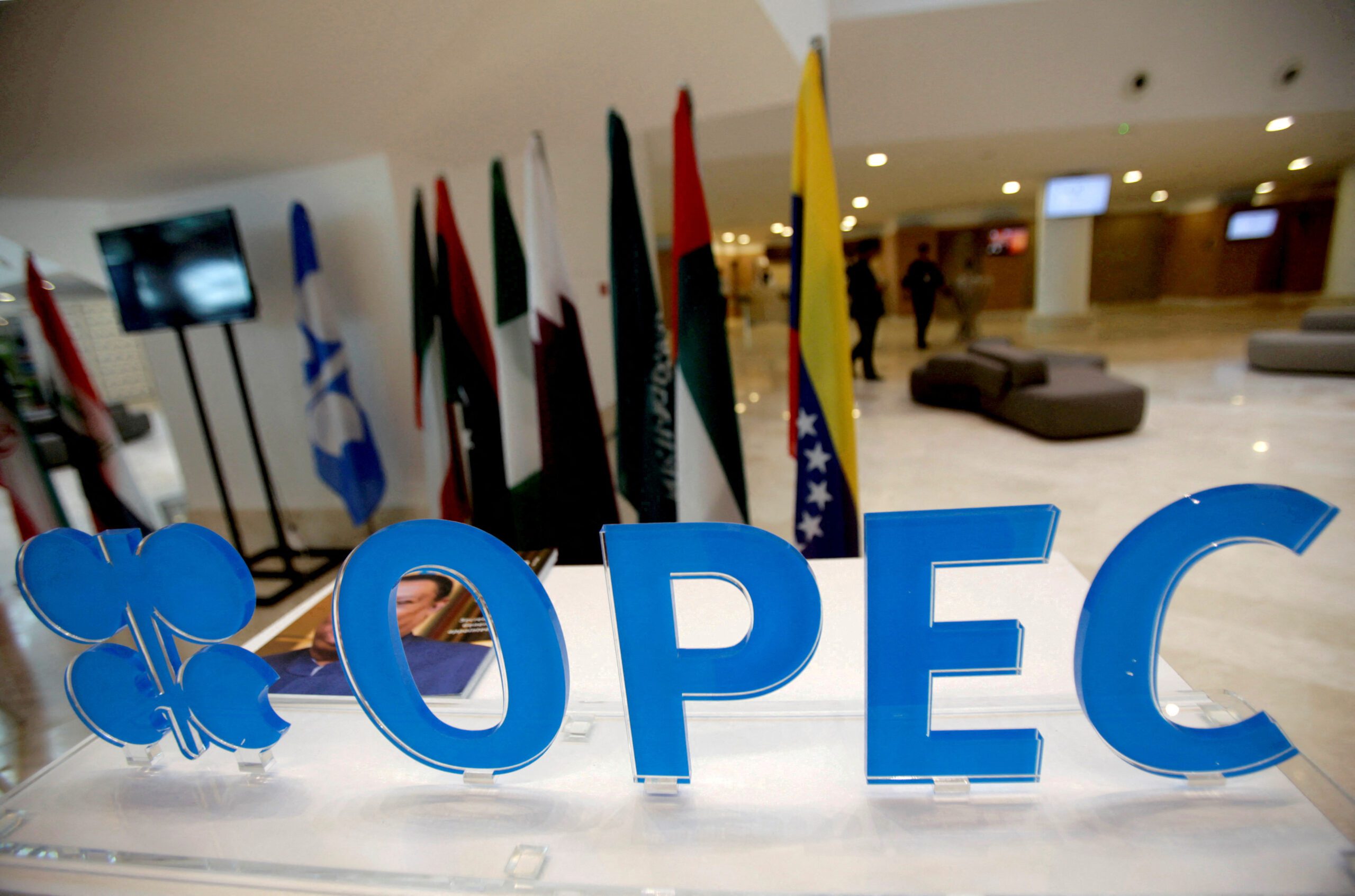
The United Arab Emirates has announced its decision to leave the Organization of the Petroleum Exporting Countries (OPEC), effective 1 May 2026. This ends a near-60-year membership that began in 1967 and marks the most consequential exit since the cartel’s founding in 1960. With UAE producing roughly 3.5 million barrels per day (mbpd) and targeting 5 mbpd by 2027, Abu Dhabi has long chafed under OPEC’s quota system.
The exit reduces OPEC+’s share of global crude supply from roughly 50% to about 45-46%, weakens the cartel’s pricing power, and adds short-term volatility to a market on which India — the world’s third-largest crude importer — depends for ~89% of its oil.
What Happened
UAE’s energy ministry confirmed the decision on Tuesday, citing the country’s “national interest” and its expanding upstream capacity. Earlier exits include Indonesia (suspended membership 2009, formally left 2016), Qatar (2019), Ecuador and Angola — but none had UAE’s weight. Saudi Arabia, the cartel’s de facto leader, has expressed regret but said the OPEC+ framework will continue with the remaining 22 producers.
The Background
OPEC was founded in September 1960 in Baghdad by five producers — Iran, Iraq, Kuwait, Saudi Arabia and Venezuela — to coordinate petroleum policy and stabilise prices. UAE joined in 1967. In response to the price crashes of 2014-16, OPEC expanded into “OPEC+” by drawing in 10 non-OPEC producers led by Russia, creating a 23-member coalition that controlled roughly half of global supply. UAE has long argued that its quota under the OPEC+ framework underutilises its expanding capacity, especially after the $150 billion ADNOC investment plan announced in 2023.
Institutional & Treaty Framework
- OPEC — Founded September 1960, Baghdad; HQ Vienna (Austria) since 1965. Founders: Iran, Iraq, Kuwait, Saudi Arabia, Venezuela.
- OPEC+ — Formed 2016; adds 10 non-OPEC producers led by Russia.
- IEA (International Energy Agency) — Created 1974 by OECD members as a counterweight to OPEC; HQ Paris. India is an associate member.
- GCC (Gulf Cooperation Council) — Bahrain, Kuwait, Oman, Qatar, Saudi Arabia, UAE.
- SPR (Strategic Petroleum Reserve) — India holds ~5.33 MMT across Visakhapatnam, Mangaluru, Padur (Phase I); Phase II under construction at Chandikhol & Padur.
Why This Matters
For India, every $1/barrel rise in crude adds approximately $1.5-2 billion to the annual import bill, widens the current account deficit, weakens the rupee and pressures retail inflation through fuel and transport costs. A weakened OPEC could mean lower crude prices in the medium term (good for India) but more short-term volatility (bad for budget-planning). UAE itself is India’s third-largest crude supplier and a strategic CEPA partner — its exit could give India room to negotiate term contracts on more favourable, non-quota-bound terms.
CLAT 2027 — Why You Must Know This
OPEC, OPEC+, IEA and GCC are perennial CLAT GK targets — founders, year, HQ, member counts. The UAE exit is the most testable static-meets-dynamic update of 2026. For Legal Reasoning, expect economic-impact passages with a “principle: $1/bbl = $1.5-2 bn” stem and applied questions on India’s import bill.
Key Facts at a Glance
| Exit Effective | 1 May 2026 |
| UAE Joined OPEC | 1967 |
| OPEC Founded | Sept 1960, Baghdad |
| OPEC HQ | Vienna, Austria |
| UAE Capacity Now → 2027 | ~3.5 mbpd → 5 mbpd target |
| India’s Crude Import Dependence | ~89% (3rd largest importer) |
| $1/bbl ⇒ India bill impact | $1.5-2 billion |
Mnemonic
I-IKSV (founders of OPEC) = Iran · Iraq · Kuwait · Saudi Arabia · Venezuela.
OPEC EXITS = Ecuador · QAtar · Indonesia · The UAE (2026) · plus Angola.
Test Your Knowledge — 10 Question Quiz
Take this quick quiz to lock in the concepts:
Practice Quiz — 10 CLAT-Style Questions
Click an option to reveal the answer and explanation.
Source: The Indian Express, 30 April 2026.