CURRENT AFFAIRS | APRIL 7, 2026
CLAT GK + INDIAN POLITY & CONSTITUTIONAL LAW
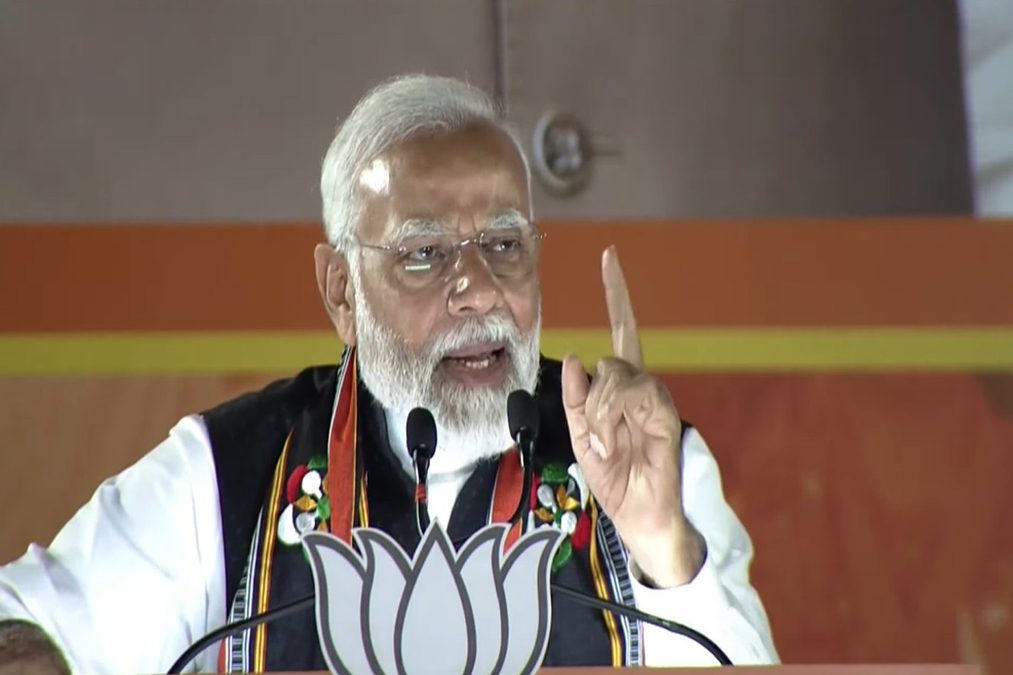
On BJP’s Foundation Day, Prime Minister Narendra Modi made a significant declaration that the Uniform Civil Code (UCC) and simultaneous elections — popularly known as “One Nation One Election” — remain the party’s core missions. The Prime Minister stated that “constructive progress” is being made in discussions on both fronts, signalling an intensified push toward these constitutional reform initiatives.
This dual announcement carries enormous constitutional implications. The UCC, enshrined in Article 44 of the Directive Principles of State Policy, has been one of India’s most debated policy questions since independence. Simultaneously, the One Nation One Election proposal, examined by the Kovind Committee, seeks to fundamentally restructure India’s electoral calendar. For CLAT aspirants, these intersecting reforms touch upon federalism, fundamental rights, DPSPs, and the very architecture of Indian democracy.
Constitutional & Legal Framework
- Article 44 (DPSP): The State shall endeavour to secure for the citizens a Uniform Civil Code throughout the territory of India
- Article 83 & 172: Duration of Houses of Parliament (5 years) and State Legislatures (5 years) — central to simultaneous elections debate
- Articles 324-329: Part XV dealing with Elections, Election Commission powers, and electoral framework
- 10th Schedule: Anti-Defection Law — relevant to government stability in simultaneous election framework
- Article 162: Executive power of States — federalism concerns in UCC implementation
The Uniform Civil Code Debate: Article 44 and Beyond
The Uniform Civil Code seeks to replace personal laws of various religious communities with a single set of laws governing marriage, divorce, inheritance, and adoption. Article 44 of the Constitution places this as a Directive Principle — an aspiration the State must strive toward but which is not judicially enforceable under Article 37.
The Supreme Court has repeatedly urged the government to implement a UCC. In Shah Bano v. Mohd Ahmed Khan (1985), Justice Y.V. Chandrachud observed that Article 44 remains a “dead letter” and called upon Parliament to enact a UCC. In Sarla Mudgal v. Union of India (1995), the Court again highlighted the anomaly of allowing bigamy through conversion in the absence of a uniform code. More recently, Jose Paulo Coutinho v. Maria Luiza Valentina Pereira (2019) praised Goa’s common civil code as a model worthy of emulation.
Goa: India’s Living Laboratory for UCC
Goa stands as India’s only state with a functioning common civil code — the Portuguese Civil Code of 1867, retained after liberation in 1961. Under this code, marriage is essentially a civil contract; property is held jointly by spouses; and inheritance follows equal distribution regardless of religion. The Goa model demonstrates that a uniform code can coexist with diverse religious practices — a critical counterpoint to opponents who argue UCC would violate religious freedom under Articles 25-28.
One Nation One Election: The Kovind Committee Framework
The High-Level Committee headed by former President Ram Nath Kovind recommended holding Lok Sabha and State Assembly elections simultaneously. This would require amendments to Articles 83 and 172 (duration of legislatures), potential modifications to the anti-defection framework under the 10th Schedule, and coordination mechanisms involving the Election Commission under Article 324. The Committee suggested a two-phase approach: first synchronizing Lok Sabha and State Assembly elections, then aligning municipal and panchayat elections.
Constitutional Challenges
Critics argue simultaneous elections could undermine federalism by making state issues subservient to national narratives. The requirement of a constitutional amendment raises questions about Article 368 — specifically whether such amendments would need ratification by half the states under the proviso to Article 368(2). Additionally, scenarios involving mid-term dissolution (Article 85 for Lok Sabha, Article 174 for State Assemblies) pose practical difficulties.
CLAT Exam Angle
- Polity: Art. 44 (UCC as DPSP), Art. 37 (non-justiciable nature), Art. 25-28 (religious freedom vs. UCC)
- Constitutional Law: Art. 83, 172 (duration of legislatures), Art. 324 (Election Commission), 10th Schedule (anti-defection)
- Landmark Cases: Shah Bano (1985), Sarla Mudgal (1995), John Vallamattom (2003), Jose Paulo Coutinho (2019)
- Legal Reasoning: DPSP vs. Fundamental Rights hierarchy — Minerva Mills principle of harmony
- Current Affairs: 21st Law Commission Report (2018), Kovind Committee recommendations, Uttarakhand UCC Act 2024
Key Facts at a Glance
| UCC Article | Article 44 (Part IV — DPSP) |
| Only State with Common Civil Code | Goa (Portuguese Civil Code, 1867) |
| Kovind Committee | Recommended simultaneous Lok Sabha + State Assembly elections |
| Duration of Lok Sabha | Article 83 — 5 years from first sitting |
| Duration of State Legislatures | Article 172 — 5 years from first sitting |
| 21st Law Commission | Stated UCC “neither necessary nor desirable at this stage” (2018) |
Mnemonic: “SSJGK” — Key UCC Cases
Shah Bano (1985) — Maintenance rights, Art. 44 invoked
Sarla Mudgal (1995) — Bigamy through conversion
John Vallamattom (2003) — Succession Act discrimination
Goa Model — Jose Paulo Coutinho (2019)
Kovind Committee — One Nation One Election
Practice Quiz — 10 CLAT-Style Questions
Click an option to reveal the answer and explanation.