
EDITORIAL ANALYSIS | 4 APRIL 2026
CLAT GK + INTERNATIONAL RELATIONS + FOREIGN POLICY + TRADE LAW
– Article 51 DPSP — International peace, just relations, respect for international law
– QUAD, BRICS, Indo-Pacific Strategy — Multilateral frameworks
– WTO, MFN, Trade Disputes — International trade law
– Non-Alignment to Multi-Alignment — Evolution of India’s foreign policy
– Act East Policy, Supply Chain Resilience Initiative (SCRI)
– Strategic autonomy — Balancing great power competition
| Context | US-China diplomatic reset amid trade tensions and geopolitical realignment |
| India’s Challenge | Managing uncertainty with Washington while stabilizing relations with Beijing |
| Key Framework | From Non-Alignment to Multi-Alignment — engaging all major powers |
| Trade Factor | US 50% tariffs on India (25% reciprocal + 25% penalty on Russian oil) |
| Border Issue | 25,000 PLA troops remain deployed along LAC despite diplomatic thaw |
The Context — Why This Editorial Matters
The Indian Express editorial (April 4, 2026) analyses a critical geopolitical shift: as the US and China begin recalibrating their relationship — with tentative diplomatic outreach, resumed trade talks, and signals of strategic accommodation — India faces a complex foreign policy challenge. The editorial identifies five strategic responses India must consider to protect its national interests in this shifting world order.
This is a high-value CLAT topic because it connects international relations, constitutional law (Art 51 DPSP), trade law (WTO), and India’s evolving foreign policy doctrine — all frequently tested in the GK and legal reasoning sections.
The Five Strategic Responses for India
1. Trade Diversification — Reducing Dependence on Any Single Partner
With US tariffs at 50% on Indian goods (25% reciprocal + 25% penalty for purchasing Russian oil), India must diversify its trade portfolio:
- EU as alternative partner — Semiconductor collaboration, critical minerals, supply chain diversification
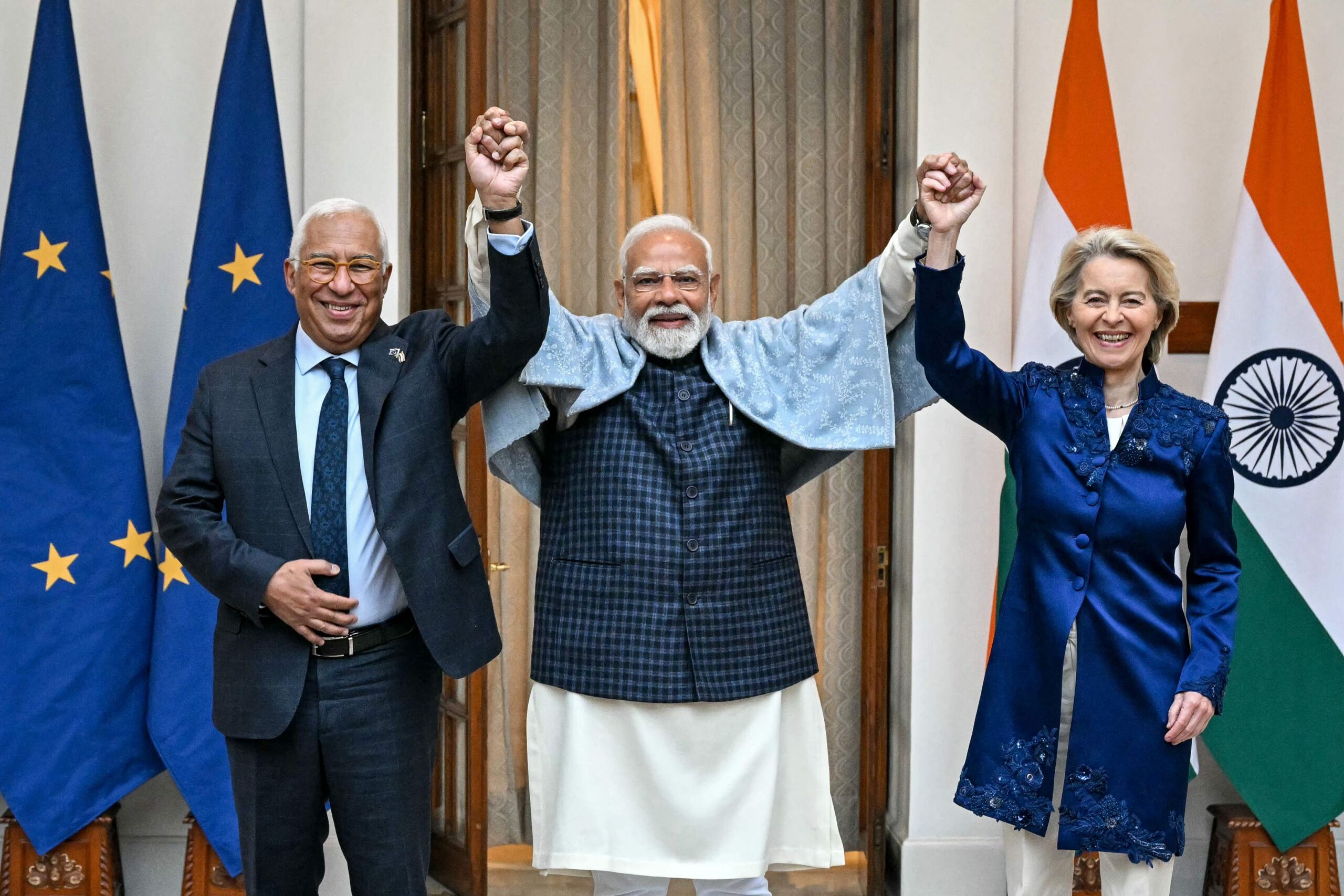
- India-EU FTA negotiations — Renewed momentum for the India-EU Trade and Technology Council
- ASEAN market deepening — India’s Act East Policy gains urgency as US reliability becomes uncertain
- Africa and Latin America — Expanding South-South cooperation and trade corridors
2. Technology Self-Reliance — From Dependence to Capability
- Semiconductor manufacturing — India Semiconductor Mission ($10 billion) must accelerate
- AI and quantum computing — Reducing dependence on US-China tech duopoly
- 5G/6G infrastructure — Building domestic telecom capabilities
- Space technology — ISRO as a global launch services competitor
3. Indo-Pacific Partnerships — Beyond QUAD
- QUAD (India, Japan, Australia, USA) — Maritime security, vaccine diplomacy, critical technology
- I2U2 (India, Israel, UAE, USA) — Technology, food security, clean energy
- SCRI (India, Japan, Australia) — Supply Chain Resilience Initiative to reduce China dependence
- IPEF (Indo-Pacific Economic Framework) — US-led economic framework (India participates selectively)
- AUKUS implications — Nuclear submarine alliance (Australia-UK-US) changes Indo-Pacific power dynamics
4. Defence Preparedness — Maintaining Credible Deterrence
- LAC situation — Despite diplomatic normalization, 25,000 PLA troops remain deployed along the Line of Actual Control
- Military modernization — INS Aridhaman (nuclear triad), Agni-V, Rafale fleet expansion
- Defence manufacturing — Atmanirbhar Bharat in defence, reducing import dependence from 60% to under 40%
- Border infrastructure — Road, tunnel, and airstrip construction along LAC and LOC
5. Multilateral Engagement — Strategic Multi-Alignment
- BRICS+ — Now 10 members (added Saudi Arabia, Iran, UAE, Egypt, Ethiopia in 2024) — India must shape the agenda to prevent Chinese domination
- G20 Presidency legacy — Continuing India’s leadership on Global South issues
- UN Security Council reform — Pushing for permanent membership with renewed urgency
- WTO engagement — Protecting India’s interests in trade dispute resolution, agriculture, and services
From Non-Alignment to Multi-Alignment — India’s Foreign Policy Evolution
- Non-Alignment (1947-1991) — Nehru’s doctrine of not joining any Cold War bloc; founding NAM in 1961 (Bandung Conference 1955)
- Look East Policy (1991) — PM Narasimha Rao opened engagement with ASEAN and East Asia post-liberalization
- Act East Policy (2014) — PM Modi upgraded to active engagement with ASEAN, Japan, Australia, South Korea
- Multi-Alignment (2020s) — Strategic engagement with all major powers (US, Russia, EU, China) based on issue-specific national interests, without formal alliances
The editorial argues that India’s multi-alignment strategy is not a rejection of partnerships but a preservation of strategic autonomy — the ability to make independent foreign policy decisions based on national interest. As the US-China dynamic shifts, India must avoid being drawn into a binary choice.
Constitutional Framework — Article 51 DPSP
Article 51 of the Indian Constitution (Directive Principles of State Policy) provides the constitutional foundation for India’s foreign policy, directing the State to:
- Promote international peace and security (Art 51(a))
- Maintain just and honourable relations between nations (Art 51(b))
- Foster respect for international law and treaty obligations (Art 51(c))
- Encourage settlement of international disputes by arbitration (Art 51(d))
WTO and Trade Law Dimensions
- Most Favoured Nation (MFN) — GATT Article I requires equal treatment of all WTO members
- National Treatment (GATT Art III) — Imported goods must be treated no less favourably than domestic goods
- WTO Dispute Settlement Body — The “jewel in the crown” of the WTO system for resolving trade disputes
- Special and Differential Treatment (S&DT) — Developing countries get longer transition periods and preferential treatment
S — Strategic autonomy (independent decision-making)
H — Hedging (engaging both US and China without full alignment)
I — Indo-Pacific partnerships (QUAD, SCRI, I2U2)
F — Foreign policy evolution (NAM to Multi-Alignment)
T — Trade diversification (EU, ASEAN, Africa, Latin America)
Source: Indian Express Editorial, April 4, 2026
Practice Quiz
Practice Quiz — 10 CLAT-Style Questions
Click an option to reveal the answer and explanation.