
CURRENT AFFAIRS | 22 APRIL 2026
CLAT GK + INTERNATIONAL LAW & LEGAL REASONING
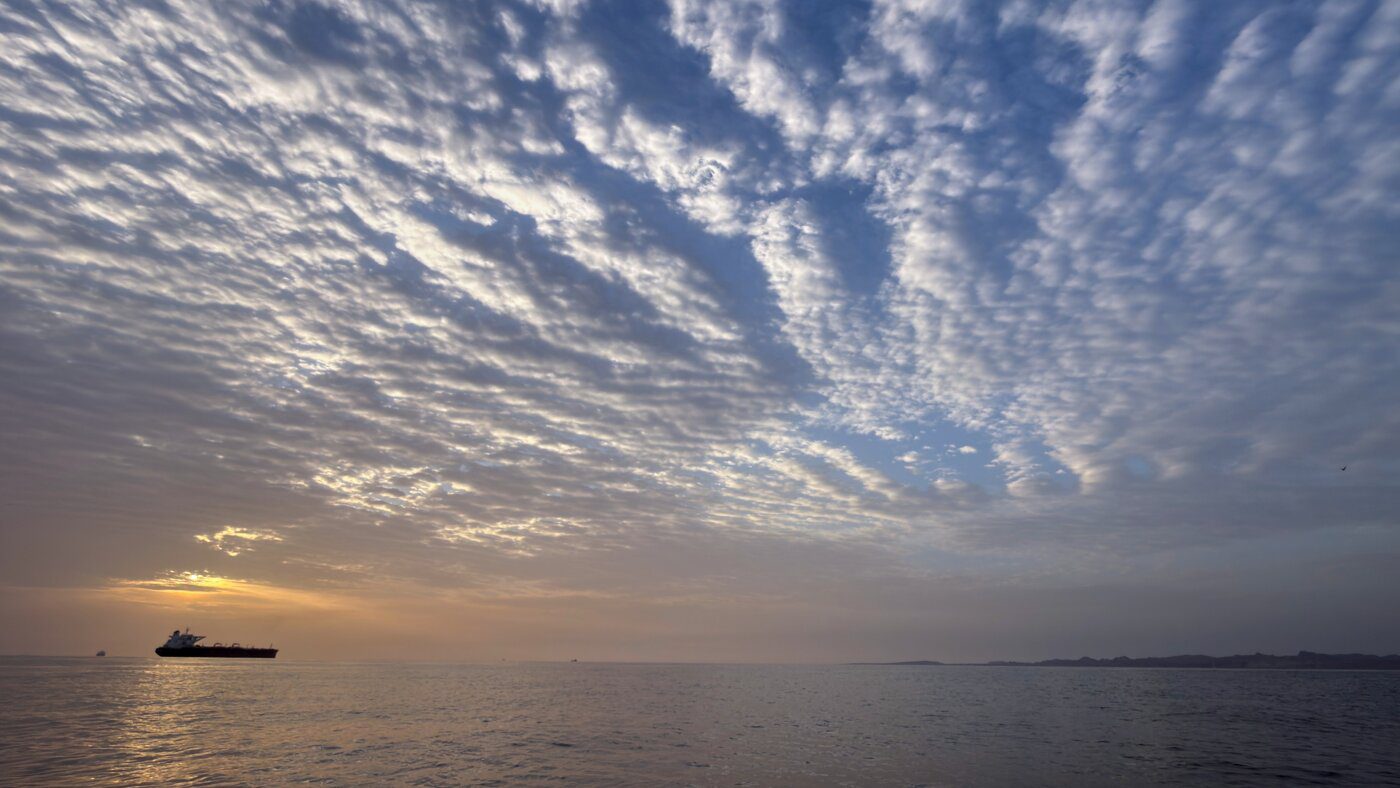
On 19 April 2026, the US Navy guided-missile destroyer USS Spruance intercepted the Iran-flagged cargo ship MV Touska in the Gulf of Oman, fired warning shots, blew a hole in her engine room after a six-hour chase, and put Marines on board. Iran has called it an “act of piracy“; Washington frames it as lawful enforcement of the naval blockade imposed on Iranian ports since 13 April 2026. Meanwhile, a second Iranian tanker — Sili City / Felicity — defied the blockade and discharged crude at Sikka port (Gujarat) for Reliance. Tehran has suspended Islamabad-hosted peace talks; Pakistan has shut its airspace to Iranian overflights. The episode is a real-time UNCLOS examination that the CLAT 2027 paper will not ignore.
Why it matters for CLAT: The Touska incident pulls four doctrines onto the same page — the UNCLOS 1982 architecture (Arts 87, 110, 111, 301), the San Remo Manual 1994 on naval warfare, the Nicaragua v US (1986) rule that non-consensual force against a foreign-flagged vessel in peacetime is ordinarily illegal, and Article 51 UN Charter self-defence. CLAT questions will probe whether a peacetime blockade is even lawful without UN Security Council authorisation, and whether “hot pursuit” under Art 111 can begin on the high seas at all.
Constitutional & Legal Framework
- UNCLOS 1982 Art 87 — Freedom of the high seas — navigation, overflight, fishing, cables
- UNCLOS 1982 Art 110 — Right of visit — warship may board a foreign ship only if suspected of piracy, slave trade, unauthorised broadcasting, no-nationality, or same-flag abuse
- UNCLOS 1982 Art 111 — Hot pursuit — must commence within the coastal State’s internal/territorial/contiguous waters or EEZ; ends when pursued ship enters another State’s territorial sea
- UNCLOS 1982 Art 101 — Piracy defined — illegal acts of violence for private ends on the high seas (State acts are NOT piracy)
- UNCLOS 1982 Art 301 — Peaceful uses of the seas — bars threat or use of force inconsistent with UN Charter
- San Remo Manual 1994 — Non-binding expert restatement of law on naval warfare — blockades must be declared, effective, impartial and notified
- Nicaragua v US (ICJ 1986) — Customary rule that States may not use force against vessels flying another State’s flag outside armed-conflict framework
- Corfu Channel (ICJ 1949) — Innocent passage through international straits — even warships enjoy it, subject to no threat
- Article 51 UN Charter — Self-defence — only in response to an armed attack; proportionality and necessity required
CLAT Angle — How This Gets Tested
- Piracy trap: Under Art 101 UNCLOS, an act is ‘piracy’ only if committed by a private ship for private ends. State warships boarding foreign vessels are NEVER piracy in legal doctrine, whatever the diplomatic rhetoric.
- Blockade law: A peacetime blockade without UNSC authorisation under Chapter VII is presumptively unlawful. The San Remo Manual applies to wartime blockades — and even then requires effectiveness, impartiality and due notification.
- Hot pursuit trap: Hot pursuit under Art 111 cannot be commenced on the high seas. It must begin when the foreign vessel is still within the coastal State’s maritime zones. A pursuit that begins in the Gulf of Oman high seas fails this test.
- Self-defence frame: Watch for a principle-application passage asking whether an economic blockade constitutes an ‘armed attack’ triggering Art 51. ICJ has consistently said no in Nicaragua and Oil Platforms (2003).
Key Facts at a Glance
| Ship | MV Touska (Iran-flagged cargo) |
| US ship | USS Spruance (guided-missile destroyer) |
| Location | Gulf of Oman, en route to Bandar Abbas |
| Blockade in force since | 13 April 2026 |
| Chase duration | ~6 hours before boarding |
| Iran’s position | ‘Act of piracy’ — has pulled out of Islamabad peace talks |
| Other tanker | Sili City / Felicity discharged crude at Sikka, Gujarat |
| Strategic stake | Strait of Hormuz — 20% of global oil, 40% India fertiliser imports |
Why “piracy” is a loaded word. In ordinary speech, forcibly boarding a ship is piratical. In international law, State conduct is categorically excluded from the UNCLOS Art 101 definition — the private-ends requirement is decisive. Iran’s framing is political, not doctrinal. The real legal question is whether the US blockade meets the San Remo and customary-law tests — declared, effective, impartial, and notified — and whether any UN Charter basis (Art 39/42 Chapter VII authorisation, or Art 51 self-defence) supports the use of force. Because no UNSC resolution exists, the blockade stands or falls on a contested self-defence claim following the 9 April ceasefire. India’s position, signalled by the Sikka landing, is pragmatic non-alignment — maintaining crude flows while publicly urging de-escalation.
Mnemonic — PIHA (Peace, Innocent passage, Hot pursuit, Armed attack)
Peace of the seas (Art 301) · Innocent passage (Corfu Channel) · Hot pursuit starts inside zones, not on high seas (Art 111) · Armed attack is required for Art 51 self-defence (Nicaragua 1986). Remember — State acts are never “piracy” (Art 101 — private-ends rule).
Likely exam questions. (1) Art 101 UNCLOS defines piracy as acts committed for which type of ends? (2) Hot pursuit under Art 111 must begin in which maritime zones? (3) Which ICJ case established customary rule against inter-State use of force outside armed conflict? (4) The right of visit under Art 110 is permitted against foreign ships on what specific suspicions? (5) Legal reasoning passage — Is a peacetime economic blockade without UNSC authorisation consistent with Art 301 UNCLOS?
Test Yourself — 10 MCQs
Click each option to reveal the answer and explanation.
Practice Quiz — 10 CLAT-Style Questions
Click an option to reveal the answer and explanation.