
Economy & Agriculture
Date: 6 March 2026 | Source: The Indian Express, Delhi Edition, 6 March 2026
Tags: Rice Export Policy, GI Tags Act 1999, Food Security, WTO, CLAT Economy, CLAT GK
📝 Test Your Understanding
Take a quick 5-question quiz based on this article
India has become the world’s largest rice exporter, but behind this achievement lies a costly paradox: the country is effectively exporting millions of litres of groundwater with every kilogram of cheap non-basmati rice it ships out. This article examines what a strategic rethink means for CLAT aspirants — covering GI Tags, food security law, and WTO obligations.
Introduction
India surpassed Thailand and Vietnam to become the world’s largest rice exporter in 2024-25, with total production of approximately 150 million tonnes. Yet behind this achievement lies a serious structural problem: the country is exporting millions of litres of water with every kilogram of rice it ships abroad.
The Water Cost of Rice Exports
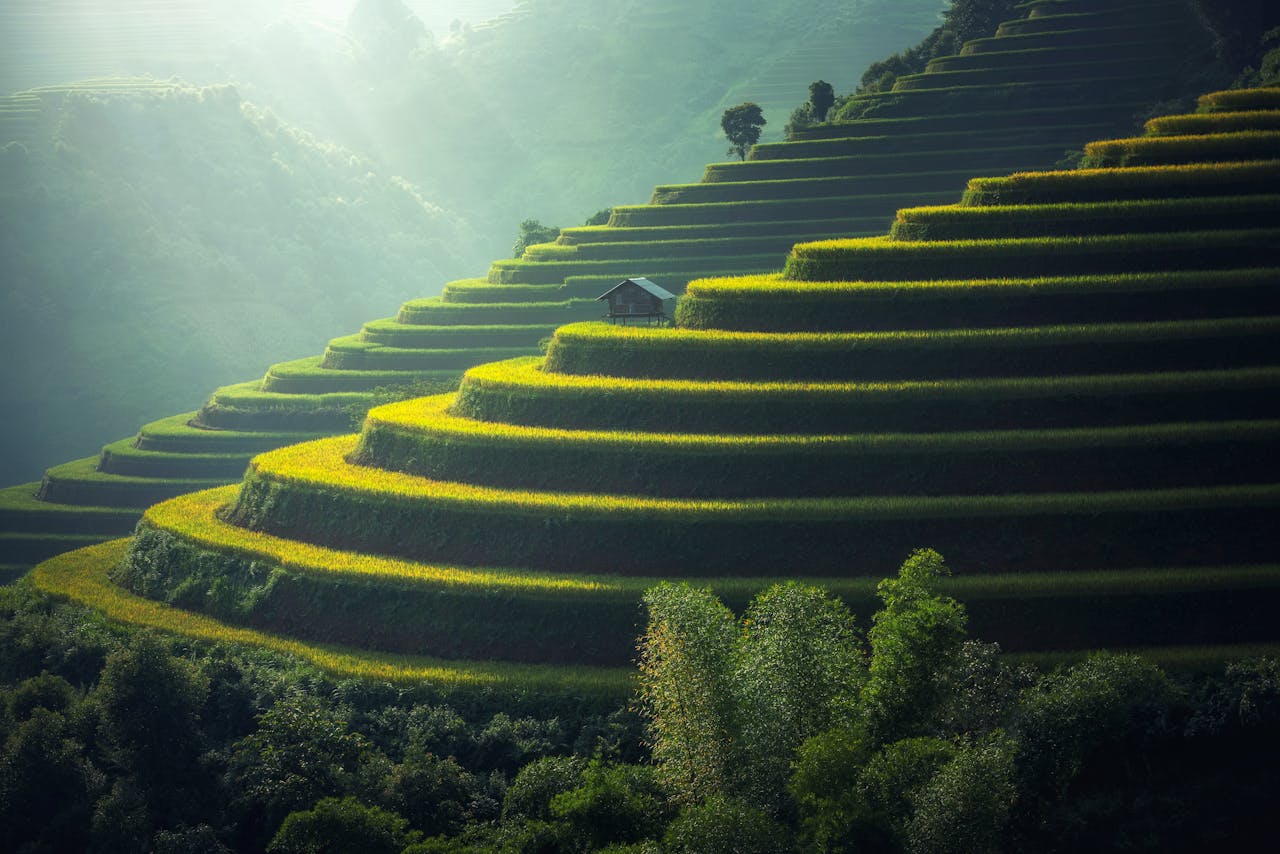
Paddy is a water-guzzling crop. Under conventional transplanting, a single acre requires roughly 5 million litres of water. With a yield of 2.5 tonnes per acre, this means roughly 2,000 litres of water per kg of grain. For non-basmati exports, the effective water export rate reaches 3,000 litres per kg shipped.
📊 Key Export Data
| Year | Basmati (lakh t) | Value ($M) | Non-Basmati (lakh t) | Value ($M) |
|---|---|---|---|---|
| 2022-23 | 45.61 | 4,788 | 177.92 | 6,357 |
| 2023-24 | 52.42 | 5,843 | 111.17 | 4,573 |
| 2024-25 | 60.65 | 5,944 | 141.30 | 6,528 |
Basmati earns ₹82–92/kg vs. ₹34–39/kg for non-basmati — far more value per litre of water used.
The GI Framework: Basmati’s Legal Moat
Under the Geographical Indications of Goods (Registration and Protection) Act, 1999, basmati rice produced in a specific 6.2 million-hectare belt — spanning Punjab, Haryana, western UP, Uttarakhand, J&K, and Himachal Pradesh — is protected as a Geographical Indication. Regional GI varieties like Kalanamak (eastern UP), Katarni (Bihar), Gobindobhog (West Bengal), and Seeraga Samba (Tamil Nadu) offer a pathway toward high-value, low-water exports.
⚠️ Key Takeaways for CLAT
- GI Tags Act, 1999: Protects products with a specific geographical origin. Basmati is India’s most valuable GI-tagged agricultural export.
- Food Security angle: Export policy intersects with the National Food Security Act, 2013 — MSP, PDS procurement, and access obligations.
- WTO angle: India’s 2023 non-basmati export restrictions were examined under WTO’s Agreement on Agriculture.
- Environment: Agriculture accounts for ~80% of India’s national freshwater withdrawal.
Glossary
| GI Tags Act, 1999 | Provides legal protection to products with a specific geographical origin (e.g., Darjeeling tea, Basmati rice). |
| NFSA, 2013 | National Food Security Act — provides subsidised food grains to ~67% of India’s population via PDS. |
| WTO Agreement on Agriculture | Governs farm subsidies, tariffs, and export restrictions. India’s rice export bans triggered WTO scrutiny. |
| Virtual Water Export | Exporting 1 kg non-basmati rice = exporting ~3,000 litres of India’s groundwater. |
📝 Practice Quiz — 5 MCQs
Select an answer to reveal the explanation