CURRENT AFFAIRS | 18 APRIL 2026
CLAT GK + CONSTITUTIONAL LAW & RELEVANT AREA
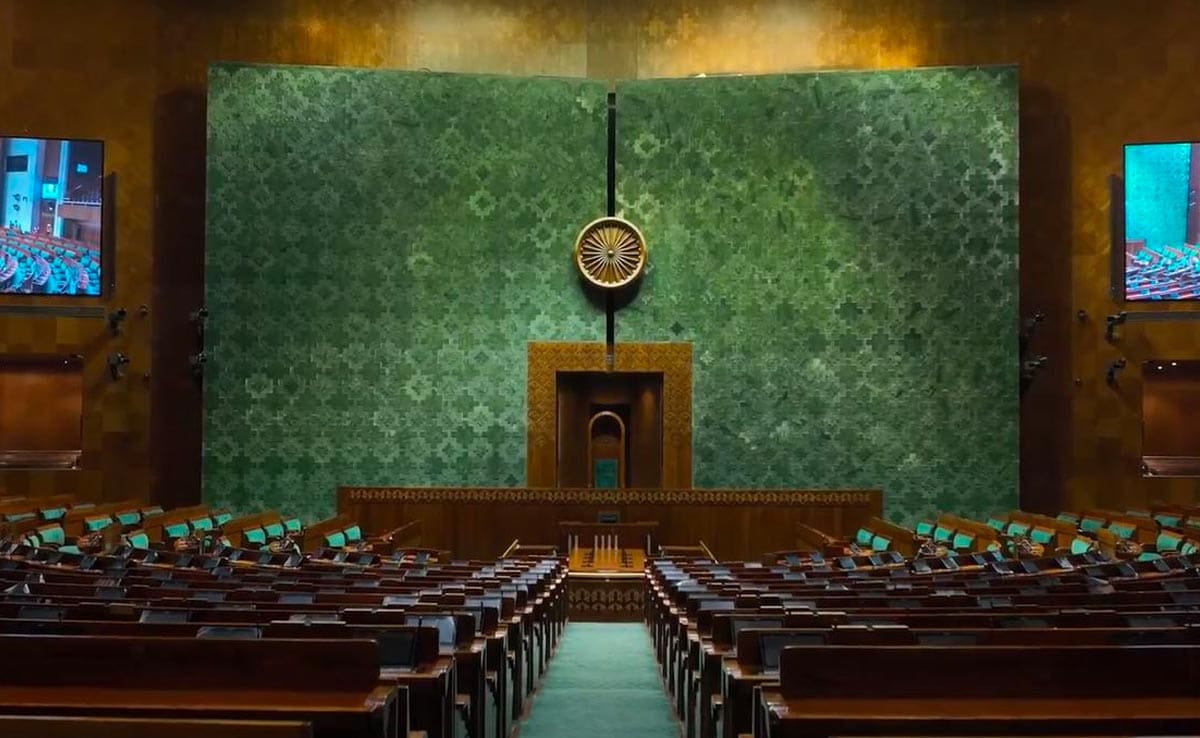
In a development that has altered the legislative record of the Modi government, the Constitution (131st Amendment) Bill, 2026 was defeated in the Lok Sabha on 17 April 2026 by 298 votes in favour to 230 against. With 528 MPs present, the ruling side fell short of the two-thirds of members present and voting required under the proviso to Article 368(2) — by a margin of 54 votes. This is the first defeat of a Constitutional Amendment Bill since the 115th CAA (GST) stalled in 2012, and the first major legislative loss for the Modi government since 2014.
The Bill proposed to raise Lok Sabha strength from 543 to 850 seats using 2011 Census figures and to operationalise women’s reservation jointly with delimitation. In an extraordinary twist, the government separately notified the Nari Shakti Vandan Adhiniyam (106th CAA, 2023) mid-debate — bringing Articles 330A and 332A into force from 16 April 2026 — in a bid to delink women’s quota from delimitation. The opposition — led by Congress, DMK, TMC and SP — still voted the Bill down, citing its impact on southern representation and concerns over federalism.
Constitutional & Legal Framework
Article 368 — Procedure for Amendment: Constitution Amendment Bills require a special majority — two-thirds of members present and voting AND majority of total membership. Bills altering federal provisions (Art 54, 55, 73, 162, 241, Seventh Schedule, representation of states, or Art 368 itself) additionally require ratification by at least half the State Legislatures under the proviso to Art 368(2).
Articles 330A and 332A (inserted by 106th CAA 2023): Reserve one-third of Lok Sabha and State Assembly seats for women, including within SC/ST seats. Commencement was originally linked to delimitation under Art 334A — the mid-debate notification on 16 April 2026 operationalises the quota independently.
Articles 81, 82, 170: Art 81 caps Lok Sabha strength at 550; Art 82 mandates readjustment after each Census; Art 170 governs state assembly composition. The 84th CAA (2001) froze state-wise allocation till “the first census taken after 2026”; the 87th CAA (2003) shifted the reference census for intra-state delimitation to 2001.
Landmark cases: Kesavananda Bharati v State of Kerala (1973) — basic structure doctrine limits Parliament’s amending power. Minerva Mills v UoI (1980) — Art 368 cannot enlarge itself to grant unlimited amending power. Kihoto Hollohan v Zachillhu (1992) — tenth schedule procedure subject to limited judicial review. Rule 367 of Lok Sabha Procedure governs division voting.
CLAT Angle — Why This Matters
This is a live case study in Article 368 procedure — CLAT regularly tests the distinction between simple majority, special majority and special-majority-plus-ratification. The 131st CAA fell short on the second limb; had the Bill passed the House it would still have needed state ratification because it affected representation of states in Parliament. Expect passage-based questions combining Art 368 proviso, basic structure (Kesavananda, Minerva Mills) and the interplay between Arts 81/82/170/330A/332A. The Nari Shakti Vandan Adhiniyam’s delinked notification raises subtle questions on commencement of a CAA via Art 334A and executive notification under Sec 1(2)-style clauses.
Key Facts at a Glance
| Parameter | Detail |
|---|---|
| Bill | Constitution (131st Amendment) Bill, 2026 |
| Vote | 298 for : 230 against (528 present; needed 352) |
| Required majority | Art 368 — 2/3 of present-and-voting + majority of total membership |
| Proposed LS strength | 543 → 850 (815 states + 35 UTs) |
| Census base | 2011 Census (intra-state); inter-state share frozen till “first census after 2026” |
| Nari Shakti Vandan Act | 106th CAA 2023; Arts 330A/332A notified 16 April 2026 |
| Last CAA defeat | 115th CAA (GST), 2012 |
| Key articles | Art 368, 330A, 332A, 81, 82, 170, 334A |
Mnemonic — “PROUD KM”
To remember the pillars of Article 368 + basic structure test:
Proviso ratification (half the states) · Ratio 2/3 present+voting · Ordinary bill route barred · Unlimited amending power rejected · Delegation of amending power disallowed · Kesavananda basic structure · Minerva Mills limits.
The Opposition’s Case — and the Federalism Hook
Southern states (5 + Puducherry) currently hold 129/543 Lok Sabha seats — roughly 23.76%. Under a pure-population redelimitation based on 2011 (or later) figures, that share could fall below 19%. The opposition pitched the vote as a defence of cooperative federalism — echoing S.R. Bommai v UoI (1994), where a nine-judge bench held federalism, secularism and democracy to be part of the basic structure. R.C. Poudyal v UoI (1993) offers a doctrinal path: the Supreme Court accepted that reasonable deviations from strict numerical equality can be constitutional if aimed at protecting minority political rights.
What Happens Next
The Nari Shakti Vandan Adhiniyam stands notified — but its 1/3 women’s quota under Arts 330A/332A will operationalise only at the next delimitation exercise, which remains legislatively stuck. The government may reintroduce a narrower CAA without the seat-expansion clause, or let Art 334A’s delimitation trigger kick in after the ongoing 2026-27 Census. Either way, a future CAA on delimitation will squarely test Art 368 proviso and may reach the Supreme Court on basic-structure grounds.
Sources: LiveLaw, The Tribune, The Wire, Daily Pioneer (April 2026).
Practice Quiz — 10 CLAT-Style Questions
Click an option to reveal the answer and explanation.