
CURRENT AFFAIRS | 18 APRIL 2026
CLAT GK + CONSTITUTIONAL LAW & RELEVANT AREA
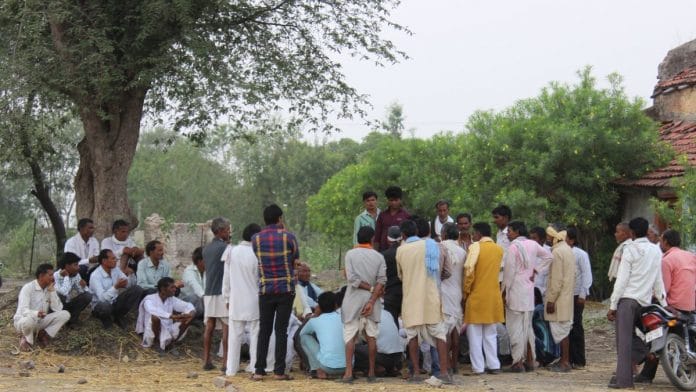
As Parliament narrowly defeats the 131st Constitutional Amendment Bill clubbing delimitation with women’s reservation, an Indian Express photo-feature from Rohtak (Haryana) quietly underlines the long arc of the 73rd Amendment at 33 years. Sarpanch Kashmiri Devi completed her PhD while presiding over gram sabha meetings; Kavita holds her second term; Sunita Devi says, with a smile: “In 1995, I voted for myself first — that one ballot changed everything for me.”
The 73rd Constitutional Amendment Act 1992, which came into force on 24 April 1993, is the often-overlooked companion to Parliament-level women’s reservation. While the 131st CAA faltered in the Lok Sabha and the 106th CAA 2023 (Nari Shakti Vandan Adhiniyam) awaits delimitation, Art 243D has been silently seating over 14 lakh women across gram, block and zilla panchayats for three decades. Haryana in 2020 raised its quota to 50%, joining Bihar (2006), Uttarakhand, Rajasthan, MP, Maharashtra and Odisha.
Constitutional & Legal Framework
- 73rd CAA 1992 (Part IX, Arts 243 to 243O): Constitutional status to Panchayati Raj Institutions.
- Art 243D: Reservation — SC/ST seats proportionate to population, not less than one-third for women (many states at 50%). Chairperson offices reserved under 243D(4).
- Art 40 (DPSP): State to organise village panchayats as units of self-government — Gandhian conception.
- Art 243G + Eleventh Schedule: 29 subjects (land improvement, rural housing, drinking water, health, women and child welfare, etc.) that states may devolve.
- Art 243K: State Election Commission — independent constitutional authority.
- PESA Act 1996: Extends Part IX to Fifth Schedule tribal areas.
- 74th CAA 1992 (Part IXA): Parallel framework for urban local bodies.
- Haryana Panchayati Raj (Amendment) Act 2020: Raised women’s quota to 50%.
- 106th CAA 2023 — Nari Shakti Vandan Adhiniyam: Art 330A, 332A and 334A (33% women reservation in LS/State assemblies) — operative post delimitation.
- Key precedents: K. Krishna Murthy v UoI (2010) — Constitution Bench upheld OBC + women political reservation, requiring empirical backing; State of UP v Pradhan Sangh Kshettra Samiti (1995) on election superintendence; Vyajyanti Tiwari on rotation of reserved seats.
CLAT Angle — Why This Matters
This is the most ‘exam-ready’ feature of the day. The Panchayat story lets CLAT examiners test three distinct clusters at once: (i) constitutional structure — Part IX vs Part IXA, 11th vs 12th Schedule; (ii) reservation doctrine — how Art 243D interacts with Art 15(3), 16(4) and the 50% Indra Sawhney ceiling (Krishna Murthy clarifies local-body quotas are distinct); and (iii) policy comparison — the success of grassroots quota (73rd CAA, operative since 1993) against the stalled Parliament quota (106th CAA 2023, still tied to delimitation). Expect passage-style questions where the principle is “Art 243D mandates not less than one-third reservation” and the application is a Haryana/Bihar 50% scenario.
Key Facts at a Glance
| Element | Detail |
|---|---|
| 73rd CAA enacted | 1992; in force 24 April 1993 |
| Part of Constitution | Part IX (Arts 243 – 243O) |
| Women’s floor quota | 1/3 under Art 243D(3) |
| Haryana women’s quota (2020) | 50% |
| States >33% | 20+ (Bihar first, 2006) |
| Elected women in PRIs | >14 lakh (largest globally) |
| Subjects devolved (11th Schedule) | 29 |
| Key case | K. Krishna Murthy v UoI (2010, Constitution Bench) |
Mnemonic
“PANCHAYAT” — Part IX, Art 243D (1/3 women), Ninety-two (1992), Chairperson reservation, Haryana 50% (2020), Art 40 DPSP, Year 1993 start, Art 243K SEC, Thirty-three years and counting.
Practice Quiz — 10 MCQs
Test yourself on the 73rd Amendment and the long arc of women’s reservation.
Practice Quiz — 10 CLAT-Style Questions
Click an option to reveal the answer and explanation.