
CURRENT AFFAIRS | 8 APRIL 2026
CLAT GK + SCIENCE & TECHNOLOGY / INTERNATIONAL LAW
• Science and technology — NASA Artemis programme, ISRO missions
• Outer Space Treaty 1967 (Art I-II: peaceful use, no national appropriation)
• Artemis Accords (India signed 2023)
• COPUOS (UN Committee on Peaceful Uses of Outer Space)
• India’s Gaganyaan and Chandrayaan programmes
What Happened: Artemis II Sets New Human Spaceflight Record
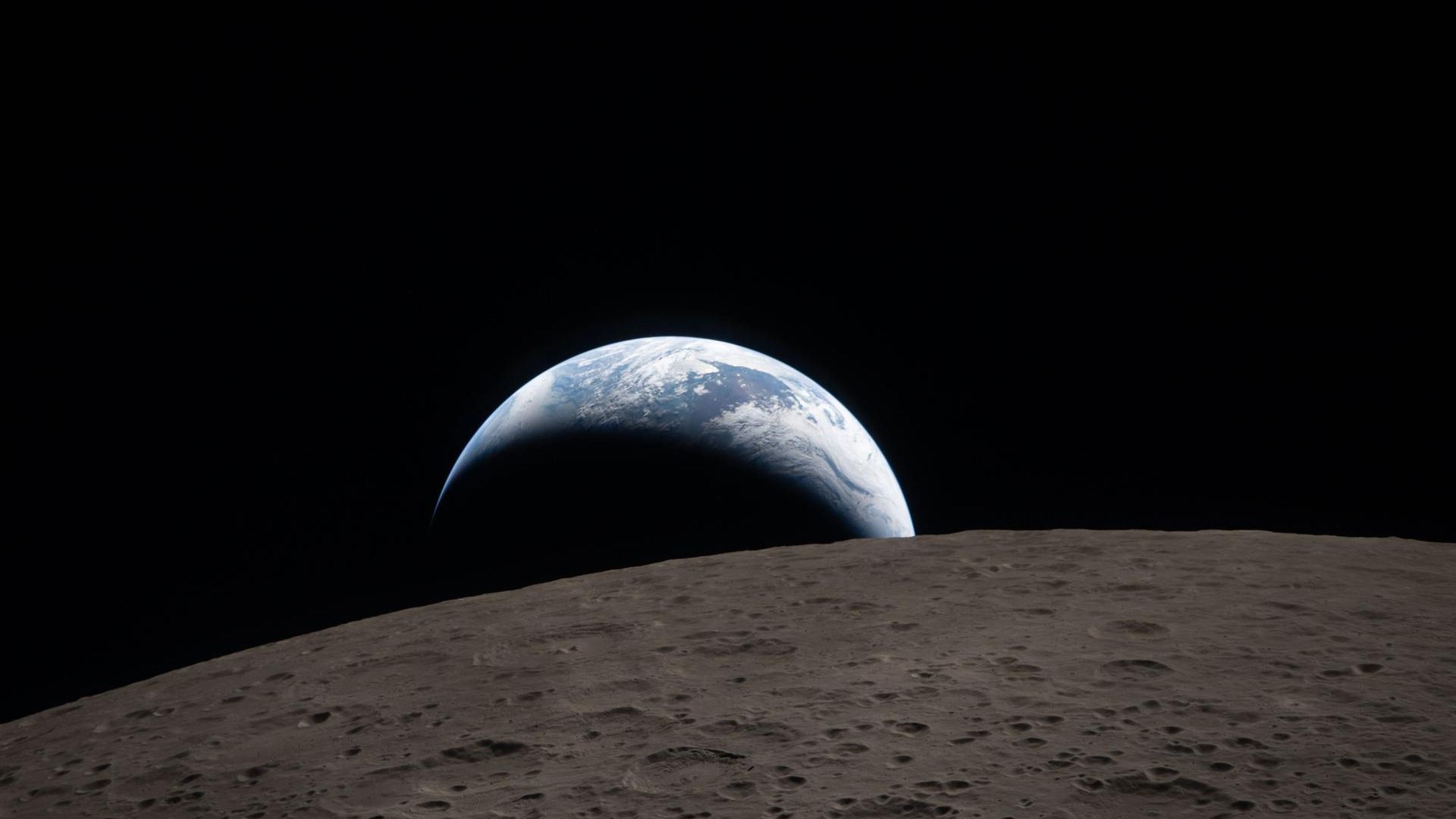
On Monday, April 6, 2026, NASA’s Artemis II mission achieved a historic milestone. The Orion spacecraft travelled 4,06,771 km (252,756 miles) from Earth, setting a new record for the farthest distance ever travelled by humans — surpassing Apollo 13’s record of 4,00,171 km set in April 1970.
For the first time in over 50 years, humans entered the lunar sphere of influence, flying approximately 4,067 miles above the lunar surface. The mission used a “free return trajectory” — a figure-eight path that uses the Moon’s gravity as a slingshot to return the spacecraft to Earth without requiring additional propulsion, serving as a critical safety mechanism.
The Crew and Mission Objectives
| Mission | Artemis II (NASA) |
| Record distance | 4,06,771 km from Earth |
| Previous record | Apollo 13 — 4,00,171 km (April 1970) |
| Record broken | April 6, 2026, at 12:56 PM CDT |
| Crew | Reid Wiseman, Victor Glover, Christina Koch (NASA), Jeremy Hansen (CSA, Canada) |
| Spacecraft | Orion with European Service Module |
| Trajectory | Free return (figure-eight, uses Moon’s gravity) |
| Key tests | Heat shield, life support, navigation systems |
The four-member crew comprised three NASA astronauts — Commander Reid Wiseman, Pilot Victor Glover (the first Black astronaut to travel to the Moon’s vicinity), and Mission Specialist Christina Koch — along with Jeremy Hansen from the Canadian Space Agency (CSA), making this an international mission.
The mission’s primary objectives were to test the Orion spacecraft’s heat shield, life support systems, and navigation capabilities ahead of the planned Artemis III mission, which aims to land humans on the Moon’s surface.
International Space Law: The Legal Framework
- Outer Space Treaty 1967 — The foundational treaty of international space law.
- Article I — Space exploration shall be carried out for the benefit and in the interests of all countries, irrespective of their degree of economic or scientific development.
- Article II — Outer space, including the Moon and other celestial bodies, is not subject to national appropriation by claim of sovereignty, use, occupation, or any other means.
- Artemis Accords (2020) — A US-led set of principles for lunar exploration. India signed in June 2023 during PM Modi’s state visit, becoming the 27th signatory. The Accords supplement the Outer Space Treaty with principles on transparency, interoperability, and space resource utilisation.
- Moon Agreement 1979 — Declares the Moon and its resources the “common heritage of mankind.” However, it has NOT been ratified by any major space-faring nation (US, Russia, China, India), making it largely ineffective.
- COPUOS — The UN Committee on the Peaceful Uses of Outer Space is the main international body governing space cooperation and norms.
India’s Space Programme: Connections and Context
Artemis II has significant implications for India’s space programme:
- Artemis Accords membership — India’s signing of the Accords in 2023 positions it as a key partner in future lunar missions, including potential Indian participation in Artemis missions.
- Gaganyaan — India’s first human spaceflight programme aims to send Indian astronauts (Gagannauts) to low Earth orbit. The successful Artemis II demonstrates technologies relevant to Gaganyaan’s development.
- Chandrayaan programme — India’s Chandrayaan-3 successfully landed on the Moon’s south pole in August 2023, making India the fourth country to achieve a soft lunar landing and the first to land near the south pole.
- India’s Space Activities Bill — A pending legislation to regulate commercial space activities in India, which will provide the domestic legal framework alongside international treaties.
• CLAT GK tests science and technology awareness — space missions, records, and India’s role are common questions
• Outer Space Treaty provisions (especially Articles I and II) are frequently tested in legal awareness
• Understanding international treaties and India’s participation (Artemis Accords, COPUOS) connects to international law questions
• India’s ISRO achievements (Chandrayaan-3, Gaganyaan) are CLAT GK staples
• The concept of “common heritage of mankind” (Moon Agreement) appears in legal reasoning passages
S — Surpassed Apollo 13’s record (4,06,771 km vs 4,00,171 km)
P — Peaceful use of outer space (OST Article I)
A — Artemis Accords (India signed 2023, 27th signatory)
C — COPUOS (UN body for space cooperation)
E — ESM (European Service Module) and international crew
Source: The Indian Express (Delhi Edition), Explained — 8 April 2026
Practice Quiz
Test your understanding with these 10 MCQs:
Practice Quiz — 10 CLAT-Style Questions
Click an option to reveal the answer and explanation.