
CURRENT AFFAIRS | 8 APRIL 2026
CLAT GK + SOCIAL REFORM & CONSTITUTIONAL HISTORY
• Social reform history — Phule, Ambedkar, Periyar
• Article 14 (equality), Article 15 (non-discrimination), Article 17 (untouchability abolition)
• Article 21A (right to education), Article 46 DPSP
• Right to Education Act 2009, SC/ST Prevention of Atrocities Act 1989
• Indra Sawhney v UoI (1992), Champakam Dorairajan (1951)
Phule’s Bicentenary: A Constitutional Project Before the Constitution
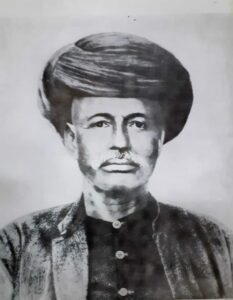
April 11, 2027 will mark the bicentenary of Mahatma Jotirao Phule, born on April 11, 1827. An Ideas Page article by Nilanjana Bhowmick in The Indian Express positions Phule not merely as a social reformer, but as a thinker whose work constitutes a “constitutional project” — one that imagined the foundations of a social order built on equality, dignity, and redistribution of power.
The Maharashtra government under Chief Minister Devendra Fadnavis has announced year-long celebrations for the bicentenary, with programs being organized throughout 2026-2027 to honour Phule’s legacy.
Phule’s significance lies in the fact that he preceded Ambedkar by nearly a century in demanding constitutional safeguards for social justice. His work directly influenced the framing of several fundamental rights and directive principles in the Indian Constitution.
Phule’s Life and Work: Key Contributions
| Born | April 11, 1827, Pune |
| Died | November 28, 1890 |
| Key work | ‘Gulamgiri’ (Slavery, 1873) |
| Organisation founded | Satya Shodhak Samaj (Truth Seekers’ Society, 1873) |
| Major achievement | Established schools for women and oppressed castes |
| Spouse | Savitribai Phule (India’s first female teacher) |
| Title ‘Mahatma’ | Bestowed by Vithalrao Krishnaji Vandekar in 1888 |
| Bicentenary | April 11, 2027 |
- ‘Gulamgiri’ (Slavery, 1873) — Phule’s most famous work situated Indian caste oppression in a global context, drawing parallels with American slavery. He dedicated the book to the people of the United States as a tribute to their anti-slavery struggle.
- Education for all — Phule and his wife Savitribai Phule established schools for women, Dalits, and oppressed castes at a time when education was restricted to upper-caste men. He insisted that higher education must be accessible to children regardless of caste.
- Satya Shodhak Samaj (1873) — Among the first organised movements against Brahminical hierarchy. The society performed marriages without Brahmin priests and campaigned for social equality.
- Widow remarriage — Phule advocated for widow remarriage and established a home for widows and an orphanage for children of widows.
Constitutional Provisions Influenced by Phule’s Vision
- Article 14 — Equality before law and equal protection of laws. Phule’s entire life was a campaign for equality across caste and gender lines.
- Article 15 — Prohibition of discrimination on grounds of religion, race, caste, sex, or place of birth. Directly reflects Phule’s anti-discrimination advocacy.
- Article 17 — Abolition of untouchability. Phule was among the earliest reformers to campaign against untouchability, decades before it was constitutionally abolished.
- Article 21A — Right to free and compulsory education (inserted by 86th Amendment, 2002). Phule’s vision of universal education directly informs this right.
- Article 46 (DPSP) — Directs the State to promote educational and economic interests of SC/ST and weaker sections and protect them from social injustice.
Landmark Cases: From Phule’s Vision to Constitutional Interpretation
• State of Madras v Champakam Dorairajan (1951) — Struck down communal reservations in education, leading to the First Constitutional Amendment adding Article 15(4) enabling special provisions for backward classes. This case shows how Phule’s vision of equal access to education was operationalised constitutionally.
• Indra Sawhney v UoI (1992) — The Mandal Commission case upheld OBC reservations but imposed a 50% ceiling on total reservations. Phule’s advocacy for the rights of “Shudras and Ati-Shudras” is the intellectual precursor to modern reservation policy.
• Right to Education Act 2009 — Operationalises Article 21A, making free and compulsory education for children aged 6-14 a fundamental right. This fulfils Phule’s 150-year-old demand for universal education.
• SC/ST Prevention of Atrocities Act 1989 — Provides legal protection against caste-based atrocities, building on the constitutional framework that Phule’s movement helped create.
The article draws a direct line from Phule to Ambedkar, noting that while Ambedkar is rightly celebrated as the “Father of the Indian Constitution,” Phule’s earlier work laid the intellectual and social foundation for the constitutional provisions on equality and social justice. Similarly, Periyar (E.V. Ramasamy) in South India carried forward the anti-caste movement that Phule pioneered.
P — Pioneer of anti-caste education (1827-1890)
H — His ‘Gulamgiri’ (1873) linked caste to global slavery
U — Universal education for women and oppressed castes
L — Led Satya Shodhak Samaj (Truth Seekers, 1873)
E — Equality vision became Art 14, 15, 17, 21A
Source: The Indian Express (Delhi Edition), Ideas Page — 8 April 2026
Practice Quiz
Test your understanding with these 10 MCQs:
Practice Quiz — 10 CLAT-Style Questions
Click an option to reveal the answer and explanation.