
CURRENT AFFAIRS | 24 APRIL 2026
CLAT GK + CONSTITUTIONAL LAW & RELEVANT AREA
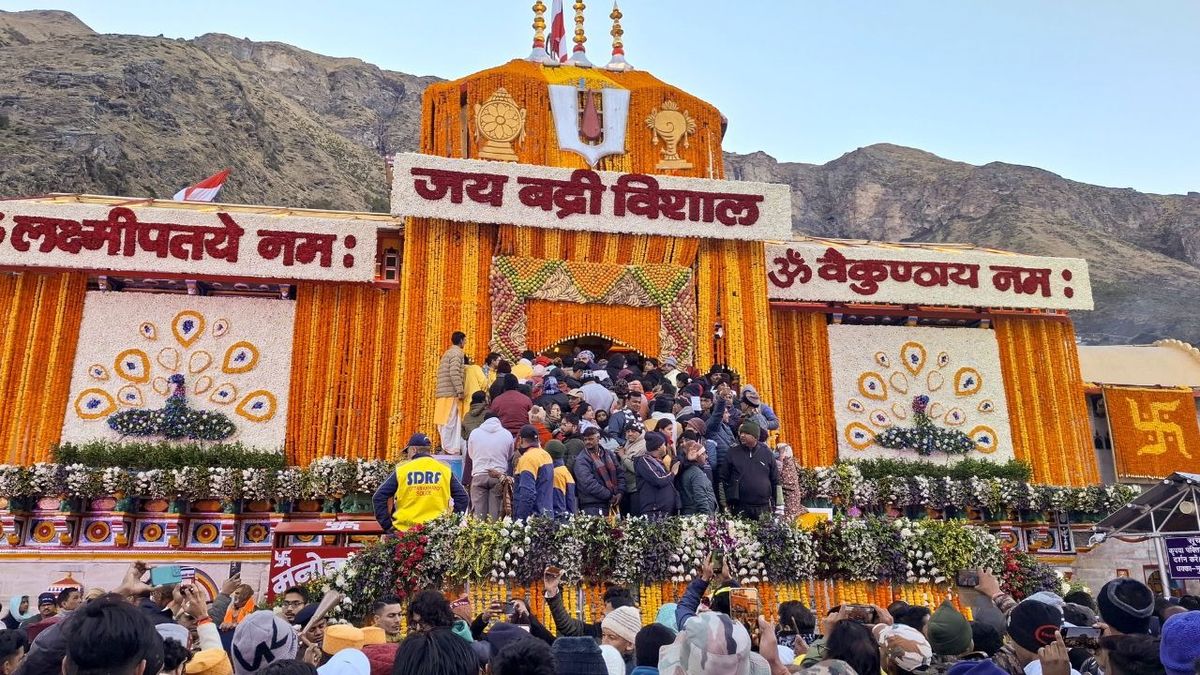
The portals of Badrinath temple in Uttarakhand’s Chamoli district were reopened to devotees at 6:15 AM on Thursday, 23 April 2026, after the customary six-month winter closure. Uttarakhand Chief Minister Pushkar Singh Dhami performed the first puja in the name of Prime Minister Narendra Modi, praying for the happiness, prosperity and well-being of the people. Nearly 15,000 pilgrims — many of whom had queued overnight — gathered at the Garhwal-Himalayan shrine to seek darshan of Lord Badri Vishal. With Gangotri and Yamunotri (19 April) and Kedarnath (22 April) having already opened, the reopening of Badrinath formally commences the 2026 Char Dham Yatra.
Key Facts at a Glance
| Date of opening | 23 April 2026, 6:15 AM — Badrinath Dham |
| Location | Chamoli district, Garhwal Himalayas, Uttarakhand |
| Deity | Badri Vishal — Lord Vishnu in meditative padmasana; 3.3-ft black-stone idol |
| First puja | Performed by CM Pushkar Singh Dhami in PM Narendra Modi’s name |
| Pilgrim footfall (Day 1) | ≈ 15,000 pilgrims |
| Other Dhams — 2026 opening | Gangotri & Yamunotri: 19 April · Kedarnath: 22 April |
| Original Char Dham (Bharat) | Puri (East), Rameswaram (South), Dwarka (West), Badrinath (North) |
| Chota Char Dham (Uttarakhand) | Gangotri, Yamunotri, Kedarnath, Badrinath |
| Temple tradition | Revived by Adi Shankaracharya, 8th century CE; current structure 19th century (Garhwal kings) |
Constitutional & Statutory Framework
- Article 25 — freedom of conscience and right to freely profess, practise and propagate religion (subject to public order, morality, health).
- Article 25(2)(a) — State may regulate ‘secular, economic, financial, political or other’ activities associated with religion.
- Article 25(2)(b) — State may throw open Hindu religious institutions of public character to all classes and sections of Hindus (temple-entry power).
- Article 26 — religious denominations’ right to establish/maintain institutions, manage affairs in ‘matters of religion’, and own/administer property.
- Article 27 — no person compelled to pay tax for promotion of any religion.
- Article 28 — no religious instruction in wholly State-funded institutions.
- Article 49 (DPSP) — State to protect monuments and places of artistic or historic interest.
- Article 51A(f) — fundamental duty to value and preserve rich heritage of composite culture.
Landmark Cases & Key Organisations
- Commissioner, HRE v LT Swamiar — Shirur Mutt (1954) — Articulated the ‘essential religious practices’ doctrine; what is ‘essential’ to a religion is constitutionally protected under Art 25/26.
- Ratilal v State of Bombay (1954) — Refined Shirur Mutt; religious/secular-activity distinction.
- Indian Young Lawyers Assn v State of Kerala — Sabarimala (2018) — Women’s entry into Sabarimala; essential-practices doctrine vs Art 14, 15, 17, 25(1).
- Shayara Bano v Union of India (2017) — Triple talaq unconstitutional; essential practices doctrine re-examined.
- Adi Shankaracharya (8th century CE) — Credited with reviving Hindu philosophy and founding the four mathas at Puri, Rameswaram, Dwarka and Jyotirmath (Badrinath).
- Uttarakhand Char Dham Devasthanam Management Act, 2019 — Created a Board for administration; repealed in 2021 following protests by tirth-purohits; administration reverted to temple committees.
- Places of Worship (Special Provisions) Act, 1991 — Freezes religious character of places of worship as on 15 August 1947 (Ayodhya carved out).
CLAT 2027 Angle — Why This Matters
- ‘Essential religious practices’ doctrine is a CLAT favourite — apply it through the Shirur Mutt / Sabarimala lens.
- Difference between Art 25 (individual) and Art 26 (denominational) is crucial; temple-administration litigation almost always involves Art 26(b) ‘matters of religion’.
- Know the ‘2019-2021 Devasthanam Act’ arc as a real-world example of the State’s regulatory power under Art 25(2)(a) being politically reversed.
- Secularism test: State may regulate economic/secular activities ‘associated’ with religion (e.g., temple finances), but not ‘matters of religion’ themselves.
Mnemonic
BE-GG-RK — Badrinath, Etc. — Bharat Char Dham = Puri, Rameswaram, Dwarka, Badrinath (clockwise); Chota Char Dham = Gangotri, Yamunotri, Kedarnath, Badrinath.
Test Yourself — 10 MCQs
Take a 10-question quiz on this topic. Answers and explanations appear immediately on submission.
Practice Quiz — 10 CLAT-Style Questions
Click an option to reveal the answer and explanation.