
CURRENT AFFAIRS | 16 APRIL 2026
CLAT GK + INTERNATIONAL RELATIONS & FOREIGN POLICY
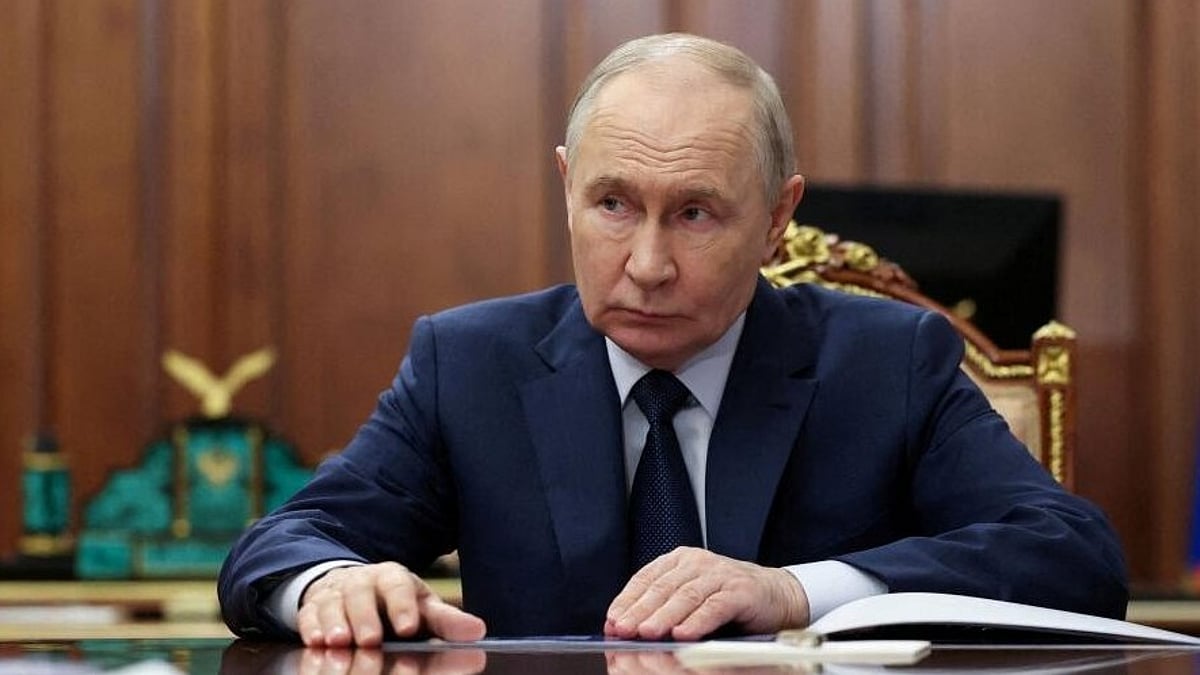
The Kremlin has confirmed that President Vladimir Putin will attend the 2026 BRICS Summit in India, tentatively slated for 12-13 September. India, which has chaired BRICS previously in 2012, 2016 and 2021, is hosting under the theme of “Building for Resilience, Innovation, Cooperation and Sustainability.” The visit throws fresh light on India’s doctrine of strategic autonomy, often described as non-alignment 2.0, as New Delhi balances its traditional Russia partnership against US pressure under the CAATSA sanctions regime.
BRICS originally comprised Brazil, Russia, India, China (2009) and later South Africa (2010); subsequent expansions in 2024 added new members, turning it into a key Global South coordination platform on development, currency and global-governance reform.
Constitutional & Legal Framework
- Article 51 (DPSP) — Directs the State to promote international peace and security, maintain just relations, foster respect for international law, and encourage arbitration of disputes.
- UN Charter Article 2(1) — Sovereign equality of all member states.
- UN Charter Article 2(4) — Prohibits threat or use of force against territorial integrity of another state.
- UN Charter Article 51 — Preserves inherent right of individual and collective self-defence.
- CAATSA 2017 (US) — Countering America’s Adversaries Through Sanctions Act; imposes secondary sanctions on parties dealing with Russia’s defence sector.
- Foreign Trade (Development and Regulation) Act 1992 — India’s domestic framework for import-export policy and the DGFT.
- Strategic autonomy / Non-alignment 2.0 — India’s doctrinal commitment to independent decision-making in foreign policy.
CLAT Angle — Why This Matters
This is the classic CLAT International Relations + Constitutional Law crossover. Expect questions on: (a) Article 51 of the Constitution as a Directive Principle guiding foreign policy (don’t confuse it with UN Charter Article 51 on self-defence — a favourite CLAT trap); (b) the principle of sovereign equality under UN Charter Article 2(1) as a justification for India’s Russia engagement despite Western pressure; (c) the general prohibition on use of force under Article 2(4) and its exceptions; and (d) the evolution of non-alignment into strategic autonomy. Be ready to identify BRICS members, its founding year (2009 for BRIC; 2010 for BRICS) and the 2024 expansion.
Key Facts at a Glance
| Element | Detail |
|---|---|
| BRICS founding | BRIC 2009 (Brazil, Russia, India, China); South Africa 2010 |
| 2026 BRICS host | India (4th time — after 2012, 2016, 2021) |
| Summit dates | 12-13 September 2026 (expected) |
| Article 51 (India) | DPSP on international peace & security |
| UN Charter Art 2(4) | Prohibition on use of force |
| UN Charter Art 51 | Right of self-defence |
| CAATSA 2017 | US law imposing secondary sanctions on Russia deals |
| Doctrine | Strategic autonomy / Non-alignment 2.0 |
Mnemonic — BRICS
Balancing • Russia-India ties • Influence • Cooperation south • Summit India
Test Your Knowledge
Attempt this 10-question CLAT-style quiz on BRICS, Article 51, UN Charter provisions, CAATSA, and strategic autonomy.
Practice Quiz — 10 CLAT-Style Questions
Click an option to reveal the answer and explanation.