
CURRENT AFFAIRS | 30 APRIL 2026
CLAT GK + Culture / History
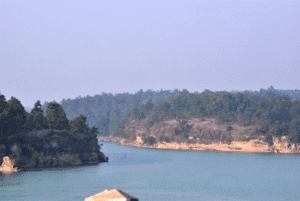
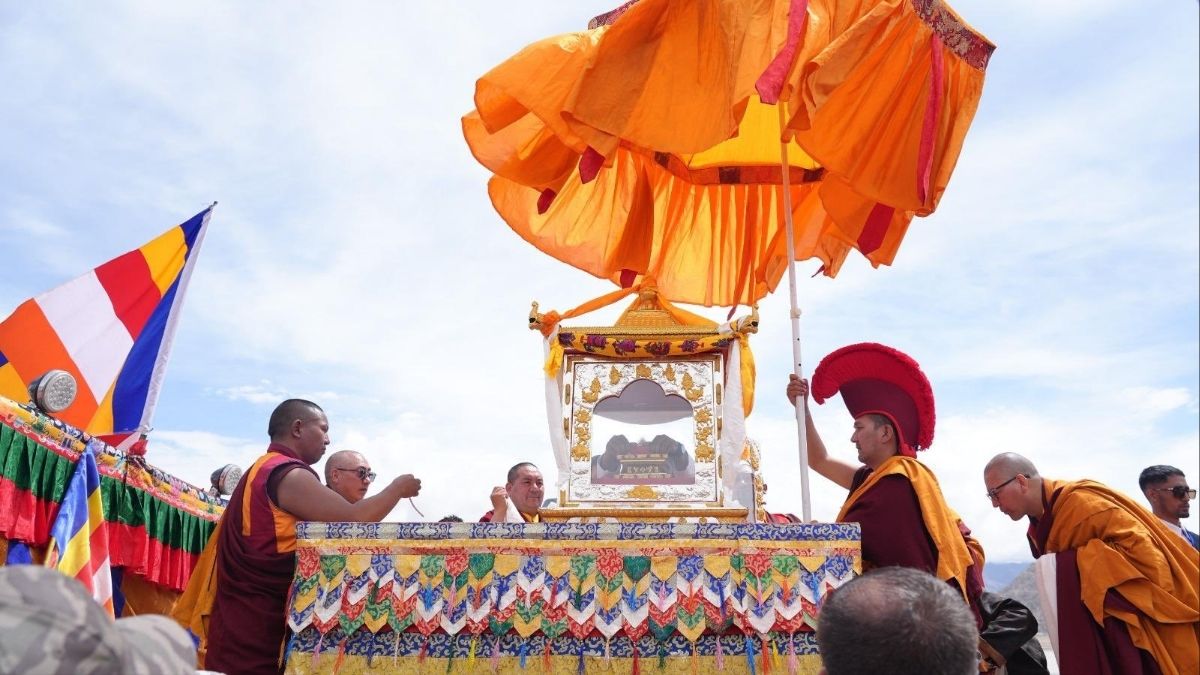
For the first time, the holy Piprahwa relics of Lord Buddha will be exposed for two weeks of public veneration on the banks of the Indus River, Leh, Ladakh, beginning Buddha Purnima — May 1, 2026. The exposition is hosted under the aegis of the Ministry of Culture, with veneration at Jivetsal (May 2–10), Zanskar (May 11–12), and the Dharma Centre, Leh (May 13–14), before the relics return to Delhi on May 15. The event will be attended by Union Home Minister Amit Shah, Union Ministers, ambassadors, Chief Ministers of Buddhist-majority states, and representatives of various Buddhist organisations.
The Indian Express op-ed, co-authored by Ashish Kundra (Chief Secretary, UT Ladakh) and Lhundup Gyalpo, frames the exposition as both a spiritual homecoming and an act of civilisational diplomacy — repositioning Ladakh as the heart of trans-Himalayan Buddhism.
What Happened
The Piprahwa relics arrived at Kushok Bakula Rinpoche Airport, Leh, on April 29, 2026, received in a ceremonial welcome by Ladakh Lieutenant Governor Vinai Kumar Saxena, senior officials and spiritual leaders. The 2-week public veneration begins May 1 — Buddha Purnima.
The Background
The Piprahwa relics were excavated in the 1890s by William Claxton Peppé, a British colonial estate engineer, who dug into a stupa-mound at Piprahwa village in present-day Uttar Pradesh (close to the Nepal border). He found a sandstone casket containing five reliquary urns and a Brahmi inscription attributing the contents to “the Buddha of the Sakya clan“. The colonial government transferred a portion to the Indian Museum, Kolkata, and gifted the bone fragments and ashes to King Rama V of Thailand, where they remain enshrined to this day. In July 2025, Peppé’s descendants attempted to auction the associated gems and offerings — India intervened and secured their return, ending over a century of colonial custody.
Constitutional & Legal Framework
- Article 25 — freedom of conscience and free profession, practice and propagation of religion (subject to public order, morality, health).
- Article 26 — every religious denomination’s right to manage its own affairs in matters of religion (relevant to monastic stewardship of relics).
- Article 49 — Directive Principle: state’s duty to protect monuments and objects of national importance.
- Ancient Monuments and Archaeological Sites and Remains Act, 1958 — governs ASI’s custodianship of relics, antiquities and monuments.
- Antiquities and Art Treasures Act, 1972 — regulates export and trade of antiquities; was the legal lever for India’s 2025 intervention against the Sotheby’s auction.
- UNESCO 1970 Convention on illicit transfer of cultural property — international framework supporting repatriation claims.
Why This Matters
The exposition is heritage / soft-power diplomacy — a 21st-century renewal of the Mauryan-era practice of relic-sharing across Asia. Emperor Ashoka, after the Kalinga War, redistributed the Buddha’s relics from the original 8 stupas at Kushinagar across his empire (legend: 84,000 stupas), making Buddhism a pan-Asian civilisational force. India’s reactivation of this network — through Ladakh’s Tiri (Mauryan-era stupa), Sani Stupa (Zanskar, Kushan-era King Kanishka), and the Mulbekh Maitreya — strengthens cultural ties with Sri Lanka, Thailand, Bhutan, Mongolia, Japan, Korea and Vietnam.
CLAT 2027 — Why You Must Know This
This story sits at the cross-section of GK (Buddhism, stupas, Ashoka), Legal Reasoning (Articles 25, 26, 49; Antiquities Act 1972), and Current Affairs (Buddha Purnima 2026, Ladakh, Amit Shah visit). A passage-based question on the Antiquities Act + Sotheby’s auction repatriation is a near-certain framing.
Key Facts at a Glance
| EXPOSITION DATES | May 1–15, 2026 (Leh, Zanskar, Dharma Centre) |
| RELICS | Piprahwa relics of the Buddha (Sakya clan) |
| DISCOVERED BY / WHEN | William Claxton Peppé, 1890s, Piprahwa (UP) |
| CURRENT CUSTODIANS | Indian Museum (Kolkata) + Wat Saket (Thailand) |
| 2025 REPATRIATION | India blocked Sotheby’s-Peppé family auction; gems returned |
| UN RECOGNITION | UN Day of Vesak (GA Resolution 54/115, 1999) |
| LADAKH BUDDHIST SITES | Tiri (Mauryan) · Sani (Kushan/Kanishka) · Mulbekh Maitreya |
Mnemonic
BES for Buddha Purnima = Birth + Enlightenment + Samadhi (Mahaparinirvana) — the three life events on the same lunar day.
Test Your Knowledge — 10 Question Quiz
Take this quick quiz to lock in the concepts:
Practice Quiz — 10 CLAT-Style Questions
Click an option to reveal the answer and explanation.
Source: The Indian Express, 30 April 2026.