
CURRENT AFFAIRS | 30 APRIL 2026
CLAT GK + Polity / Governance
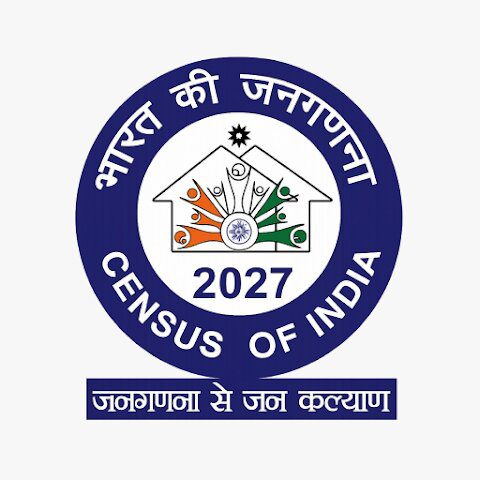
India has begun the world’s largest census exercise. Phase 1 — the Houselisting and Housing Census (HLO) — of Census 2027 commenced across the country from April 16, 2026, in eight pilot States/UTs (Odisha, Goa, Karnataka, Mizoram, Sikkim, Lakshadweep, Andaman & Nicobar, NDMC/Delhi Cantonment), with a phased rollout to follow nationally. This will be India’s first-ever fully digital census: enumerators carry a mobile app, and citizens can self-enumerate online via se.census.gov.in.
The Indian Express’s ground report from Banamalipur, Khordha district, Odisha, profiles Sarmishta Sahoo, a 25-year-old enumerator going door-to-door in 35°C heat with ORS packets and a mandatory ID card. Each enumerator is averaging ~256 buildings; over 1 lakh enumerators (mostly schoolteachers) have been deployed nationally. Heatstroke deaths of enumerators in Dhenkanal and elsewhere — 5 deaths reported so far — have triggered a Standard Operating Procedure (SOP) on heat safety and ID-carry.
What Happened
HLO captures details on housing conditions and household amenities — 33 questions in Phase 1, notified in January 2026. It is the precursor to Phase 2 — Population Enumeration (Feb–Mar 2027) with the reference moment fixed at 00:00 hours on 1 March 2027. Census 2027 will also be the FIRST since 1931 to formally enumerate caste — a politically charged restoration with deep policy and reservation implications.
The Background
Census in India is decennial since 1881 (under W.C. Plowden); the 1872 round was a non-synchronous trial. The 2021 census was indefinitely postponed in March 2020 because of COVID-19, breaking a 140-year unbroken decennial sequence. Census 2027 thus arrives 16 years after 2011 — making it both delayed and historically significant.
Constitutional & Legal Framework
- Article 246 + Seventh Schedule, Union List Entry 69 — “Census” is a Union subject; only Parliament can legislate.
- Census Act, 1948 — governs conduct, enumerator powers, penalties for refusal/false answers, and absolute confidentiality of returns.
- Article 82 — readjustment of Lok Sabha seats after each census; relevant for the post-2026 delimitation debate.
- Registrar General & Census Commissioner of India (RGCCI) — under the Ministry of Home Affairs (MHA); the constitutional authority for census conduct.
- Information Technology Act, 2000 — relevant to data security of digital enumeration and self-enumeration portal.
Why This Matters
Census data drives delimitation of constituencies, reservation matrices, scheme targeting (PMAY, Jal Jeevan, MGNREGA), Finance Commission devolution, and India’s BIMSTEC/G20 demographic narrative. The 2027 caste-enumeration restoration will reshape political and policy debates on quota expansion. The digital format also raises new data-protection questions under the DPDP Act 2023.
CLAT 2027 — Why You Must Know This
Census 2027 is a near-certain CLAT GK and Legal-Reasoning topic. Expect: (i) Article 82 + Article 81 questions on delimitation freeze; (ii) Census Act 1948 confidentiality vs RTI; (iii) Concurrent vs Union List placement; (iv) Articles 14 & 16 implications of caste enumeration; (v) federal-cooperation questions (state IDs, schoolteacher deployment).
Key Facts at a Glance
| PHASE 1 (HLO) START | 16 April 2026 (8 pilot States/UTs) |
| PHASE 2 (POPULATION) | Feb–Mar 2027; reference moment 1 March 2027 |
| FIRST OF ITS KIND | Fully digital; first caste-enumeration since 1931 |
| ENUMERATORS | ~1 lakh (mostly schoolteachers); ~256 buildings each |
| LANGUAGES (SELF-ENUM PORTAL) | 16 regional languages |
| GOVERNING ACT | Census Act, 1948 |
| CONSTITUTIONAL ENTRY | Union List, Entry 69 |
Mnemonic
HLO = Houselisting + Housing Listing Operation. Phase 1 = “What you live in“; Phase 2 = “Who lives there“.
Test Your Knowledge — 10 Question Quiz
Take this quick quiz to lock in the concepts:
Practice Quiz — 10 CLAT-Style Questions
Click an option to reveal the answer and explanation.
Source: The Indian Express, 30 April 2026.