
CURRENT AFFAIRS | 1 APRIL 2026
CLAT GK + INTERNATIONAL RELATIONS & MARITIME LAW
– UN Charter Article 33 (pacific settlement of disputes)
– UNCLOS Article 38 (transit passage through straits)
– Vienna Convention on Diplomatic Relations, 1961
– Article 51 (self-defense) and Article 103 (primacy of UN Charter)
– Multilateral diplomacy and conflict resolution
What Happened: China-Pakistan Five-Point Peace Initiative
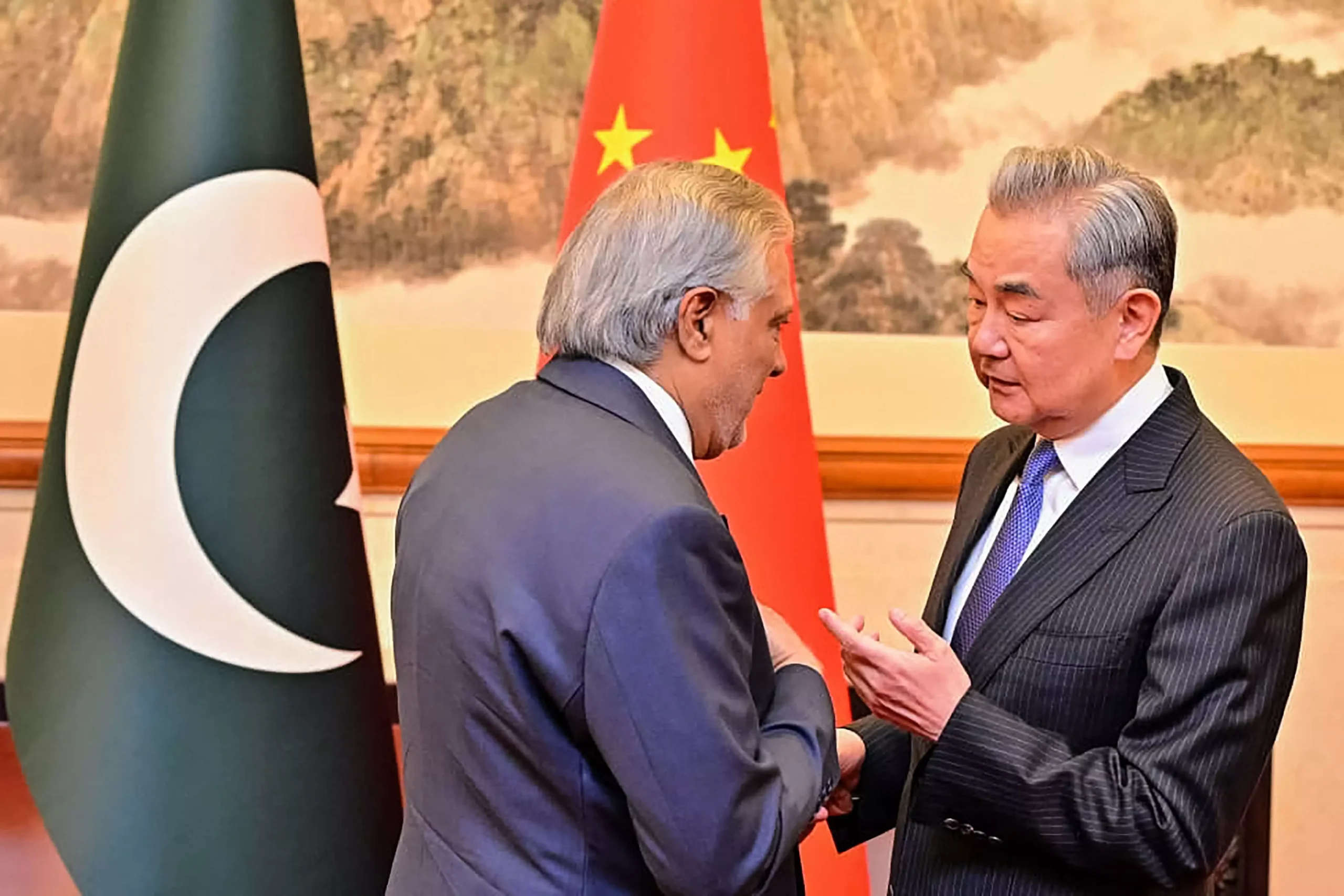
China and Pakistan on 31 March 2026 jointly issued a five-point initiative for restoring peace and stability in the Gulf and Middle East amid the ongoing US-Israeli war on Iran. This is the first time a major global power has formally stated a pathway to end the conflict that began on 28 February.
Pakistan’s Deputy Prime Minister and Foreign Minister Ishaq Dar undertook a one-day visit to Beijing at the invitation of China’s Foreign Minister Wang Yi for in-depth discussions on regional developments.
The Five-Point Proposal
1. Immediate Cessation of Hostilities: Call for immediate ceasefire and utmost efforts to prevent the conflict from spreading. Humanitarian assistance must be allowed to all war-affected areas.
2. Start of Peace Talks: Dialogue and diplomacy is the only viable option. Sovereignty, territorial integrity, national independence and security of Iran and Gulf states must be safeguarded.
3. Protection of Civilians: Immediate stop to attacks on civilians and non-military targets, including energy, desalination, power facilities, and peaceful nuclear infrastructure such as nuclear power plants.
4. Maritime Security: The Strait of Hormuz is an important global shipping route. Parties must protect ships and crew members stranded in the Strait, allow safe passage of civilian and commercial vessels, and restore normal navigation.
5. Comprehensive Peace Framework: A multilateral framework based on the primacy of the UN Charter, rejecting unilateral military solutions.
Legal Framework: UN Charter and Maritime Law
| Date | 31 March 2026 |
| China Representative | FM Wang Yi |
| Pakistan Representative | DPM/FM Ishaq Dar |
| Venue | Beijing, China |
| Key Waterway | Strait of Hormuz (~20% global oil) |
| China-Iran Oil Link | China buys 90%+ of Iran’s oil exports |
| Pakistan Offer | Ready to host US-Iran talks |
Key legal provisions involved:
- UN Charter Article 33: Requires parties to any dispute to seek a solution by negotiation, mediation, conciliation, arbitration, judicial settlement, or resort to regional arrangements — the pacific settlement of disputes
- UN Charter Article 51: The inherent right of individual or collective self-defense
- UN Charter Article 103: In case of conflict between Charter obligations and any other international agreement, Charter obligations prevail (primacy)
- UNCLOS Article 38: Establishes the right of transit passage through straits used for international navigation — directly applicable to the Strait of Hormuz
- Vienna Convention (1961): Codifies privileges and immunities of diplomatic missions — the framework under which these bilateral talks occur
– GK Section: First non-Western peace plan for the Iran conflict, Strait of Hormuz, Wang Yi-Dar meeting
– Legal Reasoning: Art 33 (pacific settlement) vs Art 51 (self-defense) — when does military action become unjustifiable?
– International Law: UNCLOS transit passage rights vs wartime blockades
– Diplomacy: China’s role as mediator (buys 90% of Iran’s oil) — neutrality vs interest
– Multilateralism: Art 103 primacy of UN Charter over bilateral defense treaties
P — Pacific settlement (Art 33)
E — End hostilities immediately
A — Article 38 UNCLOS (transit passage)
C — Civilian protection (non-military targets)
E — Enduring framework under UN Charter
Source: Dawn News, WION, Deccan Chronicle, Middle East Eye, MFA China — 31 March 2026
Practice Quiz
Test your understanding with these 10 MCQs:
Practice Quiz — 10 CLAT-Style Questions
Click an option to reveal the answer and explanation.