
CURRENT AFFAIRS | 13 APRIL 2026
CLAT GK + LEGAL REASONING + JUDICIARY
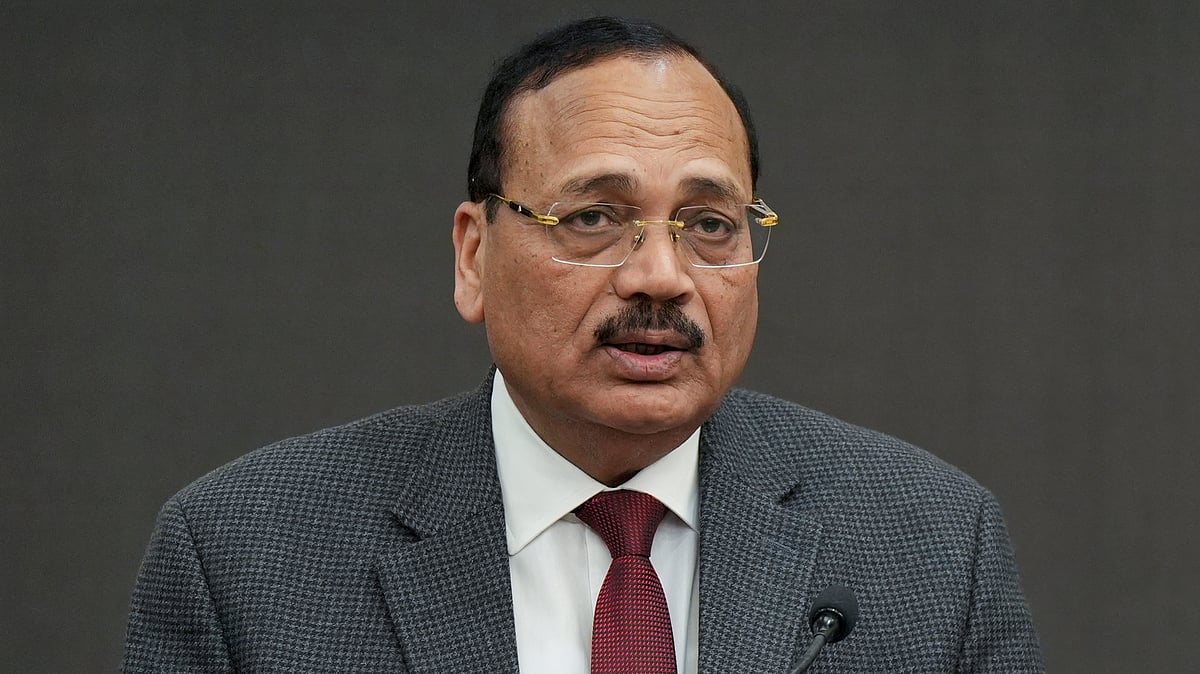
Chief Justice of India Surya Kant made a powerful statement at the North Zone Regional Conference in Dehradun, declaring that the greatest challenge facing India’s legal system is not a dearth of laws but the limited access that ordinary citizens have to justice. Addressing the two-day conference titled “Justice Beyond Barriers: Rights, Rehabilitation, and Reform for the Most Vulnerable,” organised jointly by the National Legal Services Authority (NALSA), the Uttarakhand High Court, and the Uttarakhand State Legal Services Authority, the CJI underscored a fundamental truth about Indian democracy: rights on paper mean nothing if they cannot be realised in practice.
CJI Surya Kant observed: “The strength of a republic should be measured not by its declared rights, but by the rights that are actually realised.” This statement strikes at the heart of the access-to-justice crisis in India — a country with one of the world’s most comprehensive constitutional frameworks of rights but also one of the largest backlogs of pending cases (over 5 crore cases across all levels of the judiciary). The CJI emphasised that while India possesses a robust framework of rights and policies, these benefits often fail to reach those who need them most due to issues of distance, delay, and implementation gaps.
The CJI highlighted how hilly states like Uttarakhand face unique challenges in delivering justice — rugged terrain and limited connectivity hinder physical access to courts. He identified three key measures that have proven effective in bridging the justice gap: legal aid schemes, awareness campaigns, and multi-service camps. He also inaugurated the Nyaya Mitra Portal during the conference, a digital initiative aimed at connecting citizens with legal services. The conference, held on April 11-12, 2026, brought together judicial officers, legal aid lawyers, and policy makers from across the North Zone to deliberate on inclusive justice delivery.
Article 39A and the Constitutional Mandate for Free Legal Aid
The constitutional foundation for CJI Surya Kant’s call lies in Article 39A of the Constitution, a Directive Principle of State Policy (DPSP) inserted by the 42nd Amendment Act, 1976. Article 39A directs the State to ensure that the operation of the legal system promotes justice on a basis of equal opportunity, and shall, in particular, provide free legal aid, by suitable legislation or schemes, to ensure that opportunities for securing justice are not denied to any citizen by reason of economic or other disabilities.
While DPSPs are not directly enforceable in courts (Article 37), the Supreme Court has read the right to free legal aid into Article 21 (right to life and personal liberty) through a series of landmark judgments. In Madhav Hayawadanrao Hoskot v State of Maharashtra (1978), Justice V.R. Krishna Iyer recognised that the right to free legal aid is implicit in the fair procedure guaranteed by Article 21. This was further strengthened in Hussainara Khatoon v State of Bihar (1979), where the Court held that the right to free legal aid is an essential ingredient of “reasonable, fair, and just” procedure — making it not merely a DPSP aspiration but an enforceable fundamental right under Article 21.
These judicial pronouncements led to the enactment of the Legal Services Authorities Act, 1987, which established the institutional framework for delivering free legal aid. The Act created NALSA at the national level, State Legal Services Authorities (SLSAs) at the state level, and District Legal Services Authorities (DLSAs) at the district level. Section 12 of the Act specifies who is entitled to free legal services: members of SC/ST communities, women, children, persons with disabilities, industrial workmen, victims of mass disasters, persons in custody, and those with annual income below the prescribed limit.
Constitutional & Legal Framework
- Article 39A (DPSP): Equal justice and free legal aid — State shall provide free legal aid to ensure justice is not denied due to economic or other disabilities (inserted by 42nd Amendment, 1976)
- Article 21: Right to life and personal liberty — free legal aid read into this as part of fair procedure
- Article 14: Equality before law — access to justice is integral to equal treatment under law
- Legal Services Authorities Act, 1987: Established NALSA, SLSAs, and DLSAs to provide free legal services; Section 12 defines eligible categories
- Hussainara Khatoon v State of Bihar (1979): Right to free legal aid is an essential ingredient of Article 21’s fair procedure guarantee
- Madhav Hayawadanrao Hoskot v State of Maharashtra (1978): Free legal aid for prisoners is implicit in Article 21
- NALSA: CJI is Patron-in-Chief; senior-most SC judge is Executive Chairman; established under Legal Services Authorities Act, 1987
NALSA: India’s Legal Aid Infrastructure
The National Legal Services Authority (NALSA) is the apex body constituted under the Legal Services Authorities Act, 1987, to monitor and evaluate the implementation of legal aid programmes across India. The Chief Justice of India serves as the Patron-in-Chief of NALSA, while the senior-most judge of the Supreme Court acts as the Executive Chairman. This dual leadership structure ensures that legal aid delivery has the highest judicial backing.
NALSA operates through a three-tier structure: at the national level (NALSA), state level (SLSAs headed by the Chief Justice of each High Court), and district level (DLSAs headed by the District Judge). Additionally, Taluk Legal Services Committees operate at the sub-district level to bring legal services closer to rural populations. NALSA also organises Lok Adalats — people’s courts — which provide alternative dispute resolution mechanisms that are faster, cheaper, and more accessible than regular courts.
Despite this elaborate institutional framework, the gap between legal aid availability and actual access remains significant. As CJI Surya Kant pointed out, the true test of the Constitution lies not in landmark Supreme Court judgments but in whether justice is available in the daily lives of ordinary citizens. In geographically challenging regions like Uttarakhand, where mountain terrain makes it difficult for citizens to physically reach courts, digital solutions like the Nyaya Mitra Portal become essential tools for bridging the justice gap.
CLAT Angle — Why This Matters
- Legal Reasoning: The distinction between DPSPs (not enforceable) and Fundamental Rights (enforceable) — and how courts have read DPSP values into Art. 21 to make them enforceable — is a classic CLAT principle-application topic
- Principle-Application: Questions on who is entitled to free legal aid under Section 12 of the Legal Services Authorities Act, 1987 — given a factual scenario, determine if the person qualifies
- GK/Polity: NALSA structure, CJI as Patron-in-Chief, Hussainara Khatoon and Hoskot cases, and Article 39A are frequently tested factual areas in CLAT GK
- Critical Reasoning: CJI’s statement about measuring a republic by “rights actually realised” versus “declared rights” is exactly the kind of statement that appears in CLAT English/Critical Reasoning passages
- 42nd Amendment: The amendment that inserted Art. 39A also inserted Art. 48A (environment) and Art. 51A (fundamental duties) — a bundle frequently tested together
Access to Justice as a Fundamental Right
The evolution of “access to justice” from a mere aspiration to a judicially recognised fundamental right represents one of the most significant developments in Indian constitutional law. The journey from Article 39A (a non-enforceable DPSP) to its recognition as part of Article 21 (an enforceable fundamental right) illustrates how the Supreme Court has used creative interpretation to bridge the gap between constitutional ideals and lived reality.
This judicial evolution has important implications for CLAT aspirants. The concept of “reading rights into Article 21” — where the Supreme Court interprets the right to life and personal liberty broadly to include rights not explicitly mentioned in the Constitution — is one of the most powerful tools in Indian constitutional jurisprudence. Rights that have been read into Article 21 include: right to live with dignity, right to livelihood, right to education (before it became Article 21A), right to clean environment, right to health, right to speedy trial, right to shelter, and right to free legal aid.
CJI Surya Kant’s emphasis on hilly states facing unique challenges also raises important questions about geographic equity in justice delivery — a dimension that is often overlooked in discussions about access to justice. While much attention is focused on economic barriers (addressed by free legal aid), geographic and infrastructural barriers can be equally formidable, particularly in states like Uttarakhand, Himachal Pradesh, and the North-Eastern states.
Key Facts at a Glance
| Speaker | CJI Surya Kant |
| Conference | Justice Beyond Barriers: Rights, Rehabilitation, and Reform for the Most Vulnerable |
| Organisers | NALSA + Uttarakhand HC + Uttarakhand SLSA |
| Dates | April 11-12, 2026, Dehradun |
| Key Statement | “Biggest challenge is limited access to justice, not lack of laws” |
| Portal Launched | Nyaya Mitra Portal |
| Article 39A | DPSP — Free legal aid (42nd Amendment, 1976) |
| NALSA Head | CJI (Patron-in-Chief), Senior-most SC Judge (Executive Chairman) |
| Key Precedents | Hussainara Khatoon (1979), Hoskot (1978) |
Mnemonic: “HALF” — Access to Justice Framework
- H — Hussainara Khatoon (1979) — free legal aid as part of Art. 21
- A — Article 39A — DPSP mandate for free legal aid (42nd Amendment)
- L — Legal Services Authorities Act, 1987 — created NALSA
- F — Free legal aid for SC/ST, women, children, disabled, prisoners (Section 12)
Remember: “HALF the battle for justice is won when you know your rights” — and NALSA ensures the other half through delivery
Practice Quiz — 10 CLAT-Style Questions
Click an option to reveal the answer and explanation.