
Last Updated: May 2026
The GK and Current Affairs section is the single highest-leverage scoring area in the CLAT 2027 paper. With 28–35 expected questions and a 1-mark weight per item, an aspirant who builds a disciplined current-affairs routine between May 2026 and the December 2026 paper can confidently target 30+ raw marks here — more than any other section per hour invested. This pillar guide breaks the section into four parts: what the syllabus actually covers, the only sources you need, a daily routine that fits into 45 minutes, and a section-wise approach for passage-based questions.
What CLAT 2027 GK Actually Tests
Unlike older patterns, post-2020 CLAT GK is passage-based: a 450-word passage drawn from a news article, followed by 4–6 MCQs. Roughly 80% of the questions are answerable from the passage if you read carefully; the remaining 20% require external knowledge of the underlying event. This changes the entire study strategy.
| Sub-area | Approx. Question Share | Source Window |
|---|---|---|
| National polity and government schemes | 20–25% | Past 12 months |
| International relations and treaties | 15–20% | Past 12 months |
| Economy and budget | 10–15% | Past 18 months (Budget cycle) |
| Constitutional and legal developments | 15–20% | Past 24 months |
| Awards, sports, books | 5–10% | Past 12 months |
| Static GK (history, geography) | 10–15% | NCERT-based |
| Science, environment, technology | 5–10% | Past 12 months |
The Only Sources You Need (Stop Adding More)
Aspirants routinely sabotage themselves by chasing 8–10 sources. The exam-relevant material is small. Here is the minimum viable stack for CLAT 2027:
- One national newspaper, daily — The Hindu or Indian Express. Not both. Pick one.
- One monthly current-affairs compendium — Vision IAS or Legal Edge. Read once, retain once.
- One yearbook — read static-GK chunks (Constitution, schemes, awards) every weekend.
- One curated Telegram or RSS feed for legal news — confined to 10 minutes a day.
- Past CLAT papers (2020–2026) — for pattern recognition, drilled monthly.
That is the entire stack. Anything more is procrastination dressed up as study.
The 45-Minute Daily Routine
The single biggest predictor of GK performance is consistency, not volume. Here is a tested 45-minute split that fits before college or a coaching class:
| Time | Activity | Output |
|---|---|---|
| 0–5 min | Headlines scan (front page + editorial titles) | Mental map of the day |
| 5–25 min | Read 4 articles in depth (1 polity, 1 IR, 1 economy, 1 legal) | 4 short notes (50 words each) |
| 25–35 min | Make passage-style 5 MCQs from one of the articles | Self-quiz file |
| 35–45 min | Revise yesterday’s MCQs + previous week’s notes | Spaced repetition |
Notice that one-third of the routine is revision, not new reading. Aspirants who skip revision retain about 20% of what they read after a month; those who revise daily retain 70–80%.
How to Take Notes (the 50-Word Rule)
For each article worth keeping, your note must answer five questions in 50 words or fewer:
- What happened?
- Who are the parties or institutions?
- When (exact date matters)?
- Why does it matter legally or constitutionally?
- Which previous event or doctrine does it connect to?
If you cannot fit it into 50 words, you have not understood the story yet.
Section-Wise Approach to the Passage
When you face a CLAT GK passage, do not treat it like a prose comprehension. Use this 4-step protocol:
- Skim the questions first (60 seconds) — identify whether they ask for facts, inferences, or external knowledge.
- Read the passage with a pen — circle dates, names, numbers, and any phrase that signals a definition or a treaty article.
- Answer fact-based questions immediately — they are usually 3–4 of the 5 questions and worth 60–70% of the section.
- Defer inference and external-knowledge questions — return to them after locking the easy marks. If unsure after 30 seconds, mark and move.
The 12-Month Calendar Map
From May 2026 to December 2026 is roughly 32 weeks. Here is how to allocate them:
| Phase | Weeks | Goal |
|---|---|---|
| Foundation | 1–8 (May–June) | Build the daily 45-min habit; cover 12 months of past current affairs by topic |
| Consolidation | 9–18 (July–early Sept) | Topic-wise revision; finish static GK; start sectional mocks |
| Mock-driven | 19–28 (Sept–Nov) | Two full-length mocks per week; daily current-affairs continues |
| Final prep | 29–32 (late Nov–Dec) | Revision-only; no new sources; sleep priority |
What to Stop Doing
- Stop downloading PDFs you will not read. A 500-page compilation you skim once is worse than a 100-page compilation you revise three times.
- Stop watching long YouTube current-affairs videos. A 30-minute video conveys less than a 10-minute focused read of the same news.
- Stop maintaining 6 notebooks for 6 sub-topics. One physical notebook + one digital file is enough.
- Stop chasing every breaking story. Wait 24–48 hours for the analysis to catch up; first-day reportage is often wrong.
High-Probability Themes for CLAT 2027
Based on the news cycle from May 2025 to May 2026, these themes are likely to feature in passage banks:
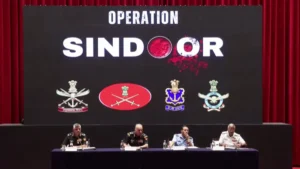
- Operation Sindoor and the law on self-defence (see our CLAT 2027 FAQ on IHL).
- Manipur and Article 355/356.
- One Nation, One Election — constitutional amendments and referencing committees.
- Digital Personal Data Protection Act implementation rules.
- Waqf Amendment Act — recent developments.
- BRICS expansion and India’s chairmanship.
- Supreme Court rulings on same-sex relationships and personal law.
- Climate finance and India’s NDC update under the Paris Agreement.
Diagnostics: Are You On Track?
Use these checkpoints monthly. If you fall short, fix the routine, not the source.
| Month | Sectional Mock Target | Note Volume |
|---|---|---|
| Month 2 (June 2026) | 20/35 raw | ~120 notes (50-word) |
| Month 4 (August 2026) | 24/35 | ~250 notes |
| Month 6 (October 2026) | 27/35 | ~370 notes |
| Month 7+ (Nov–Dec) | 30/35 | Revision-only; no new notes |
To benchmark your sectional accuracy under timed conditions, attempt our free CLAT 2027 mock test and review your answers against the official key.
Frequently Asked Questions
Q1. Should I read both The Hindu and Indian Express?
No. Pick one. Reading two doubles your time without doubling your information yield, because national stories overlap. Use the second source only on weekends to cross-check editorials.
Q2. How much static GK do I need for CLAT 2027?
Roughly 10–15% of the section. Cover Indian Constitution (Articles by name and number for major provisions), basic Indian history milestones, and major schemes. Skip exhaustive geography facts.
Q3. Are coaching monthly compendiums necessary if I read the newspaper daily?
Yes. The compendium consolidates and gives you topic-wise grouping that the newspaper cannot. Treat it as the consolidation tool, not a replacement.
Q4. How do I retain dates and names that all blur together?
Two techniques: (a) link every event to a constitutional or legal anchor (e.g., link Manipur to Art. 356), and (b) review past notes within 24 hours, 7 days, and 30 days — the spaced-repetition triad.
Q5. Can I substitute YouTube channels for newspaper reading?
For revision, yes. For first exposure, no. Reading builds the precise vocabulary CLAT passages use; videos summarise but rarely use the exact phrasing.
The CLAT 2027 GK section rewards consistency and the right source-stack — not brute-force volume. Build the 45-minute daily habit, hold the line on five sources, and trust the process. To structure this routine inside a full prep schedule with mentor-led mock analysis, explore our CLAT 2027 courses and join our 2027 batch.