CURRENT AFFAIRS | 22 APRIL 2026
CLAT GK + LEGAL REASONING — NATURAL JUSTICE
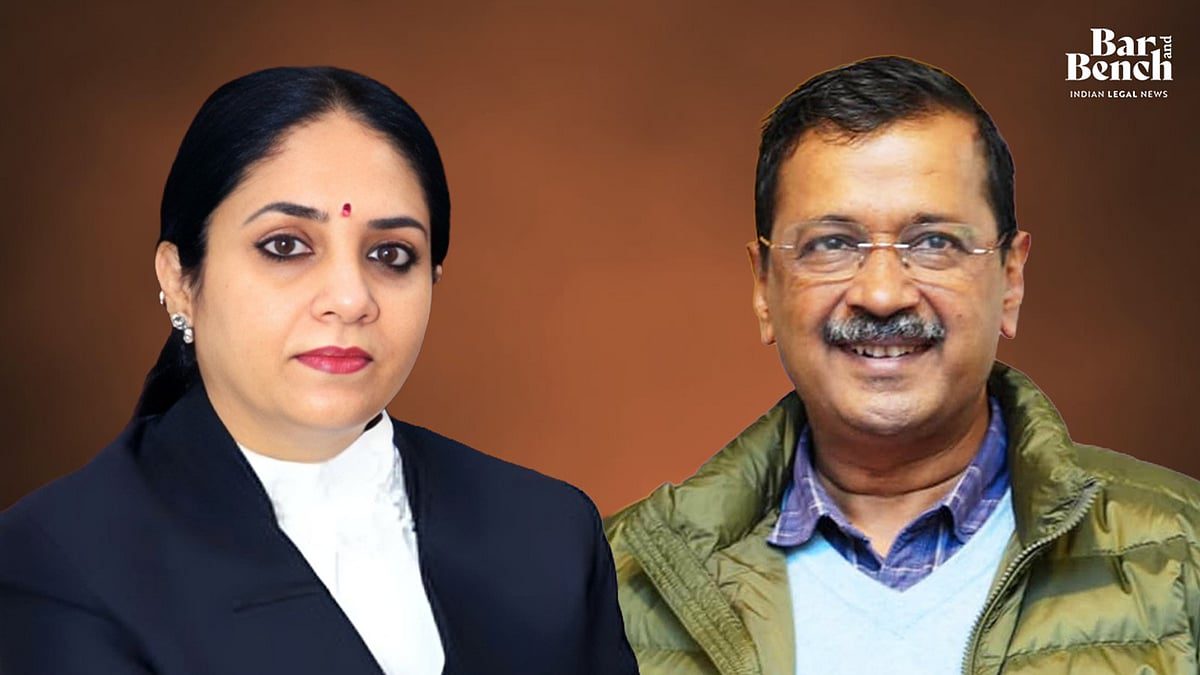
In a 79-page ruling delivered on 20 April 2026, Justice Swarana Kanta Sharma of the Delhi High Court rejected Arvind Kejriwal’s plea seeking her recusal from the Delhi excise policy case. Kejriwal had argued that her attendance at an event hosted by the Akhil Bharatiya Adhivakta Parishad (ABAP), and her alleged pattern of accepting CBI/ED submissions, created a “reasonable apprehension of bias”. The judge held — invoking Ranjit Thakur v Union of India (1987) — that a judge must not be swayed by “unfounded suspicions, conjectures and manufactured allegations”; that stepping aside on such grounds would itself abdicate judicial duty. A separate PIL seeks contempt against Kejriwal for circulating audio-video recordings of the recusal hearing.
Why it matters for CLAT: This is a textbook natural-justice judgment. The nemo judex in causa sua maxim is tested by the reasonable-apprehension standard set in Ranjit Thakur (1987), refined in PD Dinakaran (2011) and State of WB v Shivananda Pathak (1998). Classification of bias (pecuniary, personal, subject-matter, policy) is a perennial CLAT favourite — and the contempt dimension on circulating court recordings brings in Contempt of Courts Act 1971.
Constitutional & Legal Framework
- Nemo judex in causa sua — No one shall be a judge in his own cause — foundational natural-justice maxim
- Ranjit Thakur v UoI (1987) — Objective test — would a reasonable person in the litigant’s position apprehend bias? — not the litigant’s subjective fear
- State of WB v Shivananda Pathak (1998) — Prior expression of opinion on the same question by the judge is a ground for recusal
- PD Dinakaran (I) v Hon’ble Judges Inquiry Committee (2011) — Re-stated ‘real likelihood’ / ‘reasonable apprehension’ tests; judge must not sit if a fair-minded observer would suspect bias
- SC Advocates-on-Record Assn v UoI (2015) — Collegium case — judges voluntarily recused; principle that recusal must be reasoned
- Bangalore Principles of Judicial Conduct 2002 — International restatement — independence, impartiality, integrity, propriety, equality, competence
- Article 14 — Equality and fair hearing — bias violates equal protection
- Article 21 — Fair procedure — biased adjudication violates due process
- Contempt of Courts Act 1971, Sec 2(c) — ‘Criminal contempt’ includes publication that scandalises or prejudices judicial proceedings
CLAT Angle — How This Gets Tested
- Four classical categories of bias: pecuniary (financial interest — automatic disqualification per Dimes v Grand Junction Canal, 1852), personal (relation, friendship), subject-matter (prior involvement), and policy/predetermination.
- Ranjit Thakur objective test: The question is NOT whether the judge is actually biased, but whether a reasonable litigant would apprehend bias. A subjective fear alone is insufficient.
- Refusing recusal can be virtuous: Shivananda Pathak and Dinakaran warn against ‘recusal on demand’ — it allows litigants to pick judges. A judge stepping aside without legal basis abdicates duty.
- Contempt dimension: Circulating audio-video recordings of in-court proceedings, especially for social-media advocacy, can constitute criminal contempt under Sec 2(c)(ii) — ‘interference with administration of justice’.
Key Facts at a Glance
| Judge | Justice Swarana Kanta Sharma, Delhi HC |
| Ruling length | 79 pages, delivered 20 April 2026 |
| Case | CBI/ED chargesheet on Delhi excise policy 2021-22 |
| Grounds urged | Attendance at ABAP event; alleged pattern of accepting CBI/ED arguments |
| Judge’s experience | 34 years on the bench (trial + HC) |
| Key test applied | Ranjit Thakur ‘reasonable apprehension’ objective standard |
| Additional PIL | Contempt against Kejriwal for circulating hearing recordings |
| Next step | Main excise-policy case proceeds before the same bench |
What the judgment clarifies. The ruling restates four propositions that will recur in CLAT Legal Reasoning sets. First, bias is tested objectively, through the eyes of a reasonable observer, not the aggrieved litigant. Second, attendance at bar events or past appearances in a professional capacity do not, without more, ground recusal. Third, a judge who recuses without legal basis sends a message that pressure works. Fourth, publishing or circulating judicial-hearing recordings — especially outside officially released transcripts — can itself amount to criminal contempt, because it prejudices ongoing proceedings.
Mnemonic — PPS-P bias + R-RAP test
Four biases: Pecuniary · Personal · Subject-matter · Policy/predetermination. Test: Ranjit Thakur (1987) — Reasonable Apprehension of Partiality. Remember — Dimes (1852) pecuniary = automatic; everything else is the reasonable-person test.
Likely exam questions. (1) The maxim nemo judex in causa sua is a pillar of which doctrine? (2) Which case laid down the objective “reasonable apprehension” test for bias? (3) Pecuniary bias was recognised as automatically disqualifying in which landmark? (4) Circulating in-court audio-video recordings can attract which provision? (5) Legal reasoning — a judge must recuse where a fair-minded observer would apprehend bias, even without actual bias. True/False?
Test Yourself — 10 MCQs
Click each option to reveal the answer and explanation.
Practice Quiz — 10 CLAT-Style Questions
Click an option to reveal the answer and explanation.