
CURRENT AFFAIRS | 8 APRIL 2026
CLAT GK + ELECTORAL LAW & CONSTITUTIONAL RIGHTS
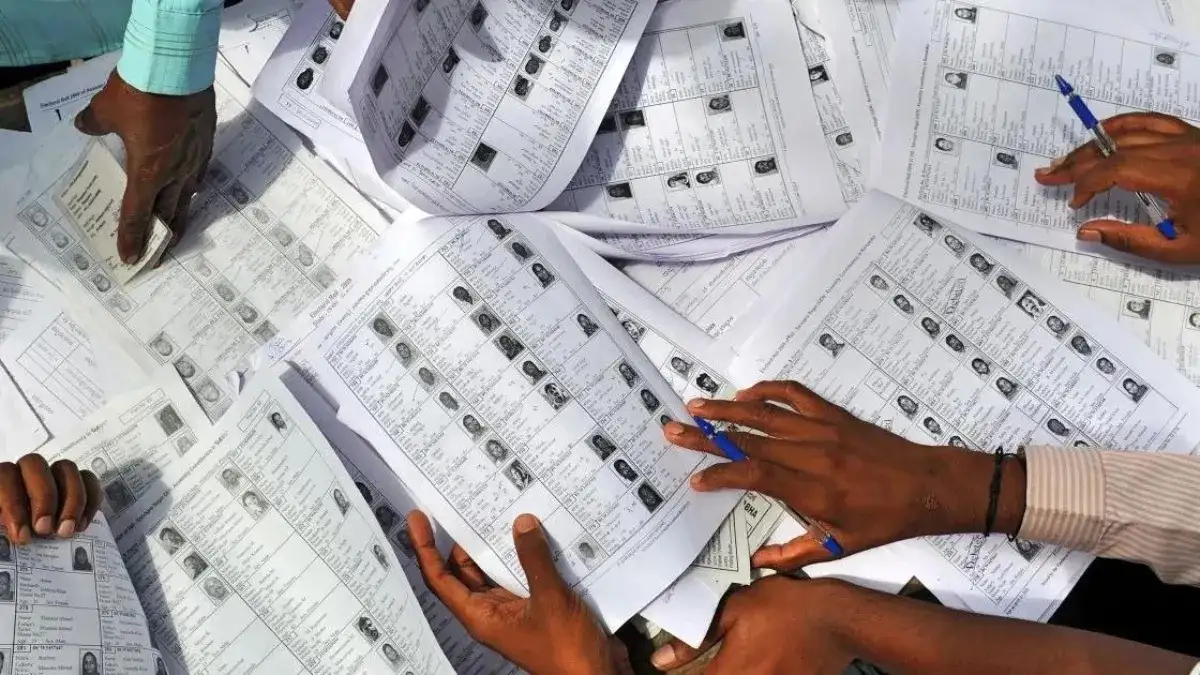
The Election Commission’s Special Intensive Revision (SIR) in West Bengal has resulted in the deletion of approximately 27 lakh voter names — raising serious questions about universal adult suffrage, algorithmic governance, and the constitutional right to vote. For CLAT 2027 aspirants, this issue tests knowledge of Articles 324, 326, the Representation of People Act, and landmark SC judgments on electoral democracy.
What Happened: The Numbers
Of 6,06,75,000 names placed under adjudication in West Bengal’s Special Intensive Revision, 27,16,393 names (45.21%) have been deleted from the electoral rolls. The total voter count in Bengal has dropped from 7.66 crore to 6.77 crore — a reduction of nearly 89 lakh voters.
The Election Commission released the first Supplementary List after adjudication. Of the total names placed under scrutiny, 5,94,54,512 have been “disposed of” by the ECI.
District-Wise Impact
The highest deletions occurred in specific districts:
- Murshidabad: 4,55,137 deletions (highest absolute number)
- North 24 Parganas: 3,25,066 deletions (55.08% deletion rate — highest rate)
- Malda: 2,39,375 deletions
The Matua-dominated Nadia district saw among the highest deletions. Minority-dominated areas — Murshidabad (45.21%) and Malda (28.14%) — were disproportionately affected. Affected persons include migrant labourers, homemakers, and college employees who told Indian Express they were deleted despite possessing valid Aadhaar and voter ID cards.
The Supreme Court directed: “27 lakh persons: Your name stands deleted. Now try your luck with the Appellate Tribunals. Yes, you may not be able to vote this time. But your right to vote is not being taken away permanently.”
Constitutional Framework: The Right to Vote
Article 324 (Superintendence of Elections): Vests the superintendence, direction, and control of the preparation of electoral rolls and the conduct of elections in the Election Commission of India. This is the ECI’s source of power for conducting the SIR exercise.
Article 325 (No Special Electoral Rolls): Provides that there shall be one general electoral roll for every territorial constituency — no person shall be excluded from or included in a special roll on grounds of religion, race, caste, or sex.
Article 326 (Universal Adult Suffrage): Elections to the Lok Sabha and State Legislative Assemblies shall be on the basis of adult suffrage — every citizen who is 18 years or above and is not otherwise disqualified has the right to be registered as a voter. This is the constitutional bedrock of Indian democracy.
Important Distinction: The right to vote is a constitutional/statutory right under Article 326 read with the Representation of People Act — it is NOT a fundamental right under Part III. This distinction is crucial for CLAT.
Landmark Cases on Electoral Rights
PUCL v Union of India (2013): The SC directed the ECI to provide the NOTA (None of the Above) option on EVMs, recognising that the right to reject all candidates is part of the freedom of expression under Article 19(1)(a). The case reinforced that electoral rights, while statutory, have constitutional dimensions.
Kuldip Nayar v Union of India (2006): The SC upheld the open ballot system for Rajya Sabha elections and discussed the nature of the right to vote. The Court held that the right to vote is a statutory right, not a fundamental right, but it has constitutional recognition under Article 326.
The SIR Question: The West Bengal SIR used software-generated “logical discrepancies” to flag names for deletion. This raises a newer concern — algorithmic governance in electoral administration. When software decides who gets deleted from voter rolls, questions of transparency, due process (Article 21), and the right to be heard arise.
Exam Tip: CLAT may frame questions around whether the right to vote is a fundamental right or a constitutional/statutory right. The answer is constitutional/statutory — but remember that the SC has given it near-fundamental status through judicial interpretation.
Representation of People Act: Key Provisions
The RPA 1950 (Sections 21-23) governs the preparation and revision of electoral rolls, including the procedure for claims and objections. Section 21 empowers the ECI to direct preparation of electoral rolls. Section 22 deals with correction of entries. Section 23 provides for inclusion of names and the appellate mechanism.
The RPA 1951 deals with the conduct of elections and contains provisions on corrupt practices, election petitions, and disqualifications.
| Names Deleted | 27,16,393 (approximately 27 lakh) |
| Previous Voter Count | 7.66 crore |
| Current Voter Count | 6.77 crore |
| Highest Deletions (Number) | Murshidabad — 4,55,137 |
| Highest Deletion Rate | North 24 Parganas — 55.08% |
| Article 324 | ECI’s superintendence power |
| Article 326 | Universal adult suffrage |
| Key Legislation | RPA 1950 (Sec 21-23), RPA 1951 |
V — Vote is a constitutional/statutory right (Art 326), NOT fundamental
O — One general electoral roll for all (Art 325 — no discrimination)
T — Total control with ECI (Art 324 — superintendence)
E — Electoral revision under RPA 1950 (Sec 21-23)
R — Reject option (NOTA) via PUCL v Union of India (2013)
Practice Quiz — 10 CLAT-Style Questions
Click an option to reveal the answer and explanation.