CURRENT AFFAIRS | 8 APRIL 2026
CLAT GK + CONSTITUTIONAL LAW
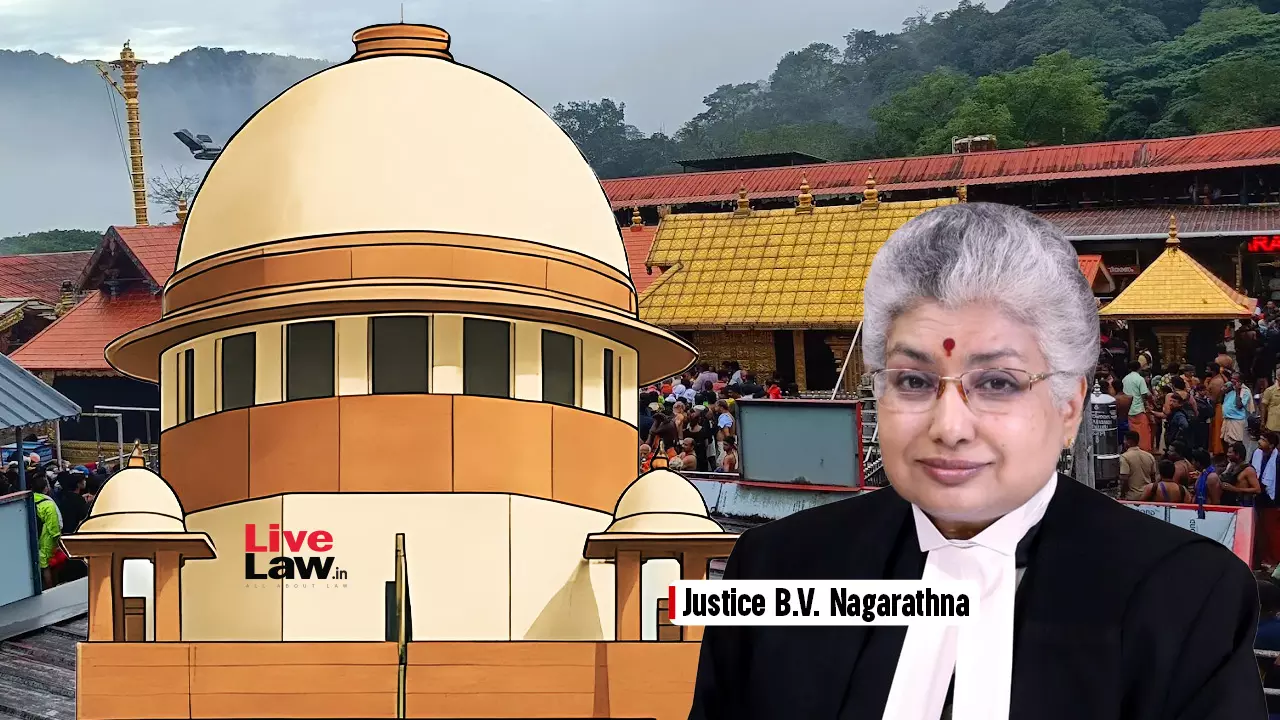
The Supreme Court’s 9-judge bench hearing the Sabarimala review has produced a powerful observation from Justice Nagarathna — the sole woman on the bench — that Article 17’s abolition of untouchability cannot be applied selectively for just 3 days. This case sits at the intersection of gender equality, religious freedom, and the Essential Religious Practices doctrine, making it one of the most exam-critical constitutional law developments for CLAT 2027.
What Happened: The Sabarimala Review Hearing
The Supreme Court is reviewing its landmark 2018 judgment in Indian Young Lawyers Association v State of Kerala, where a 5-judge Constitution Bench (4:1 majority) had struck down the practice of barring women aged 10-50 from entering the Sabarimala Ayyappa temple in Kerala. The review is now before a larger 9-judge bench.
Justice Nagarathna made a striking observation: “There can’t be 3-day untouchability… Article 17 can’t apply for 3 days.” She questioned the practice of barring menstruating-age women from the temple, referencing Article 17’s categorical abolition of untouchability “in all its forms.” Notably, she also stated that the 2018 case was “wrongly decided” and “deserves to be declared a wrong law.”
Another judge on the bench observed: “Propagation of religion, not forcible conversion, is protected by the Constitution” — highlighting the nuanced protection under Article 25.
The petitioners argued that treating women as untouchable during menstruation falls squarely within Article 17’s prohibition. The counter-argument: the temple custom is not untouchability but a legitimate religious practice protected under Article 26 (rights of religious denominations).
The Constitutional Framework
Article 14 (Right to Equality): The State shall not deny to any person equality before the law or equal protection of the laws. Gender-based exclusion from a public temple raises Article 14 questions.
Article 15(1): Prohibits discrimination on grounds of religion, race, caste, sex, or place of birth. The bar on women aged 10-50 is explicitly sex-based.
Article 17 (Abolition of Untouchability): Abolishes untouchability and forbids its practice “in any form.” The critical question: does Article 17 only cover caste-based untouchability, or does it extend to ALL forms of social exclusion, including gender-based exclusion?
Article 25 (Freedom of Religion): Guarantees freedom of conscience and the right to freely profess, practise, and propagate religion — subject to public order, morality, and health. Also allows the State to regulate secular activities associated with religious practice.
Article 26 (Religious Denominations): Grants every religious denomination the right to manage its own affairs in matters of religion and to own, acquire, and administer property. The Sabarimala temple board argues this protects the Ayyappa temple’s traditions.
Essential Religious Practices Doctrine
The Essential Religious Practices (ERP) doctrine is central to this case and is one of the most frequently tested concepts in CLAT legal reasoning.
Shirur Mutt Case (1954): The SC first laid down the ERP test, holding that the Court can examine whether a practice is essential/integral to a religion. Only essential practices receive constitutional protection under Articles 25-26.
Durgah Committee v Hussain Ali (1961): The SC held that superstitious beliefs and secular activities can be separated from essential religious practices. The State can regulate the secular aspects without violating religious freedom.
Indian Young Lawyers Association v State of Kerala (2018): The 4:1 majority held that the exclusion of women aged 10-50 was NOT an essential religious practice of Ayyappa worship. Justice Indu Malhotra dissented, arguing courts should not interfere with religious practices unless they cause social evil.
The Core Tension: Article 25-26 (religious freedom) versus Article 14-15-17 (equality and non-discrimination). The 9-judge bench must decide which prevails — and whether the ERP doctrine itself needs reconsideration.
Exam Tip: CLAT loves testing the ERP doctrine. Remember the evolution: Shirur Mutt (1954) established the test, Durgah Committee (1961) narrowed it, and Sabarimala (2018) applied it to gender exclusion. Know all three cases and their ratios.
The Scope of Article 17: Beyond Caste?
The most significant legal question before the 9-judge bench is whether Article 17 applies only to caste-based untouchability or to all forms of social exclusion. Justice Nagarathna’s observation — that there “can’t be 3-day untouchability” — suggests that menstrual-age exclusion could constitute a form of untouchability under Article 17.
If the Court accepts this wider interpretation, it would transform Article 17 from a caste-specific provision into a general anti-exclusion guarantee — with massive implications for gender rights, disability rights, and other forms of social discrimination.
| Original Judgment | 2018, 5-judge bench, 4:1 majority |
| Review Bench | 9-judge bench (larger bench) |
| Women Barred | Ages 10-50 (menstruating age) |
| Article 17 | Abolishes untouchability in ALL forms |
| Article 25 | Freedom of religion (subject to Art 14) |
| Article 26 | Rights of religious denominations |
| ERP Doctrine Origin | Shirur Mutt Case (1954) |
| Dissent (2018) | Justice Indu Malhotra |
S — Shirur Mutt (1954) — ERP doctrine origin
E — Essential Religious Practices test — is exclusion “essential”?
A — Article 17 scope — caste-only or all forms of exclusion?
D — Durgah Committee (1961) — secular vs religious activities
R — Review by 9-judge bench — larger bench can overrule 2018 decision
Practice Quiz — 10 CLAT-Style Questions
Click an option to reveal the answer and explanation.