
CURRENT AFFAIRS | 14 APRIL 2026
CLAT GK + LABOUR LAW & FUNDAMENTAL RIGHTS
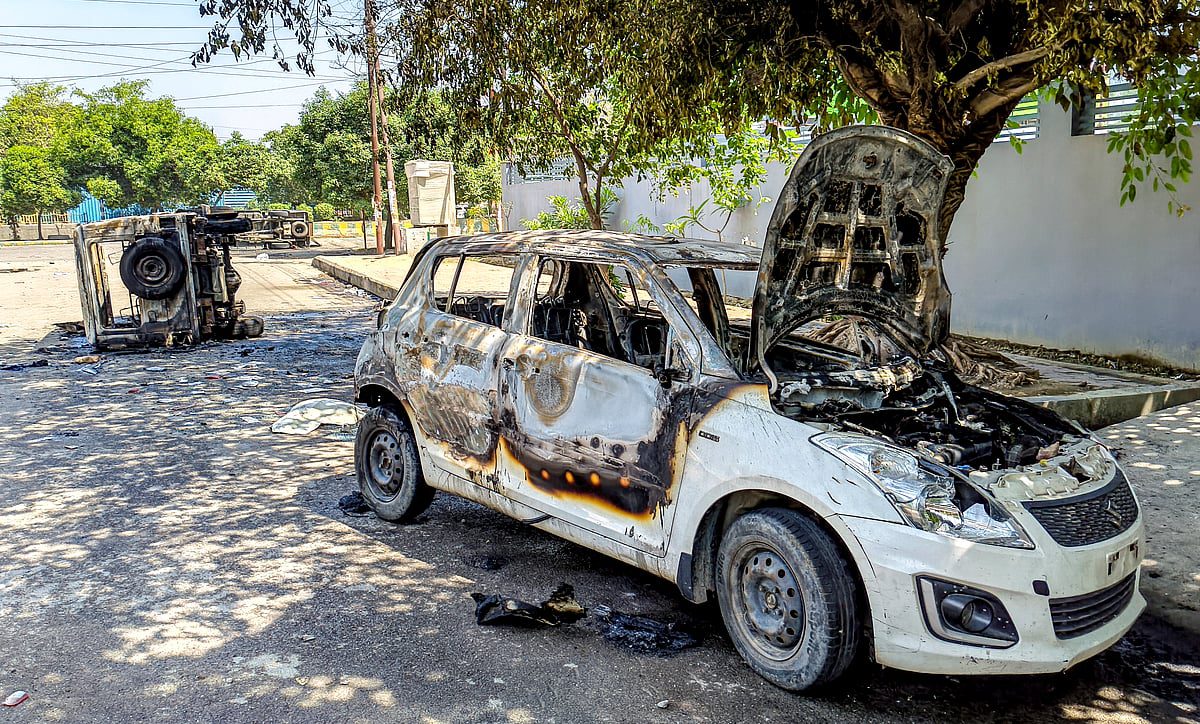
Thousands of factory workers from dozens of industrial units across Noida’s industrial belt erupted in violent protests on Monday, demanding better wages and humane working conditions. The unrest — which saw stone-pelting, vehicle torching, and clashes with police — marks a sharp escalation of labour discontent that has been simmering since February across Barauni (Bihar), Surat (Gujarat), and Manesar (Haryana). Police fired tear gas to control the crowds as burning vehicles and heavy deployment marked the industrial zones.
The trigger for the current wave was Haryana’s decision on April 9 to raise its minimum monthly wage from Rs 14,000 to Rs 19,000 — a jump of nearly 35%. Workers in neighbouring Uttar Pradesh, still earning between Rs 8,000-15,000 per month, demanded parity. But the crisis runs deeper than state-level wage disparities: rising LPG prices driven by the Hormuz oil crisis, stalled implementation of Labour Codes 2020, and punishing 12-hour shifts have pushed workers to a breaking point.
Six Demands Behind the Unrest
Workers across the industrial belt have crystallized their grievances into six core demands: (1) Minimum monthly salary of Rs 20,000; (2) Capping the working day at 8 hours instead of mandatory 12-hour shifts; (3) Better physical safety conditions on factory floors; (4) Immediate clearance of salary arrears and pending retirement dues; (5) Implementation of ESIC and PF benefits as mandated by law; and (6) Recognition of the right to organize and bargain collectively without retaliation.
The Labour Codes 2020: Promise vs. Reality
India’s four Labour Codes — the Code on Wages (2019), Industrial Relations Code (2020), Social Security Code (2020), and Occupational Safety Code (2020) — were passed to consolidate 29 colonial and post-independence era labour laws into a modern, simplified framework. However, implementation has been patchy. Many states have notified the rules but enforcement remains weak. Workers on the ground report that the codes have not translated into tangible improvements in wages, safety, or social security.
Article 43 (DPSP): Directs the State to secure a living wage, decent standard of life, and full enjoyment of leisure for all workers.
Article 43A (DPSP): Directs the State to secure participation of workers in management of industries.
Article 19(1)(b): Right to assemble peaceably and without arms — protects peaceful protest.
Article 21: Right to life includes right to livelihood (Olga Tellis v BMC, 1985).
Article 23: Prohibition of forced labour — paying below minimum wages equals forced labour (PUDR v UoI, 1982).
Code on Wages, 2019: Subsumes the Minimum Wages Act 1948, Payment of Wages Act 1936, Payment of Bonus Act 1965, and Equal Remuneration Act 1976.
Industrial Relations Code, 2020: Governs trade unions, standing orders, and industrial disputes. Requires 51% worker support for valid strike notice.
The Manesar Conspiracy Angle
In Manesar, Haryana — already scarred by the 2012 Maruti Suzuki labour violence — police recovered WhatsApp chats that they claim reveal a “conspiracy” to organize coordinated protests across multiple units. Six workers have been arrested. This raises troubling questions about the line between legitimate organizing (protected under Article 19(1)(c) — right to form associations) and criminal conspiracy. Labour rights activists argue that criminalizing worker communication has a chilling effect on collective bargaining.
The Cost of Living Crisis
The protests cannot be understood in isolation from the broader economic context. The Hormuz blockade has sent LPG prices soaring, with black-market rates making cooking gas unaffordable for low-wage workers. Food inflation, rising rent in industrial townships, and stagnant wages have created a perfect storm. Workers earning Rs 8,000-12,000 per month report that basic survival — food, rent, transport, and children’s education — is impossible at current wage levels.
Legal Reasoning: Principle-application on Art. 21 (right to livelihood), Art. 23 (forced labour = below minimum wages), Art. 19(1)(b) vs. reasonable restrictions on assembly. Questions on Labour Codes 2020 framework.
Current Affairs/GK: Labour Codes consolidation (29 laws into 4), Haryana minimum wage revision, Manesar labour history, connection to Hormuz oil crisis.
Logical Reasoning: Causal chains — global oil crisis leads to LPG price rise leads to cost of living crisis leads to worker protests. Strengthening/weakening arguments.
Key Case: PUDR v Union of India (1982) — Asiad Workers case — paying below minimum wages is forced labour under Art. 23.
| Worker Wages | Rs 8,000-15,000/month |
| Demand | Minimum Rs 20,000/month |
| Haryana Wage Revision | Rs 14,000 to Rs 19,000 (+35%) |
| Labour Codes | 4 codes replaced 29 laws |
| Protest Locations | Noida, Barauni, Surat, Manesar |
| Manesar Arrests | 6 held for “conspiracy” via WhatsApp |
W — Workers demand Rs 20,000 minimum
A — Article 43 (living wage) and Art. 43A (worker participation)
G — Grievances: 12-hour shifts, no safety, no PF/ESIC
E — Equality denied — Haryana raised wages, UP did not
S — Social Security Code 2020 not implemented
R — Right to livelihood under Art. 21 (Olga Tellis)
I — Industrial Relations Code governs strikes
S — Simmering since February across 4 states
E — Economic crisis — Hormuz blockade raised LPG prices
Historical Context: The Asiad Workers Case
The current crisis echoes the landmark People’s Union for Democratic Rights v Union of India (1982), known as the Asiad Workers case, where the Supreme Court held that paying workers below minimum wages constitutes “forced labour” prohibited under Article 23. Justice P.N. Bhagwati’s judgment established that constitutional rights are not merely theoretical but must be enforced to protect the most vulnerable. Four decades later, the same fundamental question persists: can a democracy tolerate wages that make survival impossible?
Practice Quiz — 10 CLAT-Style Questions
Click an option to reveal the answer and explanation.