CURRENT AFFAIRS | 14 APRIL 2026
CLAT GK + CONSTITUTIONAL LAW & CRIMINAL LAW
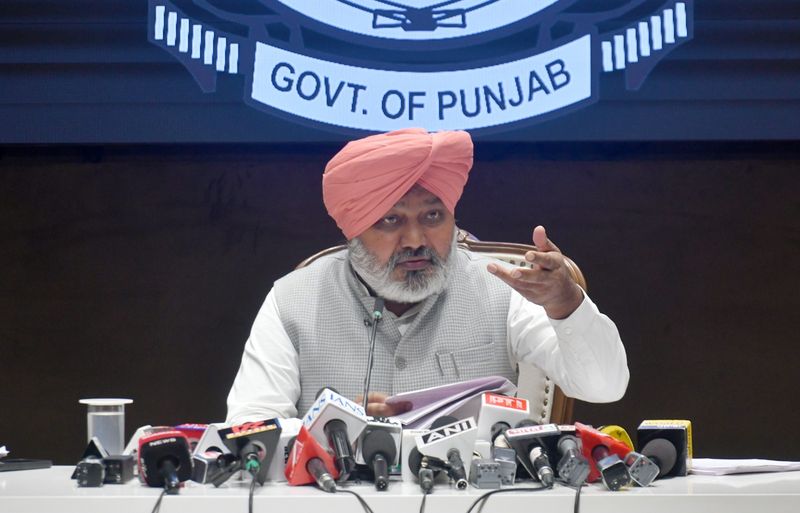
The Punjab Vidhan Sabha on Monday unanimously passed the Jaagat Jot Sri Guru Granth Sahib Satkar (Amendment) Bill 2026, introducing some of the strictest penalties in India for acts of sacrilege against the holy scripture of the Sikh faith. The Bill prescribes life imprisonment and fines up to Rs 25 lakh for desecration, marking a significant legislative intervention at the intersection of religious freedom, criminal law, and state power.
What the Bill Provides
The amended law defines sacrilege as “any wilful and deliberate act, committed with the intent of desecration by way of physical damaging, defacing, burning, tearing or theft of the Saroop(s) of Jaagat Jot Sri Guru Granth Sahib or part thereof, or by words, either spoken or written, or by signs or by visible representations or through electronic means.”
The punishment structure is tiered: a minimum imprisonment of 7 years, extendable up to 20 years, with fines ranging from Rs 5 lakh to Rs 10 lakh for sacrilege. For desecration specifically, the punishment extends to life imprisonment with fines up to Rs 25 lakh. Importantly, abettors and facilitators are treated on par with principal offenders, making them liable for the same maximum punishment. All offences under the Bill are non-bailable.
Historical Context
The Bill comes against the backdrop of the 2015 sacrilege incidents in Bargari and Burj Jawahar Singh Wala in Faridkot district, where torn pages of the Guru Granth Sahib were found scattered. These incidents triggered massive protests across Punjab and became a pivotal political issue. Previous attempts at anti-sacrilege legislation faced legal and political hurdles. The special session coincided with the presentation of B.R. Ambedkar’s birthday (14 April), adding symbolic weight to the legislative action.
Constitutional & Legal Framework
- Article 25 — Freedom of conscience and free profession, practice, and propagation of religion (subject to public order, morality, health)
- Article 26 — Freedom to manage religious affairs for every religious denomination
- Article 19(2) — Reasonable restrictions on free speech in interests of public order
- IPC Section 295/295A — Injuring/defiling places of worship and deliberate acts to outrage religious feelings (BNS corresponding sections apply post-2024)
- Article 246 + 7th Schedule — State legislature competence under List II Entry 1 (public order) and List III Entry 1 (criminal law, concurrent jurisdiction)
- Landmark: Ramji Lal Modi v State of UP (1957) — SC upheld Sec 295A as valid reasonable restriction under Art. 19(2)
Federalism and State Criminal Legislation
Punjab’s legislative action raises important questions about state competence in criminal law. While criminal law falls under the Concurrent List (List III, Entry 1), allowing both Parliament and state legislatures to legislate, state laws require Presidential assent if they are repugnant to central legislation under Article 254. The Bill will now be sent to the Governor, and given its provisions exceed the penalties in the IPC/BNS for similar offences, it may require the Governor to reserve it for the President’s consideration.
States like Haryana, Rajasthan, and Maharashtra have enacted similar religious protection laws in the past, but Punjab’s penalties are among the most stringent, reflecting the particular sensitivity of the Guru Granth Sahib in Sikh theology, where it holds the status of a living Guru.
CLAT Angle: Why This Matters
- Fundamental Rights vs Restrictions — Art. 25-26 (religious freedom) balanced against Art. 19(2) (public order restrictions)
- Federalism — State criminal legislation under Concurrent List, Article 254 repugnancy clause
- Criminal Law Reform — IPC to BNS transition and state-specific criminal enhancements
- Judicial Precedent — Ramji Lal Modi (1957) on reasonable restrictions for religious harmony
- CLAT GK — Punjab politics, sacrilege incidents background, Sikh religious institutions
Key Facts at a Glance
| Bill Name | Jaagat Jot Sri Guru Granth Sahib Satkar (Amendment) Bill 2026 |
| Passed By | Punjab Vidhan Sabha (unanimously) |
| Max Punishment | Life imprisonment + Rs 25 lakh fine |
| Min Imprisonment | 7 years (extendable to 20 years) |
| Nature of Offence | Non-bailable, cognizable |
| Key Articles | Art. 25, 26, 19(2), 246, 254 |
| Background | 2015 Bargari sacrilege incidents |
Mnemonic: SACRED
S — Sacrilege defined (wilful desecration, defacing, burning, theft)
A — Art. 25-26 (religious freedom framework)
C — Concurrent List Entry 1 (state criminal law power)
R — Ramji Lal Modi (1957) landmark case
E — Enhanced penalties (life + Rs 25 lakh)
D — Deterrent: non-bailable, abettors equally liable
Practice Quiz — 10 CLAT-Style Questions
Click an option to reveal the answer and explanation.