CURRENT AFFAIRS | MARCH 23, 2026 | CLAT GK + INTERNATIONAL RELATIONS
An Indian Express Ideas analysis captures India-China relations as a paradox of the 21st century: China is simultaneously India’s largest import partner (bilateral trade: ~$118 billion FY2024, deficit: ~$85 billion) and India’s most significant security adversary — with an unresolved 3,488 km border dispute, a bloody clash at Galwan Valley in 2020, and ongoing standoffs at the Line of Actual Control. How India navigates this paradox defines its strategic future.
Why CLAT 2027 Aspirants Must Know This
India-China relations is a perennial CLAT GK topic — tested every year. Key areas: Galwan clash (2020), Line of Actual Control, BRICS membership, PLI scheme (reducing import dependence), WTO’s MFN principle, and Panchsheel (1954). CLAT passages on international affairs increasingly feature India-China geopolitics alongside legal frameworks like UNCLOS and WTO rules.
Key Facts at a Glance
- India-China bilateral trade: ~$118 billion in FY2024 — China is India’s largest import source
- India’s trade deficit with China: ~$85 billion — India imports far more than it exports
- India imports from China: electronics, machinery, APIs (pharma raw materials), chemicals, solar panels
- Line of Actual Control (LAC): ~3,488 km — three sectors: Western (Ladakh), Middle (HP/Uttarakhand), Eastern (Arunachal/Sikkim)
- Galwan Valley clash (June 15-16, 2020): 20 Indian soldiers killed; China’s casualties undisclosed
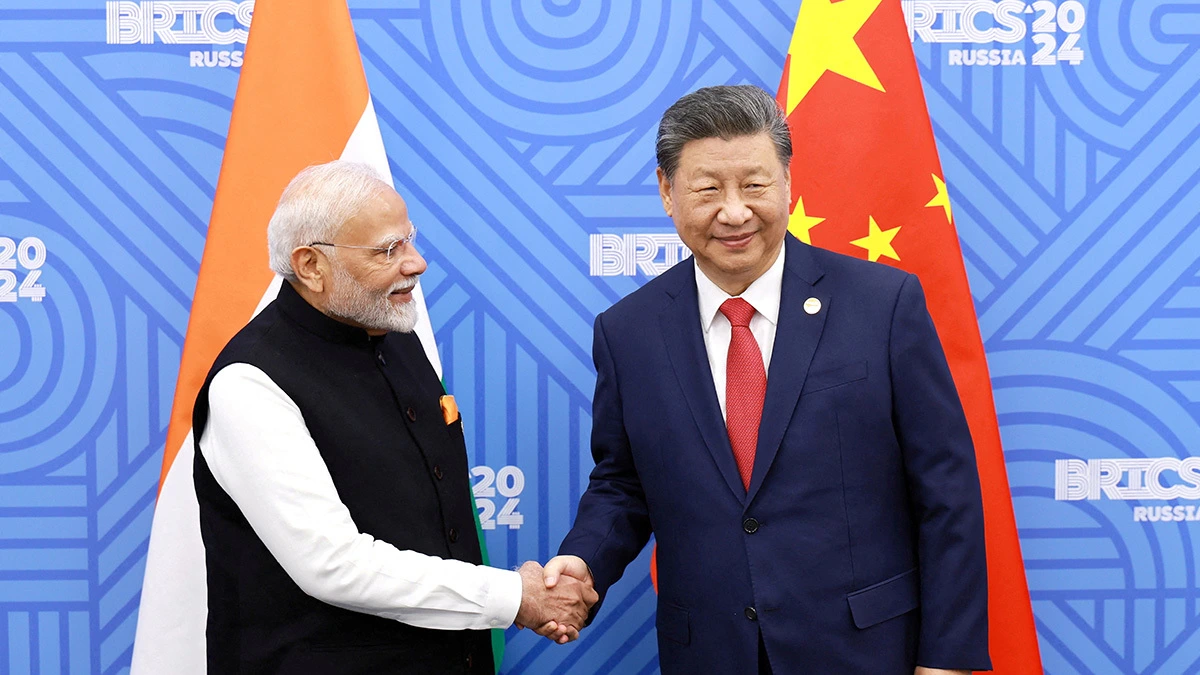
- Both nations are BRICS members; India is also in QUAD (which excludes China)
- China claims Arunachal Pradesh as “Zangnan” (South Tibet)
- India’s PLI (Production Linked Incentive) scheme targets electronics and other sectors where India is dependent on Chinese imports
- Post-Galwan: India banned 300+ Chinese apps including TikTok, WeChat, CamScanner
- Disengagement at Depsang and Demchok completed in October 2024
Key Terms and Definitions
| Term | Definition |
|---|---|
| LAC | Line of Actual Control — the de facto border between India and China (~3,488 km); not a formally demarcated international border |
| BRICS | Grouping of Brazil, Russia, India, China, South Africa (later expanded); represents major emerging economies; India and China are founding members |
| PLI Scheme | Production Linked Incentive — GoI scheme offering financial incentives to companies to build domestic manufacturing and reduce import dependence |
| Most Favoured Nation (MFN) | WTO principle (GATT Article I) — a country must give all WTO members the same trade advantages it gives to any one member |
| Panchsheel | Five Principles of Peaceful Coexistence — first codified in the 1954 Sino-Indian Tibet Agreement; foundation of India-China relations before 1962 war |
Constitutional and Legal Framework
- Article 51 (DPSP): India’s constitutional commitment to international peace, respect for international law, and settlement of disputes by arbitration
- WTO/GATT MFN Principle: Both India and China are WTO members — trade disputes between them are subject to WTO dispute settlement
- Ministry of Commerce (DPIIT/DGFT): Nodal ministry for trade policy, WTO negotiations, import/export regulation
- QUAD: Quadrilateral Security Dialogue — India, US, Japan, Australia — seen as a counterbalance to China; China excluded
- SCO (Shanghai Cooperation Organisation): Both India and China are members — India joined in 2017
Quick Takeaways for CLAT 2027
- LAC = 3,488 km; 3 sectors; NOT a demarcated border; de facto boundary
- Galwan (June 2020) = 20 Indian soldiers killed; worst clash since 1967
- India-China trade = $118 billion; deficit = ~$85 billion against India
- China calls Arunachal Pradesh “Zangnan” (South Tibet)
- BRICS = Brazil, Russia, India, China, South Africa; India in QUAD (excludes China)
- PLI scheme = domestic manufacturing incentive to reduce China import dependence
- MFN principle (WTO) = equal treatment for all WTO members in trade
Practice Quiz — 10 CLAT-Style Questions
Click an option to reveal the answer and explanation.