
CURRENT AFFAIRS | 22 April 2026
CLAT GK + INTERNATIONAL RELATIONS & LAW
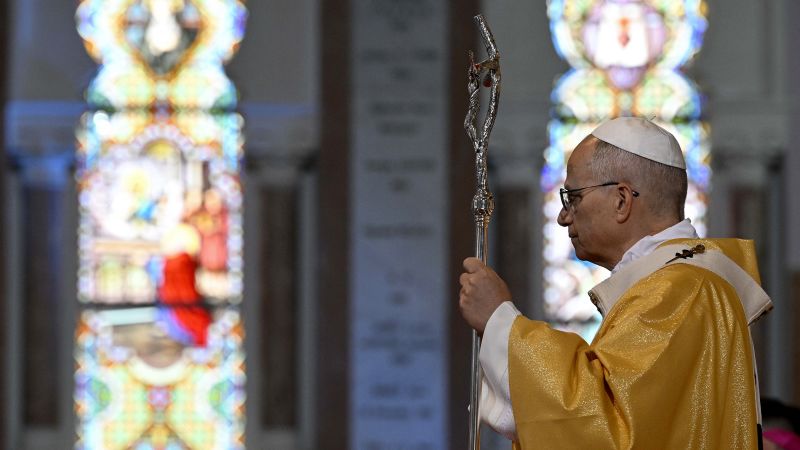
A remarkable diplomatic row is playing out across the Atlantic. Pope Leo XIV — the first US-born pontiff in Catholic history — has called the Trump administration’s mass-deportation policies “inhuman” and said he has “no fear” of speaking out. President Trump has shot back, calling Leo “weak on crime” and “terrible for foreign policy”. Vice-President J.D. Vance, himself a Catholic convert, said it “would be best for the Vatican to stick to matters of morality.”
Beneath the headlines lies a classic CLAT 2027 question: what is the legal status of the Holy See in international law, and how does a non-territorial sovereign project power?
International-Law Framework
- Holy See: A sovereign juridical entity, not merely a religious body. Maintains diplomatic relations with ~180 states, including India (since 1948).
- Vatican City State: A separate, territorial entity (~44 hectares / 0.44 sq km) created by the Lateran Treaty, 1929 between Italy and the Holy See.
- Vienna Convention on Diplomatic Relations, 1961 — foundational treaty on diplomatic immunities and inviolability; governs the Holy See’s Apostolic Nuncios.
- Montevideo Convention, 1933 — four criteria of statehood: (i) permanent population, (ii) defined territory, (iii) government, (iv) capacity to enter into relations with other states. UN recognition is not a criterion.
- Holy See at the UN — Permanent Observer, not a voting member (similar to Palestine).
- Article 51, Indian Constitution (DPSP) — directs the State to promote international peace and security, honour international obligations and encourage settlement of disputes by arbitration.
Why This Matters for CLAT 2027
- Two-in-one answer key: CLAT passages on the Vatican invariably test the Holy See / Vatican City distinction — a trap many students fall into.
- Soft-power angle: Joseph Nye’s concept of “soft power” (attraction, persuasion, legitimacy rather than coercion) is a favourite CLAT passage frame. The Pope is the textbook example.
- Possible question: Principle on diplomatic immunity + fact pattern of a Papal visit where he criticises the host — apply persona non grata doctrine from VCDR 1961.
- DPSP tie-in: Expect an Art 51 question wrapped around India’s longstanding ties with the Holy See since 1948.
Key Facts at a Glance
| Item | Detail |
|---|---|
| Pope Leo XIV | First American-born pontiff; elected 2025; age 70 at election. |
| Vatican City | Smallest independent state in the world by area and population (~800 residents). |
| India–Holy See relations | Established 1948; Apostolic Nuncio resident in New Delhi. |
| Lateran Treaty | 1929, between Italy and the Holy See — created Vatican City State. |
| VCDR | 1961 — inviolability of mission premises, diplomatic immunity, persona non grata. |
| UN status | Permanent Observer — can speak in debates, cannot vote. |
Mnemonic — "LATERAN"
Lateran 1929 (Vatican City) · Apostolic Nuncio (ambassador) · Territory 44 ha · Extraterritorial immunity (VCDR) · Recognition 180+ states · Art 51 (DPSP) · Non-member UN Observer.
The Deeper Story
The Trump–Leo row is not merely about immigration. It tests whether a sovereign without a gun or a market can still constrain great-power behaviour. The Pope’s tools — moral legitimacy, a global communion of 1.4 billion Catholics, and diplomatic recognition by most nations — are the classic instruments of soft power. For CLAT, remember: the Holy See is not sovereign because it owns territory (Vatican City is tiny); it is sovereign because other states have chosen to recognise it — the Westphalian idea that sovereignty is ultimately conferred by acceptance into the society of states.
Test Yourself: 10-Question CLAT Practice Quiz
Ten CLAT-style questions on this story — factual recall, constitutional articles, and principle-application reasoning. Tap an option to lock it in; explanations appear on submit.
Practice Quiz — 10 CLAT-Style Questions
Click an option to reveal the answer and explanation.
Source: CNN · Time Magazine · Reuters · National Catholic Register.