

CURRENT AFFAIRS | 9 APRIL 2026
CLAT GK + SCIENCE & TECHNOLOGY
PFBR Achieves Criticality: A Historic Milestone for India’s Nuclear Programme
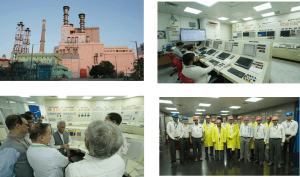
On April 6, 2026, India announced that the Prototype Fast Breeder Reactor (PFBR) has achieved criticality — meaning it can now sustain a fission chain reaction. This is a major milestone in India’s decades-long pursuit of energy independence through its indigenous three-stage nuclear programme, conceived by Dr. Homi J. Bhabha in 1958.
Writing in The Indian Express, nuclear strategist Manpreet Sethi calls this “a nuclear leap amid renewed focus on energy security,” highlighting why PFBR’s success comes at a critical juncture when the West Asia crisis threatens India’s energy supplies.
India’s Three-Stage Nuclear Programme: A Complete Breakdown
Stage 1: Pressurized Heavy Water Reactors (PHWRs)
These reactors use natural uranium as fuel and heavy water as both moderator and coolant. India has successfully operated multiple PHWRs and this stage is now mature. The spent fuel from these reactors produces plutonium, which becomes the fuel for Stage 2.
Stage 2: Fast Breeder Reactors (FBRs)
This is where PFBR comes in. FBRs use plutonium from Stage 1 as fuel. The “breeder” in the name refers to their ability to produce more fissile material than they consume. The PFBR is a 500 MWe sodium-cooled fast breeder reactor, designed by IGCAR (Indira Gandhi Centre for Atomic Research) at Kalpakkam and built by BHAVINI (Bharatiya Nabhikiya Vidyut Nigam Limited).
The FBRs will not only multiply the potential of India’s nuclear power programme but also ensure better waste management by utilizing materials that would otherwise be radioactive waste.
Stage 3: Thorium-Based Reactors
India holds approximately 25% of the world’s thorium reserves. Stage 3 envisions using thorium-232, which is converted to uranium-233 in the reactor. This stage would give India energy independence for centuries. It remains under development.
Why PFBR Was Kept Outside IAEA Safeguards
During the Indo-US Nuclear Deal (123 Agreement) negotiations, there was a demand to place PFBR under IAEA safeguards. However, India’s Department of Atomic Energy (DAE) insisted on maintaining the freedom of the reactor and safeguarding the homegrown design. This was a strategic decision — placing PFBR under international safeguards would have compromised India’s indigenous nuclear technology sovereignty.
Energy Security Imperative: West Asia Context
The timing of PFBR’s criticality is significant. India imports 85% of its crude oil, primarily from West Asian countries. The ongoing crisis in the region makes energy diversification an urgent national priority. Nuclear energy, especially through breeder reactors, offers a path to reduce dependence on imported fossil fuels.
India’s Nuclear Governance Structure
India’s nuclear programme has a unique governance structure:
- DAE (Department of Atomic Energy) functions directly under the Prime Minister — not under any ministry
- Atomic Energy Commission (AEC) is the policy-making body
- Atomic Energy Act 1962 governs all nuclear activities in India
- Nuclear Power Corporation of India Ltd (NPCIL) operates commercial nuclear power plants
⚖️ Constitutional & Legal Framework
- Article 51A(j): Fundamental Duty — develop scientific temper, humanism, spirit of inquiry and reform
- Atomic Energy Act 1962: Governs development and control of atomic energy in India
- DAE under PM: Department of Atomic Energy reports directly to the Prime Minister
- Indo-US Nuclear Deal (123 Agreement): Signed 2008 — civilian nuclear cooperation
- NSG Waiver 2008: Allowed India to engage in civilian nuclear trade despite non-NPT status
- NPT: India has NOT signed the Non-Proliferation Treaty — maintains its position as a responsible nuclear power
- IAEA Safeguards: India has placed civilian reactors under IAEA safeguards but kept strategic assets separate
🎯 Why This Matters for CLAT 2027
- GK/Current Affairs: PFBR achieving criticality is a landmark event — know the three stages, key institutions (IGCAR, BHAVINI, DAE), and the 500 MWe capacity
- Legal Reasoning: Questions on India’s NPT position, 123 Agreement, and IAEA safeguards can appear as principle-application problems
- Constitutional Knowledge: Art 51A(j) scientific temper + DAE’s unique position under PM are frequently tested
- Energy Security: Link between nuclear energy and reducing 85% oil import dependence — connects to DPSP and national interest
📋 Key Facts at a Glance
| What Happened | PFBR achieved criticality on April 6, 2026 |
| PFBR Specs | 500 MWe, sodium-cooled, fast breeder reactor |
| Designed By | IGCAR (Indira Gandhi Centre for Atomic Research) |
| Built By | BHAVINI at Kalpakkam, Tamil Nadu |
| Three Stages | PHWR (uranium) → FBR (plutonium) → Thorium reactors |
| India’s Thorium | 25% of world’s reserves |
🧠 Mnemonic to Remember
“U-P-T” for the three stages: Uranium (Stage 1 — PHWR) → Plutonium (Stage 2 — FBR/PFBR) → Thorium (Stage 3 — future). And “BHABHA”: Breeder reactor success, Homi Bhabha’s vision, Atomic Energy Act 1962, BHAVINI built it, Homegrown design (no IAEA), Achieved criticality April 2026.
Practice Quiz — 10 CLAT-Style Questions
Click an option to reveal the answer and explanation.