
CURRENT AFFAIRS | 9 APRIL 2026
CLAT GK + INTERNATIONAL RELATIONS
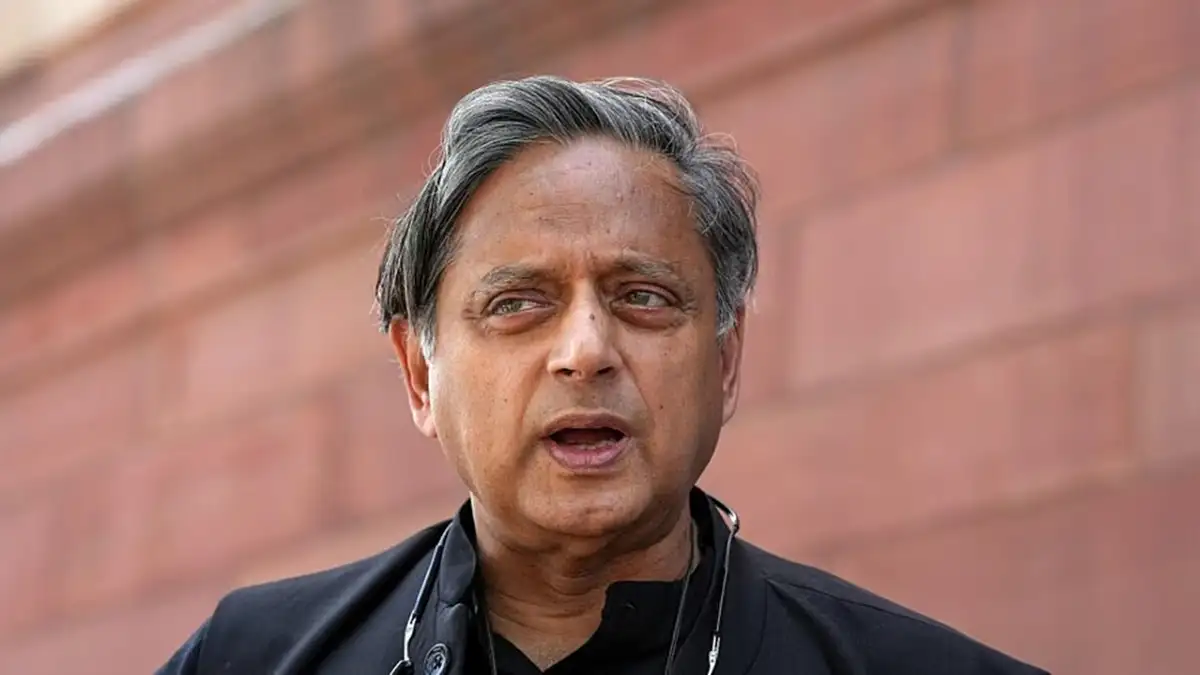
Shashi Tharoor’s Editorial: “Islamabad Channel — India Must Stand for Peace, Whoever the Broker May Be”
In a thought-provoking editorial in The Indian Express, former diplomat and parliamentarian Shashi Tharoor examines Pakistan’s emergence as an unlikely peace broker in the volatile theatre of West Asian geopolitics. The editorial challenges conventional Indian foreign policy thinking and argues for a more mature, independent diplomatic stance.
Pakistan’s Unexpected Role as Mediator
For decades, the corridors of power in Washington and Tehran were characterized by mutual antagonism. In this complex geopolitical environment, Pakistan has emerged as a key mediator in the region, having:
- Hosted foreign ministers of Turkey, Saudi Arabia, and Egypt for multilateral dialogue
- Brokered ceasefire talks between competing regional powers
- Positioned itself as a bridge between the US and Iran
Pakistan has been a key part of all resolution efforts in the region, leveraging its strategic location, Islamic identity, and relationships with both Western and Middle Eastern powers.
Tharoor’s Core Argument: India Must Rise Above Regional Rivalry
Tharoor makes several compelling points about India’s diplomatic posture:
First, India must adopt an independent “all-weather” diplomatic stance that is not hostage to its rivalry with Pakistan. If Pakistan succeeds in brokering peace, India should be among the first to celebrate — not sulk in strategic jealousy.
Second, a neighbour’s mediation does not diminish India’s standing. India’s diplomatic weight is derived from its economic size, democratic credentials, and civilizational heritage — not from blocking Pakistan’s peace efforts.
Third, celebrating a neighbour’s success in a nuclear-armed neighbourhood is a win for everyone. Regional stability in West Asia directly affects India’s energy security, diaspora safety, and trade interests.
India’s Evolving Foreign Policy Posture
The editorial notes that India is learnt to be no longer inclined to host COP33 — a development that reflects a broader rethink of India’s multilateral engagement strategy. This retreat from climate leadership hosting raises questions about whether India is becoming more selective or more withdrawn in its global engagement.
Understanding Dispute Resolution Mechanisms in International Law
For CLAT aspirants, this editorial provides an excellent framework to understand different methods of peaceful dispute resolution in international law:
- Negotiation: Direct talks between parties — no third party
- Good Offices: A third party facilitates contact but does NOT propose solutions
- Mediation: A third party actively proposes solutions (Pakistan’s role falls here)
- Conciliation: A commission investigates and proposes non-binding settlement terms
- Arbitration: A tribunal gives a BINDING decision (e.g., Indus Waters arbitration)
- Judicial Settlement: Through ICJ or other international courts
India’s Foreign Policy Principles: Constitutional Basis
India’s foreign policy has deep constitutional roots in the Directive Principles of State Policy:
Article 51 directs the State to:
- Promote international peace and security
- Maintain just and honourable relations between nations
- Foster respect for international law and treaty obligations
- Encourage settlement of international disputes by arbitration
The Panchsheel Agreement (1954) between India and China established five principles: mutual respect for sovereignty, mutual non-aggression, non-interference in internal affairs, equality and mutual benefit, and peaceful coexistence. These principles continue to inform India’s diplomatic vocabulary.
⚖️ Constitutional & Legal Framework
- Article 51 DPSP: Promote international peace, foster respect for international law, encourage arbitration
- Panchsheel Agreement 1954: Five principles of peaceful coexistence (India-China)
- Non-Aligned Movement (NAM): Founded at Belgrade Summit 1961 — India as founding member
- UN Charter Chapter VI: Pacific settlement of disputes — negotiation, mediation, arbitration
- Good Offices vs Mediation vs Arbitration: Key distinction in international law dispute resolution
- Vienna Convention on Diplomatic Relations 1961: Framework for diplomatic immunity and conduct
🎯 Why This Matters for CLAT 2027
- GK/Current Affairs: Pakistan’s mediation role in West Asia is a high-probability question for CLAT 2027 — know the context and key players
- Legal Reasoning: Questions on dispute resolution mechanisms (good offices vs mediation vs arbitration) frequently appear in CLAT
- Passage-based questions: Editorials like this are directly adapted into CLAT reading comprehension — practice identifying the author’s main argument and counter-arguments
- DPSP questions: Article 51 and India’s international obligations are standard CLAT fare
📋 Key Facts at a Glance
| Editorial By | Shashi Tharoor (Indian Express, 9 April 2026) |
| Core Argument | India should welcome Pakistan’s peace-brokering in West Asia |
| Pakistan’s Role | Hosted foreign ministers, brokered ceasefire talks between US-Iran |
| India’s Stance | No longer inclined to host COP33 — broader diplomatic rethink |
| Constitutional Basis | Article 51 DPSP — promote international peace |
| Key Concept | Good offices vs Mediation vs Arbitration (dispute resolution) |
🧠 Mnemonic to Remember
“PEACE PLAN” for dispute resolution methods in ascending order of third-party involvement: Party talks (Negotiation) → Enabling contact (Good Offices) → Active proposals (Mediation) → Commission inquiry (Conciliation) → Enforced decision (Arbitration) → Permanent court (ICJ) → Legal binding (Judicial Settlement) → Article 51 DPSP (India’s duty) → NAM principles (Non-Alignment)
Practice Quiz — 10 CLAT-Style Questions
Click an option to reveal the answer and explanation.