
CURRENT AFFAIRS | 13 APRIL 2026
CLAT GK + ENVIRONMENTAL LAW + ECONOMICS
Two seemingly unrelated stories from April 13, 2026, converge on a single theme: the fragile relationship between human activity and the natural world. The first story examines why the Iran-triggered energy shock — with Brent crude hitting $149.50/barrel, the highest since 2008 — has not yet translated into a proportional spike in global food prices. The second reports on the Uttarakhand High Court’s intervention to halt the felling of oak trees in Mussoorie for a civic construction project. Together, they illuminate the interconnections between energy security, food security, environmental protection, and constitutional law — a nexus that is increasingly relevant for CLAT aspirants.
Despite crude oil reaching near-record levels due to the Strait of Hormuz blockade, the FAO Food Price Index has actually dropped 8%. This counter-intuitive outcome is explained by one factor: record global production of cereals, oilseeds, and sugar has created ample supply buffers. Global cereal stocks are at comfortable levels, oilseed production has been boosted by bumper harvests in South America, and sugar output has exceeded expectations. However, this calm is deceptive. If the Hormuz blockade persists, fertiliser costs will spike (since fertiliser production depends heavily on natural gas), which will trigger delayed food inflation — not immediately through commodity prices but through input cost escalation over the next 6-12 months.
India’s specific vulnerability lies in its fertiliser imports. As covered in a companion article by Ashok Gulati, India imports approximately 40% of its urea, making it acutely exposed to supply disruptions through the Strait of Hormuz. While India’s food grain production is largely self-sufficient, the fertiliser-to-food transmission channel means that prolonged energy disruption will eventually affect Indian agriculture and food prices.
Himalayan Oak Trees: Uttarakhand HC Steps In
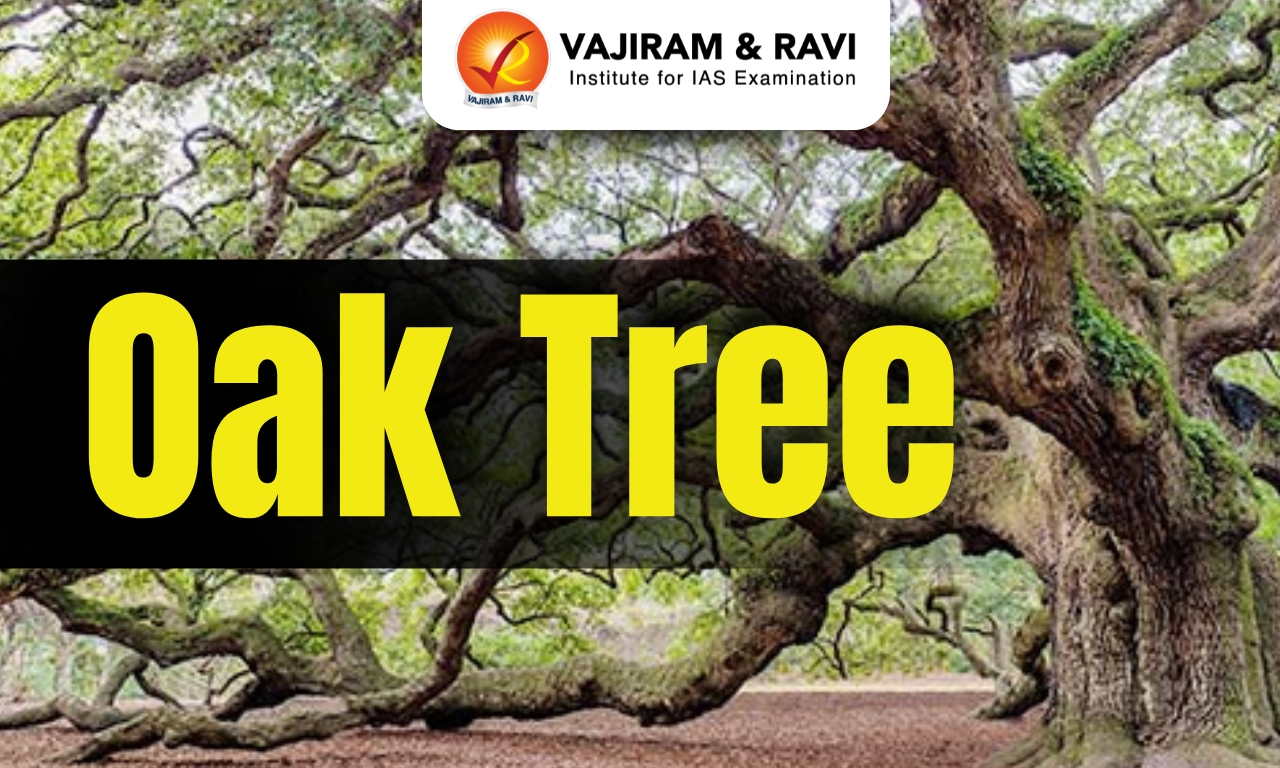
In a separate but equally significant development, the Uttarakhand High Court ordered an investigation into the felling of oak trees in Mussoorie for a civic construction project by the Municipal Council. Oak trees (Quercus leucotrichophora, commonly known as Banj oak) are classified as keystone species in Himalayan ecosystems — organisms that play a disproportionately large role in maintaining the structure and function of an entire ecosystem.
Oak forests in the Himalayas provide critical ecosystem services: they host lichens, ferns, orchids, fungi, and support extraordinary biodiversity. They serve as natural water towers — their deep root systems and thick leaf litter absorb and slowly release rainfall, feeding springs and streams that provide water to millions of people downstream. Oak forests also play a vital role in soil conservation (preventing landslides in the fragile Himalayan terrain), carbon sequestration (absorbing atmospheric CO2), and maintaining microclimate regulation in mountain ecosystems.
The High Court’s intervention invokes the constitutional and statutory framework for environmental protection in India — a framework that has been built through decades of legislative and judicial action, making environmental law one of the most dynamic and exam-relevant areas of Indian jurisprudence.
Constitutional & Legal Framework
- Article 48A (DPSP): Protection and improvement of environment and safeguarding of forests and wildlife (added by 42nd Amendment, 1976)
- Article 51A(g) (Fundamental Duty): Every citizen’s duty to protect and improve the natural environment including forests, lakes, rivers, and wildlife, and to have compassion for living creatures
- Forest Conservation Act, 1980: Restricts dereservation of forests and use of forest land for non-forest purposes without prior Central Government approval
- Environment Protection Act, 1986: Umbrella legislation (post-Bhopal) — empowers the Central Government to take measures for environmental protection
- Wildlife Protection Act, 1972: Provides for protection of wild animals, birds, and plants; establishes National Parks and Wildlife Sanctuaries
- T.N. Godavarman v Union of India (1996): Landmark continuing mandamus — expanded definition of “forest” to include all forests regardless of ownership or classification
- MC Mehta v Union of India: Series of PILs on environmental protection — industrial pollution, vehicular emissions, Taj Mahal protection, river cleaning
Environmental Jurisprudence: From Art. 48A to Judicial Activism
India’s environmental protection framework operates at three levels: constitutional (DPSPs and Fundamental Duties), legislative (Forest Conservation Act, Environment Protection Act, Wildlife Protection Act), and judicial (landmark Supreme Court decisions).
At the constitutional level, Article 48A and Article 51A(g) form a complementary pair — the former directing the State to protect the environment, and the latter imposing a duty on every citizen to do the same. Both were inserted by the 42nd Amendment, 1976 — the same amendment that added Article 39A (free legal aid) and several other provisions that strengthened the Constitution’s social justice architecture.
At the judicial level, the Supreme Court has been exceptionally proactive in environmental protection. In T.N. Godavarman Thirumulkpad v Union of India (1996), the Court issued a landmark continuing mandamus that transformed forest conservation law. The Court expanded the definition of “forest” to cover all forests irrespective of their ownership or classification — meaning that even private forests and forests not officially recorded as such receive protection under the Forest Conservation Act, 1980. This case remains one of the longest-running PIL proceedings in Supreme Court history.
The MC Mehta v Union of India series of cases has addressed virtually every aspect of environmental law — from the closure of polluting industries in Delhi (the Mathura Refinery and Taj Mahal cases) to vehicular emission norms (the CNG conversion of public transport in Delhi) to the protection of the Ganga and Yamuna rivers. These cases established the Polluter Pays Principle and the Precautionary Principle as part of Indian environmental law.
The right to a clean environment has also been read into Article 21 (right to life) by the Supreme Court, making environmental protection not just a DPSP aspiration but an enforceable fundamental right. This judicial evolution — from DPSP to fundamental right — mirrors the trajectory of the right to free legal aid (Article 39A read into Article 21) and reflects the broader trend of the judiciary using Article 21 as a vehicle for expanding the scope of fundamental rights.
CLAT Angle — Why This Matters
- Legal Reasoning: Environmental law questions are high-frequency in CLAT — expect principle-application questions based on the Forest Conservation Act (can forest land be diverted for non-forest use?) and the Polluter Pays Principle
- GK/Science: FAO Food Price Index, Brent crude prices, energy-food nexus, and keystone species concept are all potential GK questions
- Constitutional Law: The Art. 48A + Art. 51A(g) pair is frequently tested — remember both were added by the 42nd Amendment; the former is a DPSP (State duty), the latter a Fundamental Duty (citizen duty)
- Landmark Cases: T.N. Godavarman (forest definition expansion) and MC Mehta (polluter pays, precautionary principle) are must-know cases for CLAT
- Critical Reasoning: The counter-intuitive question “Why hasn’t the energy shock caused food inflation?” is exactly the kind of passage-based reasoning question that appears in CLAT English and Critical Reasoning sections
- 42nd Amendment Bundle: Art. 39A + Art. 48A + Art. 51A were all inserted by the same amendment — a fact frequently tested as a matching question
The Energy-Food-Environment Nexus
The two stories together illustrate a nexus that CLAT aspirants must understand: energy prices affect fertiliser costs, which affect food production costs, which affect food prices and food security. Simultaneously, the drive for development (construction, urbanisation, industrialisation) puts pressure on natural ecosystems (forests, water bodies, biodiversity), which in turn affects the ecological foundations of agriculture and food security.
This nexus is particularly relevant in the Himalayan context. The felling of oak trees in Mussoorie is not just a local environmental issue — it has cascading effects on water availability (oak forests feed springs), soil stability (preventing landslides), and climate regulation. As the CJI Surya Kant noted in the NALSA conference (another news story from the same day), hilly states like Uttarakhand face unique challenges — and these include environmental challenges that directly affect the livelihoods and security of mountain communities.
Key Facts at a Glance
| Brent Crude Price | $149.50/barrel (highest since 2008) |
| FAO Food Price Index | Dropped 8% despite energy shock |
| Reason for No Food Spike | Record global production of cereals, oilseeds, sugar |
| Oak Tree Species | Quercus leucotrichophora (Banj oak) — keystone species |
| Court Intervention | Uttarakhand HC ordered investigation into oak felling in Mussoorie |
| Art. 48A | DPSP — State to protect environment and forests (42nd Amendment) |
| Art. 51A(g) | Fundamental Duty — citizen to protect environment |
| Forest Conservation Act | 1980 — restricts use of forest land for non-forest purposes |
| Environment Protection Act | 1986 — umbrella legislation post-Bhopal gas tragedy |
| Key Cases | T.N. Godavarman (forests), MC Mehta (pollution, precautionary principle) |
Mnemonic: “FEWO” — Environmental Law Framework for CLAT
- F — Forest Conservation Act, 1980 + Fundamental Duty Art. 51A(g)
- E — Environment Protection Act, 1986 (umbrella law, post-Bhopal)
- W — Wildlife Protection Act, 1972 (oldest of the three environmental statutes)
- O — Oak trees as keystone species + Art. 48A (State duty to protect environment)
Remember: “FEW Oaks remain” — just as few oak forests remain in the Himalayas, remember the FEW-O environmental law stack: Forest (1980), Environment (1986), Wildlife (1972), and Oak/Art. 48A
Practice Quiz — 10 CLAT-Style Questions
Click an option to reveal the answer and explanation.